
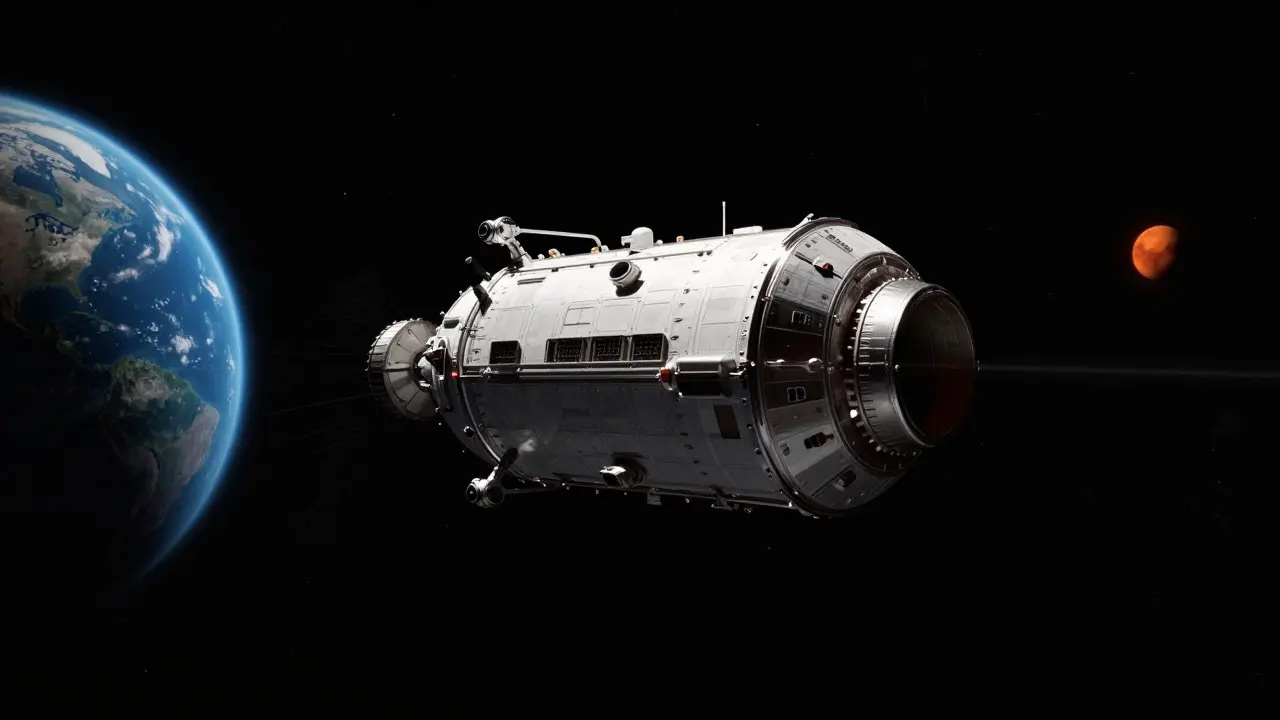
Imagine floating in the void between Earth and Mars, far from the protective bubble of our planet's magnetosphere. Without that natural shield, you are exposed to a constant barrage of high-energy particles known as galactic cosmic rays, which can penetrate standard spacecraft hulls and damage human DNA over time. This is the core problem facing engineers designing deep space habitats for missions lasting 500 to 1,000 days. The traditional solution? Stack tons of aluminum or polyethylene around the crew. But that mass penalty is crushing launch budgets. Enter magnetic shielding: an active system that uses powerful fields to bend charged particles away from the habitat, rather than absorbing them.
As of 2026, this technology remains largely conceptual, with no full-scale system yet flown in space. However, feasibility analyses have matured significantly since the early 2010s. While magnetic shields promise to drastically reduce dose rates from solar energetic particles, they face stiff hurdles regarding mass, power consumption, and their ability to stop the most energetic cosmic rays. This article breaks down how these systems work, compares major architectural designs like toroids and Halbach arrays, and evaluates whether we can realistically deploy them for crewed Mars missions in the late 2030s.
The Physics of Deflection: How Magnetic Shields Work
To understand why we need magnets, we first have to look at what we're fighting against. In deep space, beyond Earth's magnetosphere, astronauts face two main threats: solar energetic particles (SEPs) and galactic cosmic rays (GCRs). SEPs are bursts of protons ejected during solar flares, while GCRs are high-energy nuclei originating from outside our solar system, often with energies exceeding several giga-electron volts per nucleon.
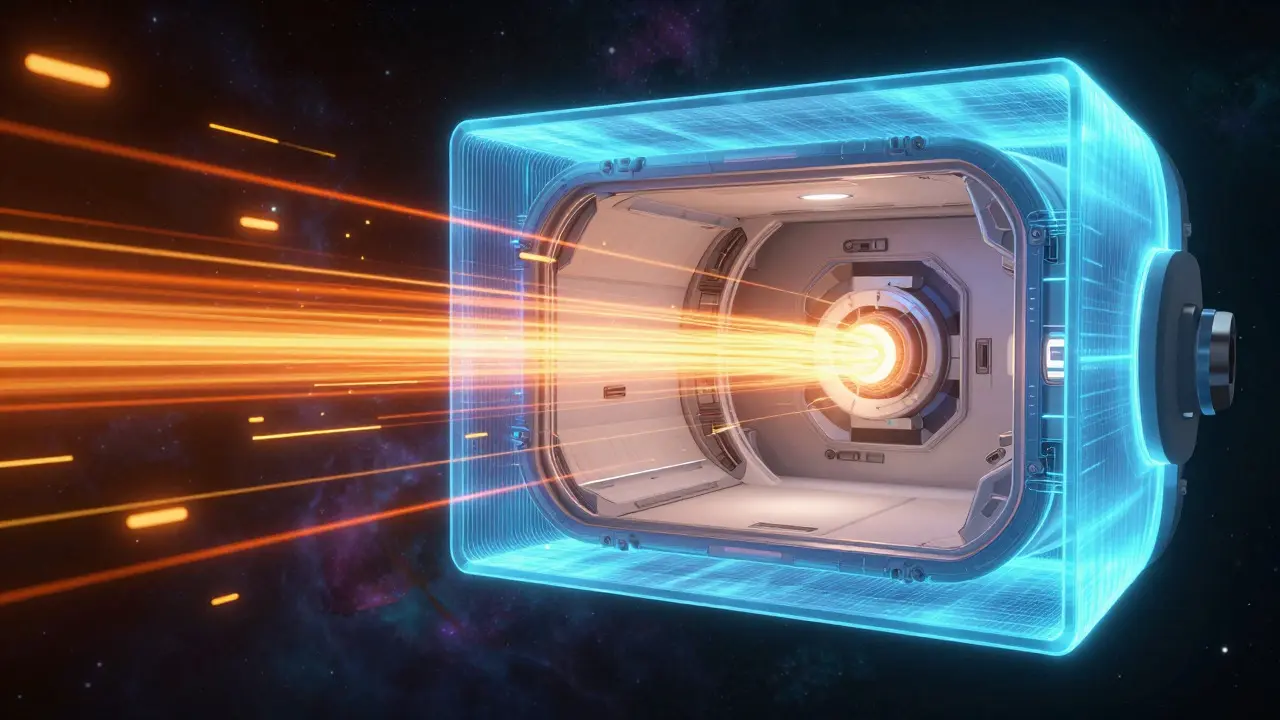
Magnetic shielding works on a simple principle: the Lorentz force. When a charged particle moves through a magnetic field, it experiences a force perpendicular to both its velocity and the field direction, causing it to curve. By creating a strong enough field around the habitat, we can increase the particle's trajectory radius until it misses the crew compartment entirely. The key metric here is "shielding power," defined as the product of the magnetic field strength (in tesla) and the path length (in meters). For example, a system with a shielding power of 8 tesla·meter can effectively deflect protons with kinetic energies up to roughly 1 giga-electron volt.
This approach contrasts sharply with passive shielding. Passive methods rely on material thickness to absorb energy. Calculations show that achieving a 50% reduction in GCR dose using only passive materials would require tens of tonnes of shielding for a standard 5-meter-diameter habitat. That mass is often incompatible with current launch vehicle capabilities. Magnetic shielding aims to achieve comparable protection with a fraction of the mass, provided the superconductors and support structures are light enough.
Major Architectures: Toroids vs. Halbach Arrays
Not all magnetic shields look the same. Over the last decade, researchers at NASA, ESA, and CERN have explored several distinct geometries, each with trade-offs in efficiency, mass, and internal field interference.
The Barrel Toroid (SR2S Concept)
One of the most studied designs is the barrel toroid, central to the European Space Radiation Superconducting Shield (SR2S) project. Imagine a giant donut wrapped around the cylindrical habitat module. This configuration uses multiple toroidal coils arranged around the crew volume to create a closed magnetic field envelope. The goal is to mimic Earth's magnetosphere locally, bending incoming particles away from the center. SR2S targeted deflection of 1 GeV particles using Ti-clad magnesium diboride conductors, aiming for shielding powers in the range of several tesla·meters.
The Pumpkin Configuration
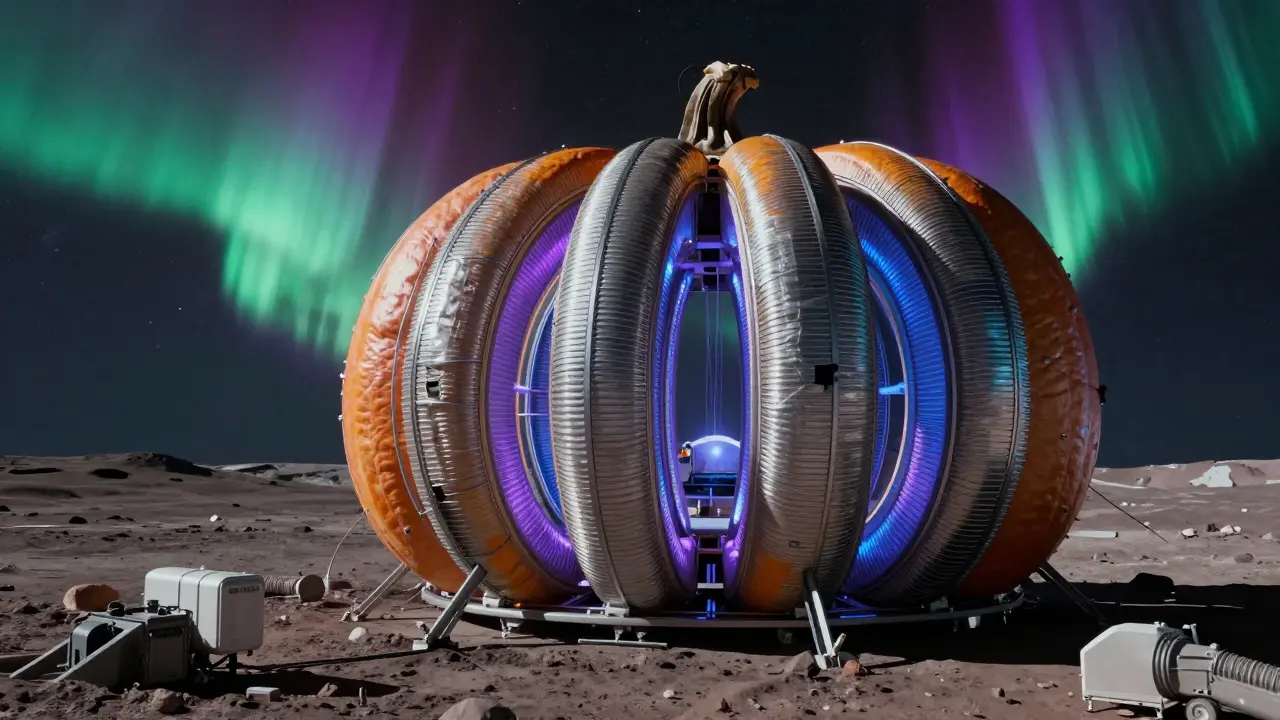
Introduced in studies presented at the MT-25 conference, the pumpkin configuration offers a twist on the traditional toroid. Here, multiple smaller toroids are arranged with axes perpendicular to the spacecraft's main axis, resembling the segments of a pumpkin. This design improves shielding efficiency per unit mass compared to a single large barrel toroid. It also tends to be more transparent to secondary radiation produced when primary particles hit the structure, potentially reducing the overall dose inside the habitat.
Halbach Arrays (CREW HaT)
A newer entrant is the Halbach array, featured in the CREW HaT concept published in 2022. A Halbach array is a specific arrangement of permanent magnets or coils where the magnetic field is concentrated on one side and nearly cancelled on the other. For space habitats, this is a game-changer. It allows engineers to generate a strong external field to deflect particles while keeping the internal field within the habitat very low. This reduces the risk of interfering with sensitive electronics or affecting human physiology, a significant concern with uniform-field toroids where the interior might sit in a 0.1 tesla field.
| Architecture | Key Feature | Shielding Power Target | Main Advantage | Main Limitation |
|---|---|---|---|---|
| Barrel Toroid (SR2S) | Closed field lines around habitat | ~8-20 T·m | Proven theoretical basis, mimics geomagnetic field | High internal field, complex cryogenics |
| Pumpkin Config | Perpendicular toroid segments | ~8-20 T·m | Better mass efficiency, lower secondary radiation | Complex mechanical assembly |
| Halbach Array (CREW HaT) | Field cancellation inside habitat | Variable | Low internal field, deployable design | Newer concept, less flight heritage |
Feasibility Check: Mass, Power, and Technology Readiness
The theory looks good on paper, but engineering reality is harsh. As of 2026, the primary barrier to deployment is not the physics, but the hardware. Most concepts rely on superconducting magnets, which must operate at extremely low temperatures to carry current without resistance. This introduces three massive challenges:
- Cryogenic Systems: Keeping magnets cold requires continuous cooling. For a mission lasting 900 days, the cryocoolers must be incredibly reliable. A failure could lead to a quench event, releasing megajoules of stored energy and potentially destroying the system. Power requirements for these coolers can reach kilowatt levels, straining the habitat's electrical budget.
- Structural Loads: Strong magnetic fields exert enormous Lorentz forces on the coils themselves. The support structures must withstand these forces without adding too much mass. Current estimates suggest that even optimized designs still weigh tens of tonnes, including the magnet, support structure, and cryogenic plant.
- Technology Readiness Level (TRL): Most magnetic shielding concepts remain at TRL 3 to 4, meaning they are validated in the lab but not yet integrated into a spacecraft prototype. We lack flight heritage. No full-scale magnetic shield has been tested in the vacuum of space for extended periods.
NASA's Magnet Architectures and Active Radiation Shielding Study (MAARSS), initiated around 2012, concluded that while high-temperature superconducting (HTS) coils are feasible, they did not offer dramatic improvements over passive shielding when realistic mass and power constraints were applied. This sober assessment suggests that magnetic shielding alone may not be the silver bullet we hoped for in the near term.
Performance Limits: Can It Stop Everything?
Here is where expectations need to be managed. Magnetic shielding is excellent at stopping Solar Energetic Particles (SEPs). Studies consistently show that an 8 tesla·meter system can eliminate more than 90% of the dose from SEPs, which is a huge win for safety during solar storms.
However, Galactic Cosmic Rays (GCRs) are trickier. Many GCRs are heavy ions with very high energies. Even a robust 20 tesla·meter system only partially reduces the dose from these high-energy particles. Residual dose remains significant. This means that for long-duration missions to Mars or beyond, magnetic shielding cannot stand alone. Experts from CERN and ESA agree that a hybrid approach is necessary: combine a moderate amount of passive material shielding (to catch secondary neutrons and lower-energy particles) with a magnetic field (to bend the primary high-energy charges). This mixed strategy is likely the path forward for the 2030s and 2040s.
Future Outlook: From Lab to Launch
So, will we see magnetic shields on Mars rovers or habitats in the next decade? Probably not as the primary shield. Initial crewed missions will likely rely on optimized passive shielding and storm shelters. However, the development of high-temperature superconductors is accelerating. New materials operating at higher temperatures (20-77 Kelvin) could reduce the burden on cryocoolers and allow for lighter conductor masses.
We can expect to see small-scale demonstrators on uncrewed probes or orbital platforms in the late 2020s. These tests will validate the reliability of the cryogenic systems and the structural integrity under load. If successful, larger integrated subsystems could appear on lunar bases or early Mars transfer vehicles by the mid-2030s. Ultimately, magnetic shielding will evolve from a standalone solution into a complementary layer in a multi-faceted radiation protection strategy, working alongside trajectory optimization and biological countermeasures.
What is the difference between magnetic shielding and passive shielding?
Passive shielding uses physical materials like aluminum or water to absorb radiation, adding significant mass to the spacecraft. Magnetic shielding uses electromagnetic fields to deflect charged particles away from the habitat, potentially reducing mass but requiring complex superconducting magnets and cryogenic power systems.
Can magnetic shielding stop all galactic cosmic rays?
No. While magnetic shielding is highly effective against solar energetic particles, it only partially mitigates high-energy galactic cosmic rays. Even advanced systems with 20 tesla·meter shielding power leave a residual dose, necessitating a combination with passive shielding for full protection.
Why are superconductors needed for space magnetic shields?
Generating the strong magnetic fields required to deflect high-energy particles demands immense electrical currents. Conventional copper wires would be too heavy and inefficient due to resistive heat loss. Superconductors carry current with zero resistance, allowing for stronger fields with lighter wire, though they require extreme cooling.
Is magnetic shielding ready for crewed Mars missions in the 2030s?
It is unlikely to be the primary shield for initial 2030s missions. Most concepts are at Technology Readiness Level 3-4. Engineers anticipate relying on passive shielding first, with magnetic systems potentially serving as supplementary protection for later missions once reliability is proven in uncrewed tests.
What is a Halbach array in the context of space habitats?
A Halbach array is a specific coil arrangement that concentrates the magnetic field outside the habitat while canceling it inside. This is beneficial because it protects the crew from external radiation without exposing them or sensitive instruments to strong internal magnetic fields.