
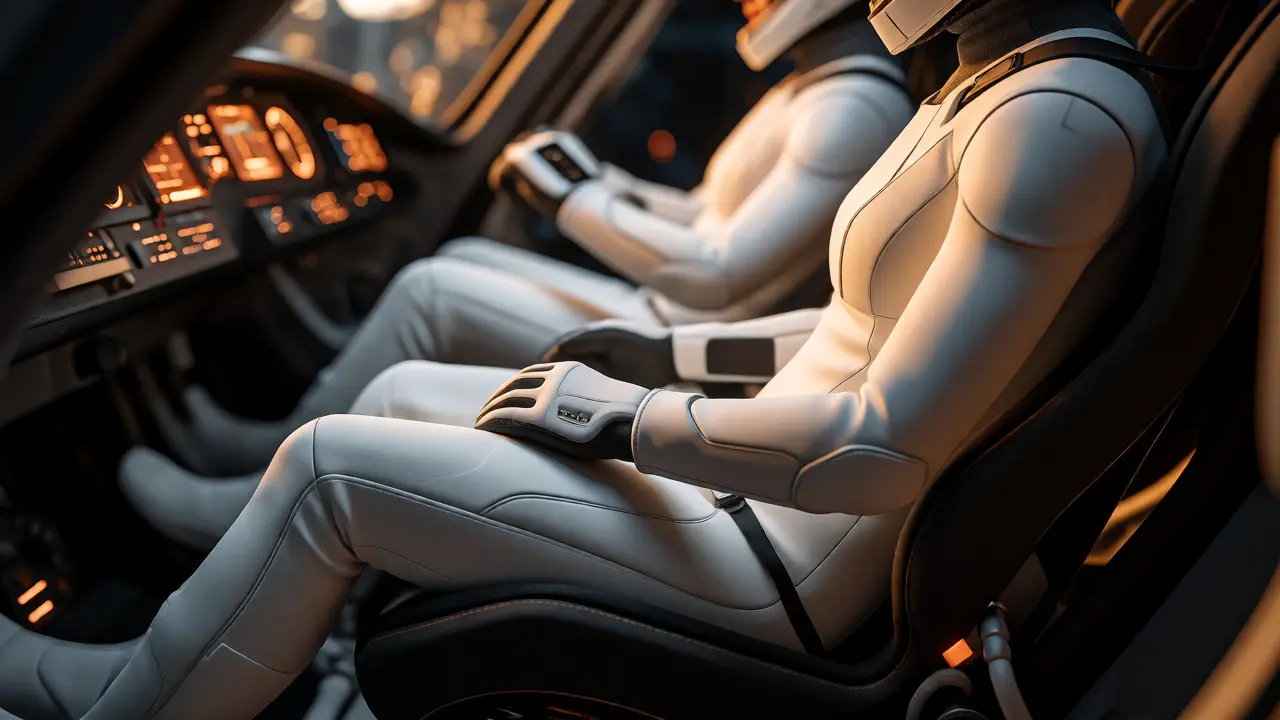
Imagine you are strapped into a seat, engines roaring, preparing for launch. You’re wearing a sleek, form-fitting suit that looks more like high-end athletic gear than bulky armor. Now imagine stepping out of an airlock into the vacuum of space to fix a solar panel. The suit you wear there is a massive, white, multi-layered machine that weighs as much as a small car. Why the huge difference? It comes down to one critical question: Are you staying inside the ship, or are you going outside?
This is the core distinction between IVA suits (Intravehicular Activity) and EVA suits (Extravehicular Activity). While both protect astronauts from pressure loss, they solve completely different problems. An IVA suit is essentially a personal life-support backup for emergencies inside a spacecraft. An EVA suit is a self-contained spaceship that you wear on your body. Confusing them can be dangerous-literally. You cannot take an IVA suit for a spacewalk, and you wouldn’t want to wear an EVA suit for a two-hour launch because it would be exhausting and unnecessary.
The Core Purpose: Survival vs. Work
The biggest mistake people make is thinking these suits are just "thicker" versions of each other. They aren’t. Their design philosophies are opposites in many ways. An IVA suit is designed for passive survival during specific, short-duration phases of flight: launch, reentry, and docking. Its job is simple: keep you alive if the cabin suddenly loses pressure. It relies heavily on the spacecraft for oxygen, cooling, and power. If the ship’s systems fail, the suit has limited emergency reserves, but it’s not meant to keep you alive for hours on its own.
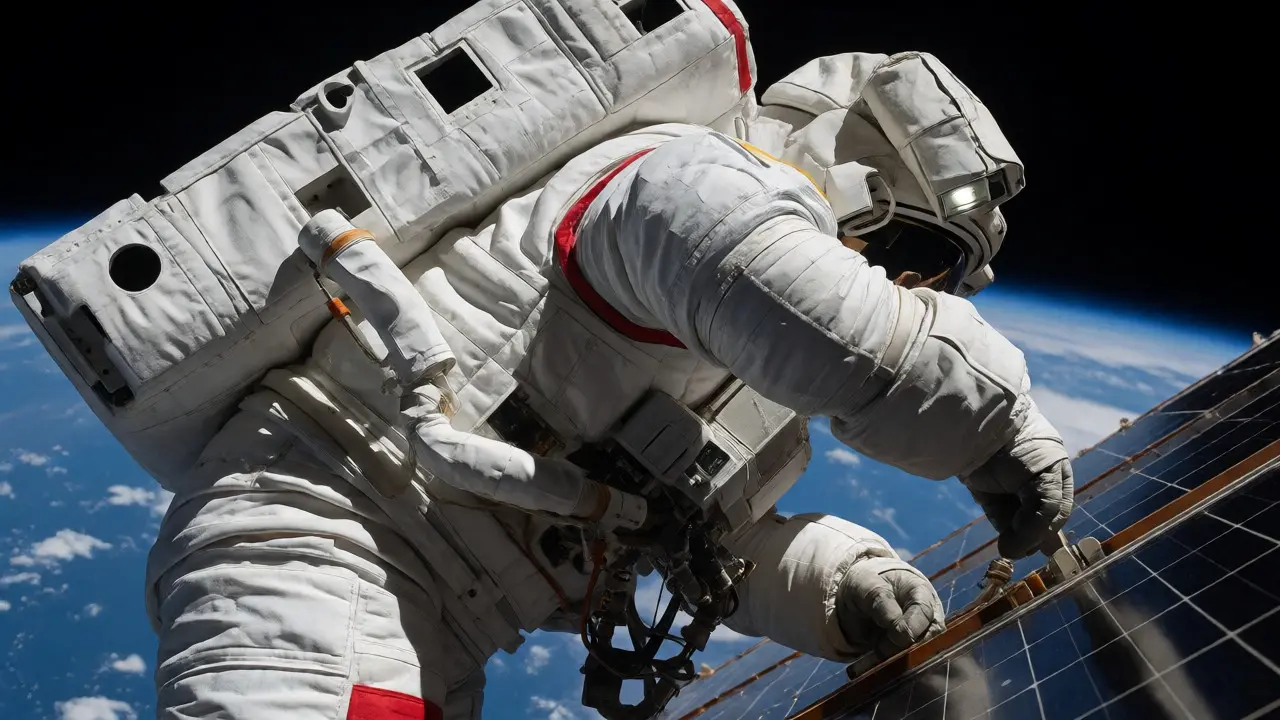
In contrast, an EVA suit is active workwear. When an astronaut steps outside, they leave behind the safety net of the spacecraft’s atmosphere. The suit must provide everything: breathable air, water, waste management, temperature control, and radiation shielding. NASA defines an EVA suit as a system that permits work outside a spacecraft in microgravity or partial gravity, supplying functions comparable to a small spacecraft. This means an EVA suit is a complex engineering marvel with 14 or more protective layers, whereas an IVA suit is often just a few layers of fabric and bladder.
Design Differences: Mobility and Protection
If you’ve ever tried to bend your arm while wearing a thick winter coat, you know how hard it is to move. Now imagine doing that while your suit is inflated like a balloon. This is the central challenge of spacesuit design: internal pressure resists movement. EVA suits operate at higher pressures to reduce the risk of decompression sickness and allow for longer missions without pre-breathing pure oxygen. For example, the Russian Orlan suit operates at about 5.8 psi, while the US EMU runs at roughly 4.3 psi. To counteract the stiffness caused by this pressure, EVA suits use articulated joints, bearings, and convoluted fabrics. They are built for dexterity, allowing astronauts to grip tools, turn bolts, and manipulate cables.
IVA suits, however, prioritize comfort while seated. Since astronauts spend most of their time strapped into a couch during launch and entry, mobility isn’t the primary concern. These suits are lighter, less bulky, and easier to put on quickly. They don’t need the heavy thermal micrometeoroid protection layers because they stay inside the hull, which shields them from extreme temperatures and debris. A modern example is SpaceX’s Crew Dragon IVA suit, which features touchscreen-compatible gloves so astronauts can interact with displays while seated. It connects to the seat via a single umbilical, relying on the capsule for main life support.
| Feature | IVA Suit (Intravehicular) | EVA Suit (Extravehicular) |
|---|---|---|
| Primary Environment | Inside spacecraft (cabin) | Outside spacecraft (vacuum) |
| Life Support Source | Spacecraft + Emergency Backup | Portable Life Support System (PLSS) |
| Typical Duration | Hours (Launch/Entry) | Up to 8+ Hours (Work Shift) |
| Weight | Lightweight (~10-20 kg) | Heavy (~55-145 kg equipped) |
| Mobility Focus | Seated comfort, minimal movement | Full range of motion, tool usage |
| Protection Layers | Minimal (Pressure retention) | Extensive (Thermal, Micrometeoroid, UV) |
Why You Can’t Swap Them
You might wonder, "If I have an EVA suit, why not wear it for launch?" Technically, you could, but it would be inefficient and uncomfortable. EVA suits are incredibly hot and stiff. Wearing one for six hours in a cramped capsule would drain the astronaut’s energy before the mission even starts. Furthermore, EVA suits require significant maintenance and sizing adjustments. They are not designed for rapid donning in an abort scenario where every second counts.
Conversely, trying to go outside in an IVA suit is a fatal error. Most IVA suits lack a Portable Life Support System (PLSS). Without the backpack unit found on EVA suits, an astronaut in an IVA suit would run out of oxygen within minutes, overheat rapidly due to lack of active cooling, and suffer severe injury from micrometeoroids or extreme temperature swings. The gloves on an IVA suit are also too thin to protect against the sharp edges of space hardware or the abrasive lunar dust.
Historical Evolution and Hybrids
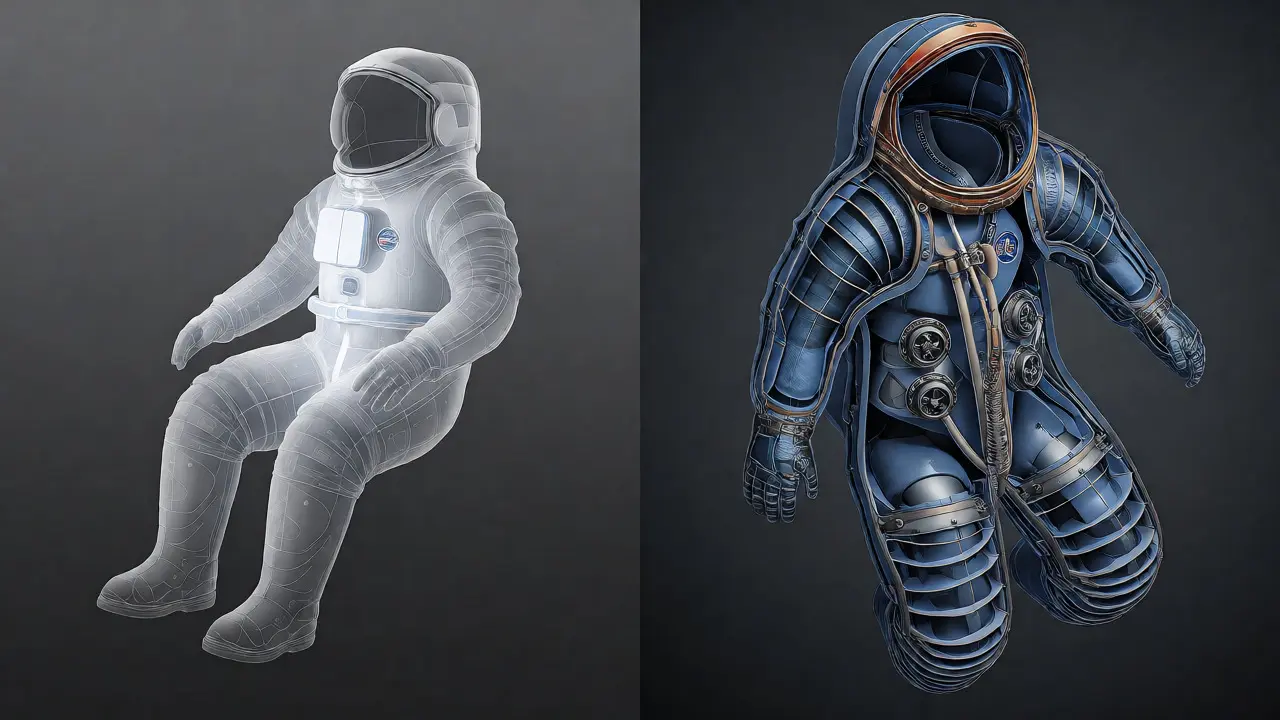
The line between IVA and EVA hasn’t always been so clear. In the early days of spaceflight, such as the Gemini program, astronauts used modified Navy pressure suits for both inside and outside activities. These were tethered to the spacecraft, meaning they didn’t need full autonomy. The Apollo program changed the game by creating the first true hybrid family. The Apollo A7L suit was designed to handle launch, entry, and lunar surface EVAs. It featured improved joint mobility for walking on the Moon and a robust PLSS backpack. Today, we see a return to specialization but with advanced materials. NASA’s current ISS EMU (Extravehicular Mobility Unit) is a mature orbital EVA design that has served since the 1980s. However, new developments are blurring the lines again. SpaceX recently announced an EVA suit derived from their IVA architecture. By adding flexible materials, novel joints, and a heads-up display, they are attempting to create a suit that can transition from launch comfort to spacewalk capability. This represents the next frontier: versatile suits that reduce the logistical burden of carrying separate inventory for every mission phase.
Future Outlook: Artemis and Commercial Space
As we look toward the Artemis moon missions and future Mars expeditions, the demand for better EVA suits is skyrocketing. The upcoming AxEMU suit, developed by Axiom Space for NASA, aims to improve upon the old EMU design. It focuses on increased flexibility for kneeling, bending, and geological sampling-tasks that were difficult in previous generations. The goal is to accommodate 90% of the human population, ensuring inclusivity for all astronauts.
Meanwhile, commercial providers like Boeing and SpaceX continue to refine IVA suits for crew transport. Boeing claims their Starliner ascent suit is 20% lighter than predecessors, focusing on ergonomic comfort for long-duration flights to the International Space Station. The trend is clear: IVA suits are becoming more integrated with vehicle interfaces, while EVA suits are evolving into highly specialized robotic assistants that extend human capability in hostile environments.
Can an astronaut wear an EVA suit during launch?
Technically yes, but it is impractical. EVA suits are heavy, hot, and restrict movement significantly. They are designed for working outside, not sitting in a seat for hours. Using an EVA suit for launch would cause unnecessary fatigue and requires complex logistics for donning and doffing compared to a streamlined IVA suit.
What happens if an IVA suit is used for a spacewalk?
It would likely result in death or serious injury. IVA suits generally lack the independent life support (oxygen supply, CO2 removal, cooling) needed for extended exposure to vacuum. They also lack the thermal insulation and micrometeoroid protection layers required to survive outside the spacecraft's hull.
How long can an astronaut stay in an EVA suit?
Modern EVA suits like the NASA EMU are designed for up to 8 hours of continuous operation. This includes primary life support and a backup reserve. The duration is limited by consumables such as oxygen, water for cooling, and battery power, as well as the physical endurance of the astronaut.
Why are EVA suits so expensive?
EVA suits are essentially wearable spacecraft. They contain complex electronics, fluid circulation systems, multiple layers of specialized materials (like Kevlar and GORE-TEX), and precision-engineered joints. Each suit is custom-fitted and rigorously tested, making them bespoke flight hardware rather than mass-produced consumer goods.
Do IVA suits have helmets?
Yes, but they are typically simpler than EVA helmets. IVA helmets are often attached to the suit or the seat and may not offer the same level of visibility or integration with external lighting and cameras. Some modern IVA designs, like SpaceX’s, feature fixed helmets with visors optimized for looking at instrument panels rather than the void of space.