
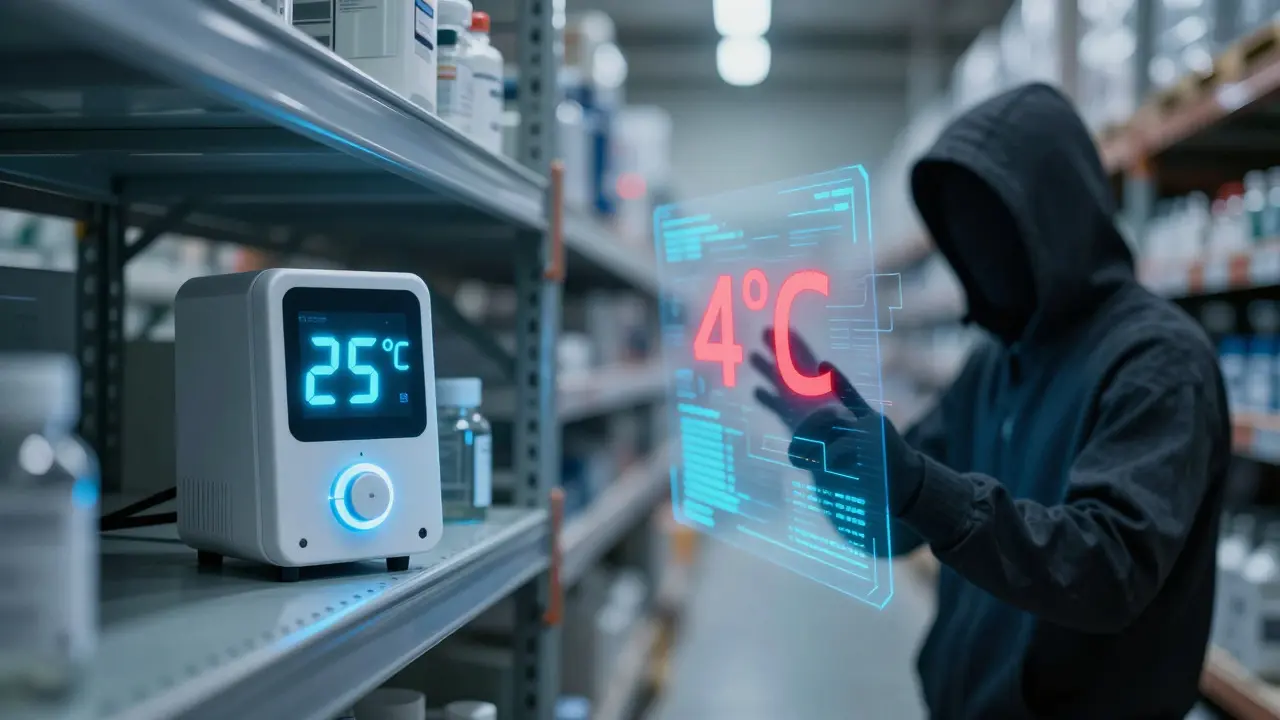
Imagine a temperature sensor in a pharmaceutical warehouse sending a reading of 25°C. A few seconds later, a hacker alters that number to 4°C on the central server to hide a spoilage event. In traditional systems, this fraud can go undetected for months. But what if every sensor reading was instantly locked into a tamper-proof digital ledger? That is the promise of IoT and Blockchain Integration, an architectural approach that uses distributed ledgers to guarantee the immutability and provenance of data generated by connected devices.
This isn't just theoretical hype. As we move through 2026, industries from healthcare to manufacturing are adopting hybrid models where Internet of Things (IoT) devices stream data directly onto blockchains. The goal is simple but powerful: ensure that once a machine records a fact, no one-not even the system administrator-can change it without leaving a trace.
The Core Problem: Why IoT Needs Blockchain
The Internet of Things has exploded. We have billions of sensors tracking everything from factory machinery to patient vitals. However, these devices face two major vulnerabilities: single points of failure and data manipulation.
In a centralized cloud setup, all data flows to one server. If that server is hacked or corrupted, your entire dataset is compromised. Worse, because IoT devices are often low-power and resource-constrained, they lack the processing power to encrypt and verify data securely before transmission. This creates a gap between the physical world (the sensor) and the digital record (the database).
Blockchain technology solves this by replacing the central server with a decentralized network. When an IoT device sends data, it is grouped into a "block" and cryptographically linked to the previous block. To alter one piece of data, a hacker would need to rewrite the entire chain across thousands of computers simultaneously-a feat that is computationally impossible for most attackers.
How the Architecture Works: The Hybrid Model
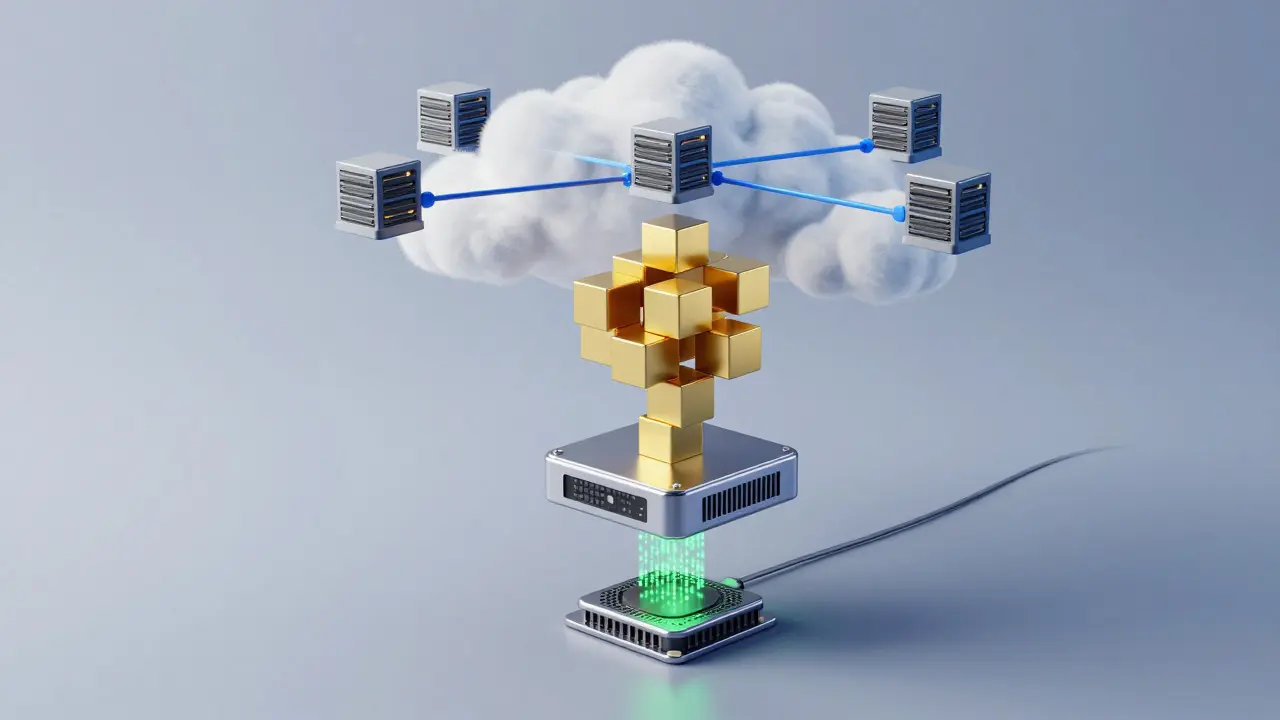
You might wonder how a tiny, battery-powered sensor can interact with a complex blockchain network. The answer lies in the Hybrid Edge-Blockchain Architecture. Directly connecting every IoT device to a public blockchain is inefficient and expensive due to high transaction fees and bandwidth requirements.
Instead, modern deployments use a three-layer structure:
- Physical Layer (Devices): Sensors, RFID tags, and actuators collect raw data. These devices are lightweight and focus solely on sensing.
- Edge Layer (Gateways): Data flows to local edge nodes or fog computing units. These gateways aggregate data, perform initial validation, and sign transactions using cryptographic keys. They act as the bridge, reducing the load on the blockchain.
- Blockchain Layer (Ledger): Validated data batches are written to the distributed ledger. Smart contracts automatically execute based on predefined rules, such as triggering an alert if a temperature threshold is breached.
This model ensures that only critical, verified data hits the blockchain, keeping costs down while maintaining integrity.
Real-World Use Cases for Data Integrity
The true value of this integration becomes clear when you look at specific industry applications. Here is how different sectors are leveraging immutable data logs.
Supply Chain Traceability
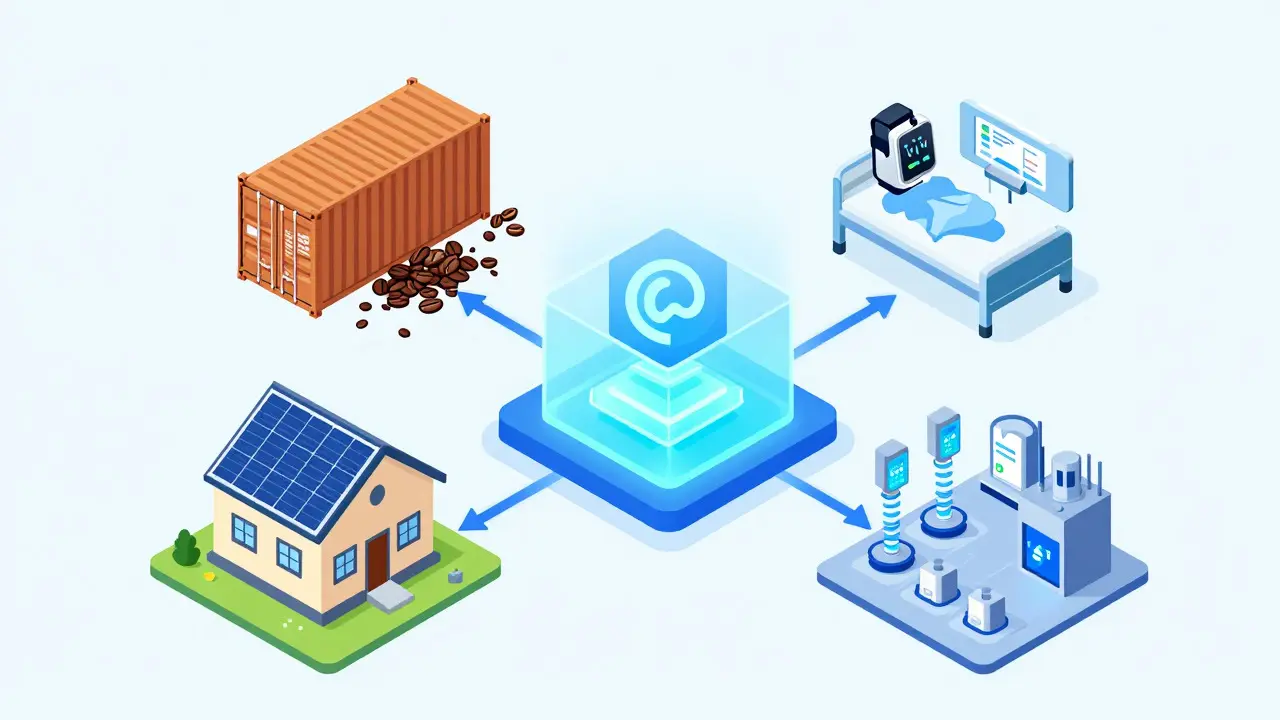
In global logistics, trust is fragile. A retailer needs to know that the organic coffee beans arrived fresh and weren't swapped with cheaper alternatives. By attaching IoT sensors to shipping containers, companies can record location, humidity, and shock levels at every stop. Each update is hashed onto the blockchain. If a discrepancy arises, the immutable audit trail reveals exactly where and when the condition changed, assigning liability instantly.
Healthcare Monitoring
Patient data is sensitive and legally protected. Wearable medical devices stream heart rate and glucose levels to hospital servers. With blockchain integration, these readings become tamper-evident. Doctors can trust that the historical data used for diagnosis hasn't been altered by software errors or malicious actors. Additionally, smart contracts can manage patient consent, ensuring that only authorized providers access specific records.
Smart Grids and Energy Management
As renewable energy sources like solar panels become more common, the grid becomes decentralized. Smart meters generate massive amounts of usage data. Blockchain ensures that energy consumption and production records are accurate, enabling peer-to-peer energy trading. Homeowners can sell excess solar power to neighbors, with the transaction automatically recorded and settled via cryptocurrency or tokenized credits, eliminating billing disputes.
Industrial Manufacturing
Factories rely on predictive maintenance. Sensors monitor vibration and heat in heavy machinery. If a bearing starts to fail, the sensor logs the anomaly. On a blockchain, this log cannot be deleted by a manager trying to avoid downtime reports. This transparency forces better maintenance practices and provides insurers with reliable risk assessment data.
Market Reality: Growth and Discrepancies
The financial outlook for IoT and blockchain integration is promising, though analysts disagree on the exact scale. Market research from 2025 shows a wide range of estimates, reflecting the difficulty in defining the market's boundaries.
| Research Firm | 2025 Estimate | Future Projection | CAGR (Growth Rate) |
|---|---|---|---|
| All Market Analysis | $2.15 Billion | $8.45 Billion by 2032 | 13.5% |
| Straits Research | $390 Million | $392 Million by 2034 | 5.3% |
| Mordor Intelligence | $4.90 Billion | $13.66 Billion by 2031 | 18.62% |
| Precedence Research | $1.20 Billion | $95.5 Billion by 2035 | 54.86% |
Why the difference? Some firms count only direct hardware sales, while others include consulting services, software platforms, and adjacent security tools. Despite the variance, the consensus is clear: the market is growing. The demand for verifiable data in regulated industries drives adoption, even if the numbers fluctuate.
Challenges and Limitations
It’s not all smooth sailing. Integrating IoT with blockchain introduces significant technical hurdles.
- Scalability: Public blockchains like Ethereum can handle limited transactions per second (TPS). Millions of IoT devices generating constant data can clog the network, leading to high latency and fees. This is why private or consortium blockchains (like Hyperledger Fabric) are often preferred for enterprise use.
- Data Quality vs. Integrity: Blockchain guarantees that data hasn’t been changed *after* it was recorded. It does not guarantee the data was correct *when* it was recorded. If a sensor is miscalibrated or physically tampered with, the blockchain will immutably store the wrong information. This is known as the "garbage in, gospel out" problem.
- Privacy Concerns: Storing raw personal data on a public ledger violates regulations like GDPR. Solutions involve storing only hashes (digital fingerprints) on-chain and keeping the actual data off-chain in encrypted storage.
- Device Constraints: Many IoT devices run on batteries and have minimal memory. Running full blockchain nodes on them is impossible. Relying on edge gateways adds complexity and potential new attack vectors.
Implementation Checklist for Businesses
If you are considering integrating blockchain into your IoT strategy, start with these steps:
- Define the Trust Boundary: Identify which data points absolutely require immutability. Not every sensor reading needs to go on-chain. Focus on compliance-critical or high-value transactions.
- Choose the Right Ledger: For internal operations, a private blockchain offers speed and privacy. For supply chains involving multiple competitors, a permissioned consortium blockchain builds shared trust.
- Secure Device Identity: Implement strong authentication mechanisms. Each device must have a unique cryptographic key stored in a secure element to prevent spoofing.
- Leverage Edge Computing: Deploy robust gateways that can batch data and pre-process alerts before writing to the ledger. This reduces costs and improves performance.
- Design Smart Contracts Carefully: Code your business logic clearly. Test for edge cases. Once deployed, smart contracts are hard to change, so accuracy is paramount.
Is blockchain necessary for all IoT projects?
No. If your data is internal, non-critical, and managed by a trusted single entity, a standard database is cheaper and faster. Blockchain is best suited for multi-party environments where trust is low, or where regulatory compliance requires an unchangeable audit trail.
How does blockchain protect against sensor tampering?
Blockchain itself doesn't prevent physical tampering. However, it makes tampering detectable. If a sensor is manipulated, the sudden deviation in data patterns can trigger smart contract alerts. Furthermore, cryptographic signatures ensure that the data came from a specific, authenticated device, preventing spoofing attacks.
What is the role of smart contracts in IoT?
Smart contracts are self-executing codes on the blockchain. In IoT, they automate responses to sensor data. For example, if a cold chain sensor detects temperatures above 4°C, a smart contract can automatically notify the supplier, freeze payment, or order a replacement shipment without human intervention.
Can blockchain handle the volume of IoT data?
Directly, public blockchains struggle with high-volume IoT streams. Most successful implementations use a hybrid approach: raw data is stored in scalable off-chain databases, while only the cryptographic hashes and critical metadata are written to the blockchain for verification purposes.
Which blockchain platforms are best for IoT?
Enterprise solutions often prefer Hyperledger Fabric or Corda for their privacy and permissioned nature. For public-facing applications, Ethereum (with Layer 2 scaling solutions) or specialized IoT-focused chains like IOTA or VeChain are popular choices due to their low transaction fees and scalability features.