
Remember the last time you spent twenty minutes trying to move money from one crypto wallet to another? You switched networks, paid gas fees on three different chains, and prayed the bridge didn't fail. Now imagine telling an app, “Send this value there,” and having it just work. That is not a distant dream. It is happening right now.
We are witnessing a massive shift in how humans interact with computers. For decades, we have been operators-clicking buttons, typing commands, and managing every tiny step of a process. But with the rise of generative AI and complex blockchain networks, that model is breaking. We are moving toward an era where we become supervisors. We state our goals, and intelligent systems figure out the steps to achieve them.
This shift is defined by two powerful concepts: Intent-Based UX and Chain Abstraction. Together, they represent the next major evolution in user interface design, bridging the gap between artificial intelligence and decentralized finance (DeFi).
The Third Paradigm: From Commands to Outcomes
To understand where we are going, we need to look at where we came from. Jakob Nielsen, co-founder of the Nielsen Norman Group, argues that we are entering the third major user interface paradigm in sixty years.
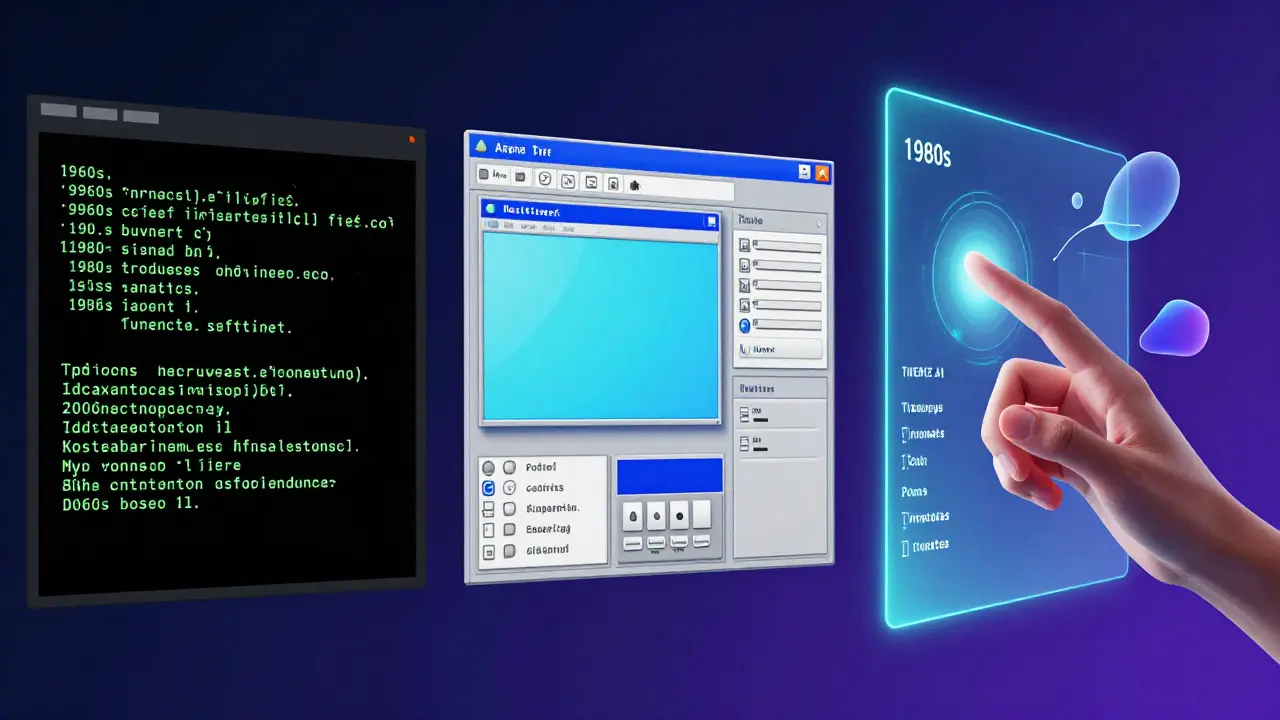
The first paradigm was the command line (1960s). You had to know the exact syntax to tell the computer what to do. The second was the Graphical User Interface or GUI (1980s). Windows, icons, and menus made computing accessible, but you still had to manually execute every action-copy, paste, save, format.
The third paradigm, emerging in 2023 with tools like ChatGPT, is intent-based. Instead of specifying procedures, users specify outcomes. You don’t tell the AI how to write code; you tell it what the code should do. This shifts the locus of control from the user’s micro-operations to the system’s planning capabilities.
In practical terms, this means fewer clicks and more thinking. A study by the Nielsen Norman Group suggests that for complex tasks, such as drafting reports or analyzing data, intent-based systems can reduce explicit user actions by over 80%. However, this power comes with a new challenge: trust. When the system does the heavy lifting, how do you know it did it correctly?
What Is Intent-Based UX?
Intent-Based UX is a design philosophy where the user defines the desired result, and the system determines the path to get there. It relies on three key components:
- Functional Intent: A clear definition of the goal, including constraints (e.g., “low risk”) and boundaries (e.g., “do not spend more than $100”).
- Permission Choreography: The system visualizes its plan before executing it. It shows you which tools it will use and asks for consent. This prevents irreversible mistakes.
- Epistemic UI: Interfaces that show uncertainty. If the AI is guessing, it tells you. It provides confidence scores and alternative hypotheses so you can calibrate your trust.
For example, instead of manually selecting a font, size, and layout for a presentation, you might say, “Create a professional pitch deck for a fintech startup.” The AI generates options, and you refine them. You are no longer an operator; you are a supervisor.
Chain Abstraction: Hiding the Blockchain Complexity
In the world of Web3 and cryptocurrency, the problem is even more acute. Today, using DeFi often feels like engineering. You must manage multiple wallets, switch between Ethereum, Solana, or Polygon, pay gas fees in native tokens, and hope the bridge doesn’t hack your funds.
Chain Abstraction aims to solve this by hiding the complexity of multi-chain infrastructure. According to LI.FI, a leading interoperability provider, chain abstraction is not a product but a vision. It seeks to make dozens of blockchains appear as one unified system to the user.
Under this model, you never see “bridges” or “gas tokens.” You simply want to swap Token A for Token B. The system handles the routing across chains, aggregating liquidity from various decentralized exchanges (DEXs) to get you the best price. The user sees only the final outcome and a single fee.
This is crucial for mainstream adoption. Most people do not care about which blockchain their assets sit on. They care about usability, security, and speed. Chain abstraction removes the cognitive load of understanding technical details, allowing non-experts to participate in the digital economy.

How Intents Work in Practice
Let’s look at how these concepts merge in real-world applications. In both AI and Web3, the workflow follows a similar pattern:
- Input: The user expresses a high-level goal. “Earn yield on my stablecoins with low risk” or “Generate a landing page for my bakery.”
- Processing: An off-chain agent or solver analyzes the request. In AI, this might be a large language model (LLM) planning steps. In Web3, solvers compete to find the most efficient route across blockchains.
- Visualization: The system presents a plan. It might show the expected return on investment, the estimated time, or the draft design.
- Approval: The user reviews the plan and approves it. This step is critical for safety.
- Execution: The system executes the plan autonomously.
Research from the arXiv preprint "Frontend Diffusion" demonstrates this in software development. Users can sketch a rough layout on a canvas, and an LLM-powered tool converts it into production-ready HTML/CSS/JS code. This abstract-to-detailed pipeline allows designers to focus on intent rather than syntax.
Risks and Challenges
Despite the benefits, this shift is not without risks. Moving control from the user to the system introduces new failure modes.
Hallucinations and Errors: In AI, if the intent is vague, the system might produce incorrect or harmful results. Nielsen warns that hidden failures are a major concern. Users need easy ways to correct mistakes and undo actions.
Principal-Agent Problems: In Web3, when solvers handle your transactions, they have discretion over which protocols to use. A malicious or poorly configured solver could optimize for their own profit rather than your best interest. This creates a trust deficit. Users may lose visibility into counterparty risks and MEV (Maximal Extractable Value) exposure.
Security Risks: Chain abstraction relies on bridges and cross-chain messaging. These layers have historically been vulnerable to hacks. Even if the UI hides the complexity, the underlying infrastructure must be secure. As LI.FI notes, chain abstraction is an end-goal vision, and current solutions still depend on imperfect technology.
To mitigate these risks, experts recommend designing interfaces that reintroduce friction where necessary. Permission choreography ensures users understand what they are approving. Epistemic UIs help users assess the reliability of the system’s suggestions.

Best Practices for Designers
If you are building products in this new landscape, here are some key principles to follow:
- Divergent Routing: Don’t just give one answer. Present a range of options based on different dimensions like speed, cost, or style. Let users navigate this space to refine their intent.
- Clear Boundaries: Explicitly state what the system can and cannot do. Avoid black-box interactions.
- Transparency: Show the reasoning behind decisions. If an AI recommends a specific investment, explain why.
- Control Levers: Allow advanced users to tweak parameters. Even in an abstracted system, power users need access to settings like slippage tolerance or lock-up periods.
UX Tigers emphasizes that teams must design not just screens, but the entire agent choreography. This requires collaboration between UX designers, AI engineers, and security experts.
The Future Landscape
Where is this heading? Experts predict that intent-based UX will become embedded in traditional GUIs. We won’t abandon clicking entirely, but we will mix direct manipulation with goal-level commands. For instance, you might drag and drop elements while using natural language to set properties.
In Web3, chain abstraction is essential for the next growth phase of DeFi. As regulatory clarity improves and infrastructure matures, platforms that offer seamless, intent-driven experiences will attract institutional capital and mainstream users. TDeFi argues that this shift will lower barriers to entry, making DeFi accessible to retail investors who previously found it too complex.
Ultimately, intent-based UX and chain abstraction represent a broader trend toward human-centric technology. By focusing on outcomes rather than processes, we empower users to achieve more with less effort. The challenge lies in balancing simplicity with transparency, ensuring that as systems become smarter, they remain trustworthy.
What is the difference between intent-based UX and traditional UI?
Traditional UI requires users to perform step-by-step actions (commands) to achieve a result. Intent-based UX allows users to state the desired outcome, and the system automatically determines and executes the necessary steps.
How does chain abstraction simplify Web3?
Chain abstraction hides the complexity of multiple blockchains, bridges, and gas fees. It presents all chains as a single unified system, allowing users to interact with crypto apps without managing technical details like network switching.
Are there security risks with intent-based systems?
Yes. Risks include AI hallucinations, misaligned outcomes due to vague intents, and in Web3, potential exploits by malicious solvers or insecure bridges. Transparency and permission controls are essential to mitigate these risks.
Who coined the term 'third user interface paradigm'?
Jakob Nielsen, co-founder of the Nielsen Norman Group, identified generative AI as the catalyst for the third UI paradigm, following command-line and graphical user interfaces.
What is permission choreography?
Permission choreography is a design pattern where the system visualizes its planned actions, exposes data sources, and pauses to negotiate user consent before execution. This ensures users retain control over autonomous agents.