
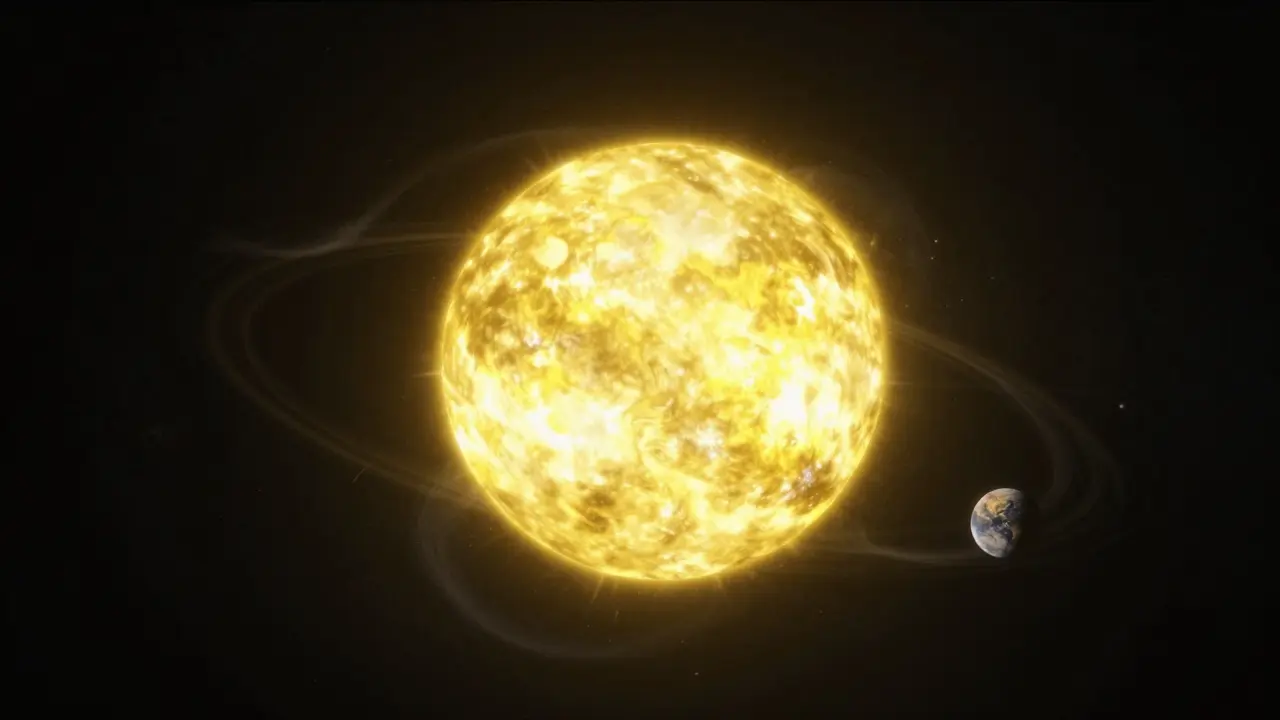
Imagine trying to detect a tiny pebble orbiting a massive bonfire from miles away. You can't see the pebble, and the fire is blinding. But if that pebble is heavy enough, it will tug on the bonfire, making the whole flame dance in a tiny, rhythmic circle. In astronomy, this is exactly how we find worlds beyond our own. By tracking the radial velocity spectrographs that measure this "stellar wobble," scientists are finally closing the gap between finding giant gas balls and finding a true twin of Earth.
| Instrument | Precision (m/s) | Key Milestone | Detection Capability |
|---|---|---|---|
| HARPS | 0.97 m/s | Found 130+ planets | Habitable super-Earths (low-mass stars) |
| HARPS-N | 0.40 m/s | 5x better than HARPS | Small rocky planets / mini-Neptunes |
| EPRV / HARPS3 | < 0.1 m/s | Next-Gen Frontier | True Earth-mass analogs |
The Art of the Stellar Wobble
To understand how this works, we have to look at gravity. A planet doesn't just orbit a star; they actually orbit a common center of mass. Because the star is so much heavier, it barely moves, but it does shift. This movement creates a Doppler shift in the light the star emits. Think of it like a siren passing you on the street: the sound gets higher as it approaches and lower as it moves away. Light does the same thing. As a star moves toward us, its light shifts toward the blue end of the spectrum; as it moves away, it shifts red.
This is where Radial Velocity is a method of detecting exoplanets by measuring the change in the velocity of a star along the line of sight to the observer . Unlike the transit method used by telescopes like TESS, which only tells us how big a planet is based on how much light it blocks, radial velocity tells us the planet's mass. When we have both the size (from a transit) and the mass (from the wobble), we can calculate the density. That's how we know if a world is a fluffy gas giant or a hard, rocky place where you could actually stand.
The Heavy Hitters: HARPS and HARPS-N
For years, the gold standard has been HARPS (High Accuracy Radial velocity Planet Searcher). Launched in 2003 at the La Silla Observatory in Chile, it changed the game by hitting a precision of 0.97 meters per second. To put that in perspective, that's like detecting a change in speed of about 3.5 kilometers per hour. It opened the door to finding "super-Earths"-planets slightly larger than ours-but mostly around small, cool stars where the gravitational tug is stronger.
Then came HARPS-N, the Northern hemisphere sibling installed on La Palma. This machine pushed the limit even further, reaching 40 centimeters per second. That is literally slower than a casual human walking speed. Because it's so sensitive, it spent years classifying mini-Neptunes and small rocky worlds, proving that the galaxy is teeming with small planets, not just Jovian giants.
Breaking the Noise Barrier with AI
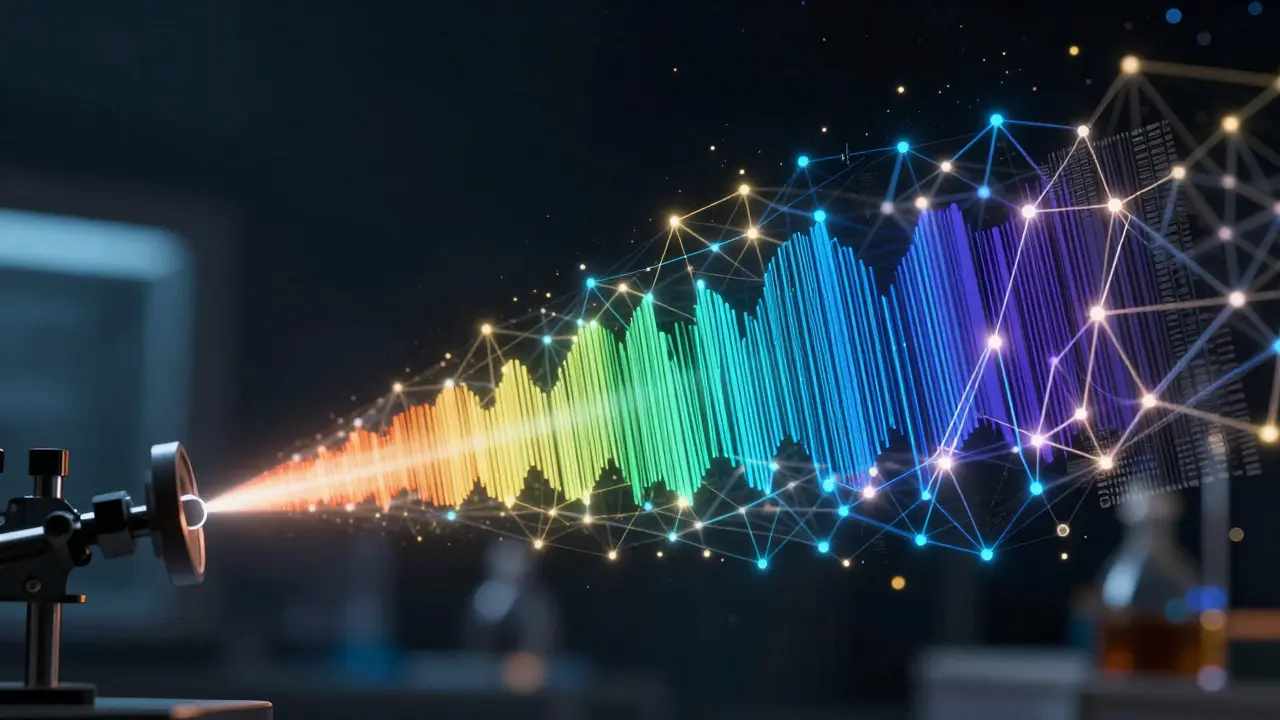
There is a huge problem with this method: stars are "noisy." They have spots, flares, and boiling surfaces that can mimic the signal of a planet. For a long time, this stellar activity acted like static on a radio, drowning out the tiny signal of an Earth-sized planet. Now, we're using machine learning to clean up the act.
Recent research from 2024 has introduced convolutional neural networks that can model stellar activity at the spectral level. On stars like HD128621, these algorithms can now hit a detection threshold of 0.5 meters per second. Even more impressive, when applied to solar datasets via HARPS-N, AI has reached thresholds of 0.2 meters per second. This means we can now theoretically spot a planet with only 2.2 times the mass of Earth in an orbit exactly like ours around a Sun-like star. We aren't just guessing anymore; we're filtering the noise to find the signal.
The Frontier: EPRV and the Quest for Terra
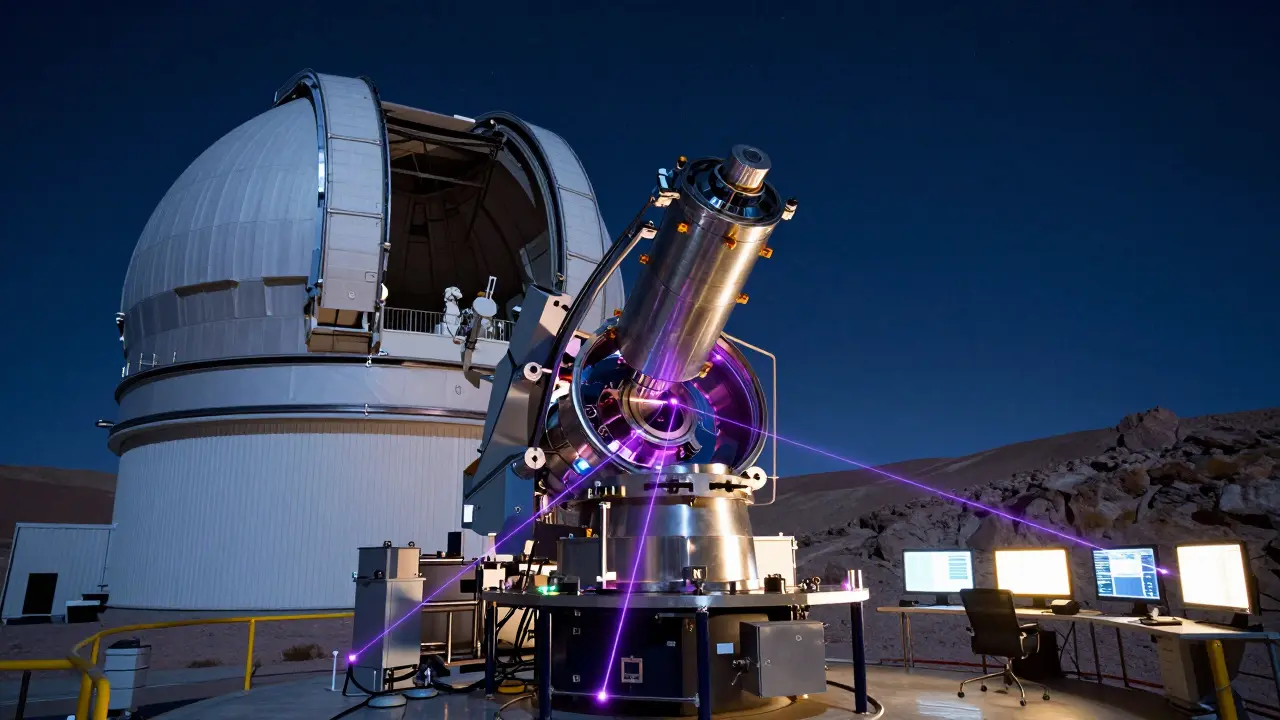
We are currently entering the era of Extreme Precision Radial Velocity, or EPRV, which is the bleeding edge of the field. The goal here is to detect non-transiting Earth analogs-planets that don't pass in front of their star but are still there, tugging away.
However, EPRV isn't a magic bullet. It works best on GKM-type stars, which are G, K, and M dwarfs. These stars are ideal because they have plenty of sharp spectral lines. If a star rotates too fast or is too hot, those lines blur together, and the precision vanishes. But for the nearby stars within 20 parsecs of Earth, EPRV is our best bet for finding a world that looks and feels like home.
Looking ahead, the HARPS3 instrument is being developed as part of the Terra Hunting experiment. This isn't just a new tool; it's a decade-long commitment to specifically hunt for Earth-like exoplanets. By combining mechanical stability, laser-frequency combs for calibration, and the AI tools mentioned earlier, the Terra Hunting program aims to finally confirm if we are alone in our local stellar neighborhood.
Why This Matters for the Search for Life
Why go through all this trouble to measure a few centimeters per second? Because mass is the key to habitability. A planet that is too light might be a gas dwarf with no solid surface. A planet that is too heavy might have a crushing atmosphere. By refining the radial velocity method, we move from simply "finding planets" to "characterizing worlds." When we find a rocky planet in the habitable zone of a G-type star, we have a prime candidate for atmospheric study with the next generation of telescopes.
What is the difference between the transit method and radial velocity?
The transit method detects a planet when it passes in front of its star, blocking a bit of light; this tells us the planet's diameter. Radial velocity measures the gravitational "wobble" of the star, which tells us the planet's mass. Using both allows scientists to calculate the planet's density to see if it's rocky or gaseous.
Why are M-dwarf stars easier to study with this method?
M-dwarfs are smaller and less massive than the Sun. Because the star is lighter, a planet of a given mass exerts a stronger gravitational pull on it, creating a larger, easier-to-detect wobble. Additionally, their habitable zones are closer to the star, meaning planets orbit faster and create more frequent signals.
Can we detect a true Earth twin around a Sun-like star yet?
We are incredibly close. While HARPS and HARPS-N focused on super-Earths, the combination of EPRV technology and AI-driven noise reduction is pushing thresholds down to 0.2 m/s. This is the level of precision needed to see an Earth-mass planet in a one-year orbit around a G-type star.
What is the "stellar noise" problem?
Stars aren't static light bulbs; they have sunspots, granulation, and magnetic cycles. These surface activities can shift the spectral lines in a way that looks exactly like a planet's gravitational pull. Machine learning is now being used to distinguish these stellar "glitches" from actual planetary signals.
What is the Terra Hunting experiment?
Terra Hunting is a planned 10-year program centered around the development of the HARPS3 spectrograph. Its primary objective is to move beyond the discovery of "super-Earths" and specifically identify Earth-like planets orbiting stars in our nearby cosmic neighborhood.
9 Responses
it's just wild to think about how far we've come with this tech
convenient how they only show us the data they want us to see...’stellar noise’ is just a great cover for the signals they're actually hiding from the public
The phrasing in that last section is borderline sloppy, but the real issue is that these agencies have been lying about "Earth 2.0" for decades to keep the funding flowing while they hide the real discoveries in underground bunkers.
USA should be leading this stuff!!! we probly already found ten earths but the goverment is keepin it secret to flex on other countrys later!!!!
The sheer existential dread of finding a twin Earth is almost too much to bear... we are but ghosts haunting a vast, cold vacuum, searching for a mirror of our own fragility in the darkness of an uncaring cosmos. To find another world is not a victory, but a reminder of the agonizing loneliness that defines the human condition across a billion light-years of silence!
It is truly a moral failure that we spend billions on "stellar wobbles" while people are suffering in the streets...!!! We seek a new home because we have utterly failed to protect the one we already have...!!! The vanity of the scientific community is just breathtaking...!!! Why look for a twin Earth when we are destroying the original...!!! It is an insult to the very concept of stewardship...!!! We are essentially shopping for a new house while the current one is on fire...!!! This obsession with the void is just a distraction from our own systemic decay...!!! We don't need more data on GKM-type stars, we need a shred of basic human empathy...!!! The hubris of thinking we deserve another planet is staggering...!!! I find it repulsive that this is celebrated as progress...!!! Progress should be measured by how we treat the least among us, not by how many centimeters per second a star moves...!!! It is a hollow victory...!!! A glittering, expensive, completely meaningless distraction...!!! We are chasing ghosts in the sky to avoid the monsters in our own mirror...!!!
The integration of AI to filter stellar noise is a necessary evolution because our biological perception is simply too limited for this scale. We have to accept that the universe doesn't speak our language and these tools are the only bridge we have to understand the architecture of existence.
Stop pretending this is about science when it's clearly about government waste! Spending money on a "Terra Hunting experiment" while our own borders are a disaster is an absolute disgrace!
Do you think the AI makes mistakes often?