
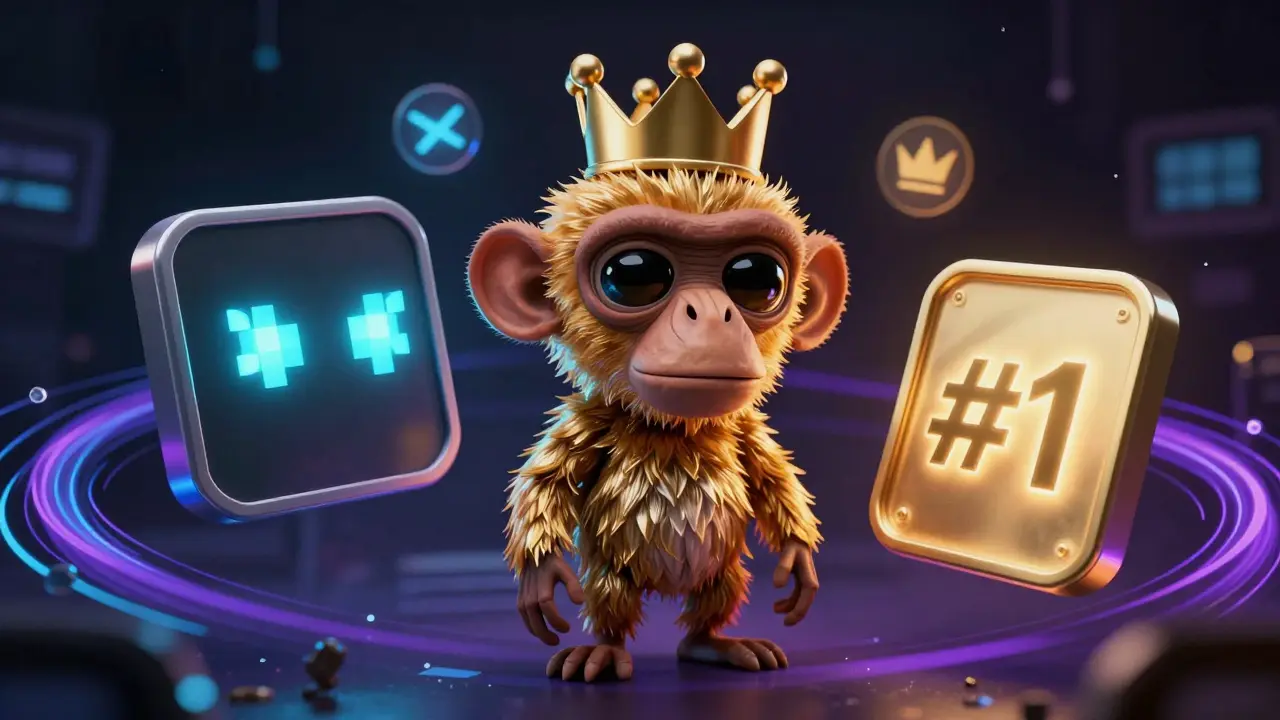
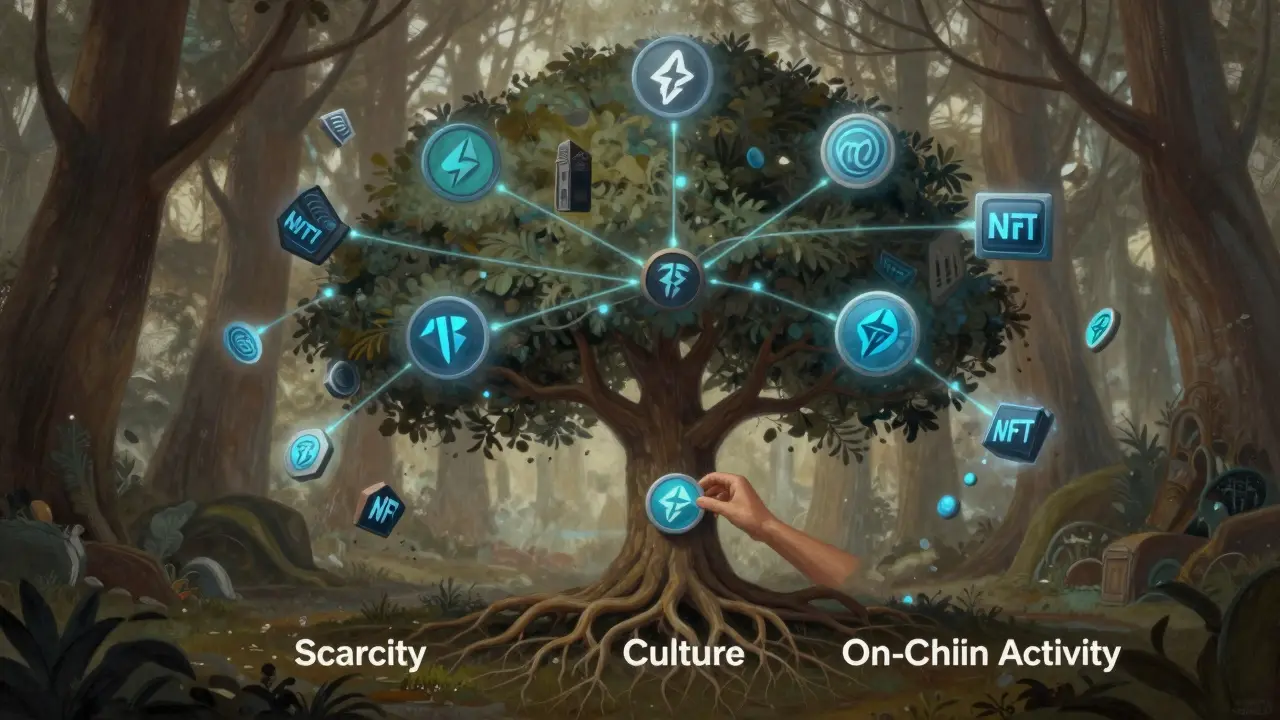
Not all NFTs are created equal. You might see one selling for $50 and another for $500,000 - and both are technically the same thing: a digital file with a blockchain certificate. So what’s really driving the price? It’s not just how cool the art looks. The real answer lies in three things: scarcity, cultural relevance, and on-chain activity metrics. These aren’t just buzzwords. They’re the measurable forces behind every NFT’s value.
Scarcity: Why One-of-One Matters More Than You Think
Scarcity is the bedrock of NFT value. Unlike a Spotify song or a JPEG you can copy-paste forever, NFTs are designed to be unique or limited. But not all limited editions are created equal. A one-of-one NFT - like CryptoPunk #7804 or Beeple’s Everyday: The First 5000 Days - commands a massive premium. Data from 2021 to 2023 shows these pieces sell for 300% to 500% more than limited runs of 10 to 100 copies. Why? Because there’s no chance of supply inflation. If you own #7804, no one else can. That’s pure digital ownership. But scarcity isn’t just about edition size. It’s also about traits. Take a Bored Ape: if it has a golden fur, laser eyes, and a crown, it’s rarer than one with a plain shirt and regular eyes. Tools like Rarity.Tools and Rarity Sniper analyze up to 20 traits per collection, assigning a rarity score based on how many others share those features. A single rare trait can push a price up by 50% or more. Even mint number matters. NFTs with #0 or #1 in the collection often sell for 18% to 22% more than later mints, according to a 2023 study of 10,000 transactions. It’s not magic - it’s psychology. The first one feels like the original, the pioneer. Collectors pay for that history.Cultural Relevance: When a Tweet Makes an NFT Worth Millions
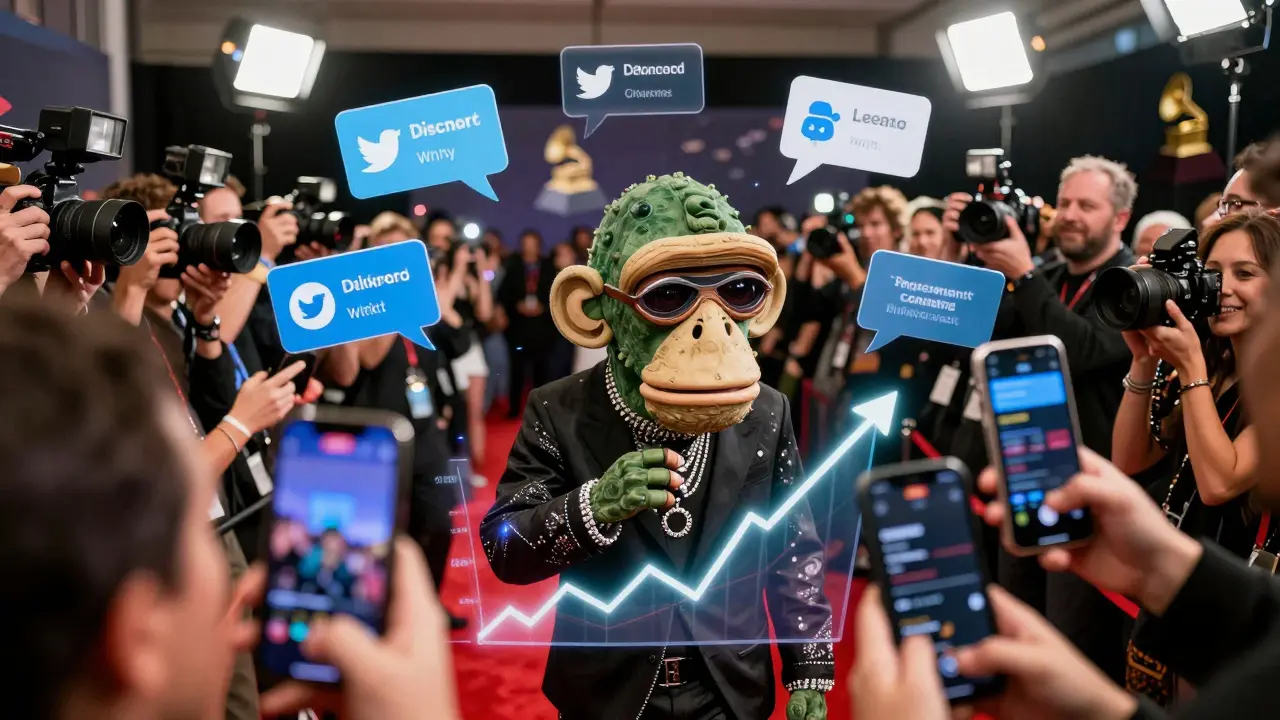
Scarcity tells you how rare something is. Cultural relevance tells you why people care. This is where NFTs break from traditional art. A painting’s value comes from its artist, provenance, and style. An NFT’s value often comes from who talked about it, where it went viral, and what it represents in online culture. In March 2024, Colormatics analyzed 500 NFT collections and found that every 1,000 Twitter mentions led to a 3.2% price bump within 72 hours. That’s not a coincidence - it’s a feedback loop. A tweet from a celebrity like Kanye West can generate $4.2 million in secondary sales in under two days. When a Bored Ape was worn by a pop star at the Grammys, its floor price jumped overnight. Historical moments matter too. Beeple’s $69 million sale at Christie’s in 2021 didn’t just make headlines - it rewrote the rules. Suddenly, digital art wasn’t just for crypto nerds. It was museum-worthy. That cultural shift lifted the entire market. But here’s the danger: cultural relevance is fleeting. A viral tweet can inflate a price 200% to 300% - then crash just as fast. The Bored Ape Yacht Club #3749 spiked after a viral post in April 2023, then lost half its value within a week. Culture moves fast. If you’re buying based on hype alone, you’re betting on a trend, not a value.On-Chain Activity: The Real Pulse of an NFT’s Health
If scarcity is the skeleton and culture is the skin, on-chain activity is the heartbeat. This isn’t about how many people own an NFT. It’s about what they do with it. Are they holding? Selling? Trading? Using it in games? These actions leave digital footprints on the blockchain - and they tell you whether an NFT is alive or dying. Nansen and other on-chain analytics tools track three key signals:- Holding duration: NFTs held longer than 90 days before resale sell for 27% more on average. People who hold are believers, not speculators.
- Transaction velocity: The sweet spot for resale is 14 to 21 days after purchase. Too soon? You’re a flipper. Too late? You’re stuck.
- Liquidity: Collections with over $1 million in daily trading volume keep their floor prices 18% higher during market downturns. High liquidity means buyers are always there.
Why Most NFTs Lose Value - And How to Avoid It
Here’s the hard truth: 89% of NFT collections launched in 2021 are trading below their mint price as of late 2023. Why? Because most projects focused on one thing - hype - and ignored the others. A lot of buyers fall into traps:- They buy based on rarity scores alone - but don’t check if the trait data is manipulated. A 2025 audit found 22% of collections had fake rarity distributions.
- They chase influencer endorsements - even when the NFT has zero on-chain activity. One Reddit user lost $15,000 on a World of Women NFT that dropped 89% in three months because no one was trading it.
- They ignore liquidity. A rare NFT with no buyers is just a digital postcard.
Tools You Need to Value NFTs Right
You don’t need to be a coder to value NFTs - but you do need the right tools.- Rarity.Tools - Free and transparent. Great for beginners. Scores traits across 15-20 categories.
- Rarity Sniper - More advanced. Uses AI to predict value based on rarity, sales history, and cultural signals. Its new ‘RarityGPT’ tool, launched in March 2025, cuts valuation errors by 28%.
- Nansen - Tracks whale wallets, liquidity, and holding patterns. Professional tier costs $999/month, but you can get basic data for free.
- Etherscan - The blockchain explorer. Use it to check transaction history, ownership changes, and contract activity.
11 Responses
Okay, but let’s be real-rarity scores are garbage. I’ve seen collections where the 'rarest' trait is shared by 12% of the collection, and the algorithm still calls it 'ultra-rare' like it’s a diamond. It’s all rigged. And don’t get me started on those 'RarityGPT' tools-they’re just fancy Excel sheets with a ChatGPT skin. You’re not analyzing value; you’re feeding a black box that’s trained on hype. Also-why is everyone ignoring that 22% of rarity data is fake? That’s not a bug. That’s a feature.
On-chain activity isn’t a metric-it’s a narrative. Liquidity? Holding duration? Please. You’re mistaking velocity for validity. A collection can have $50M in daily volume and still be a dead asset-think of the CryptoKitties implosion. Culture isn’t Twitter mentions-it’s institutional adoption. And until NFTs are in museums, not just wallets, you’re just decorating your crypto portfolio with JPEGs. The market’s still in its tantrum phase.
This is exactly the kind of breakdown the space needs. Too many people treat NFTs like lottery tickets. But if you look at the real signals-community, activity, utility-you start seeing the difference between noise and substance. Keep building with purpose. The long-term holders will thank you.
What if the value isn’t in the scarcity, the culture, or even the on-chain data-but in the collective belief that it matters? We assign meaning to pixels because we’re meaning-making creatures. The blockchain just gives us a ledger for our myths. So when you buy an NFT, are you buying art? Or are you buying a shared hallucination that’s somehow become real because enough people agreed to believe it?
Lol. You spent 2000 words to say 'buy the rare ones that people are talking about'. I could’ve just said that. And why are you recommending Nansen? That thing costs more than my rent. Just buy a Punk and chill.
There’s something beautiful about how this all mirrors human value systems. We’ve always priced things not by cost, but by story, by belonging, by who else believes in them. NFTs just made it visible. The real question isn’t how to value them-it’s why we still feel the need to. Maybe we’re not investing in art. Maybe we’re investing in connection. And that’s not a flaw. That’s the point.
I appreciate the depth here. A lot of people skip the on-chain stuff because it feels technical, but it’s the most honest signal. If no one’s trading it, it doesn’t matter how rare it is. I’ve used Etherscan to check a few NFTs before buying-just to see if the wallet history looks real. It’s not glamorous, but it’s saved me from a few disasters. Keep it simple. Track ownership. Watch volume. Watch time held. That’s your foundation.
While the framework presented is comprehensive it lacks consideration of regulatory implications and the potential for market manipulation through artificial scarcity metrics. The reliance on third party analytics platforms introduces systemic risk. Furthermore the psychological bias toward mint number one may reflect cultural heuristics rather than intrinsic value. Further study is warranted before institutional adoption can be recommended
In India, we don’t care about rarity. We care if it’s useful. If your NFT gives you access to a real concert ticket or a discount at a local café-that’s value. Not a golden ape.
Wow what a masterpiece of overanalysis. You wrote a novel about how to tell if a JPEG is worth more than another JPEG. Congrats. You turned a meme into a PhD thesis. Next you’ll write a 10,000 word essay on why my cat’s selfie is rare because it has one ear up
This is why America thinks it’s smarter than everyone else. You turn a simple concept into a Wall Street spreadsheet. In other countries, people just buy what they like. You don’t need 20 metrics to know if something’s cool. If it’s on a celebrity’s profile? Buy it. If it’s not? Move on. Stop overthinking. Just collect.