
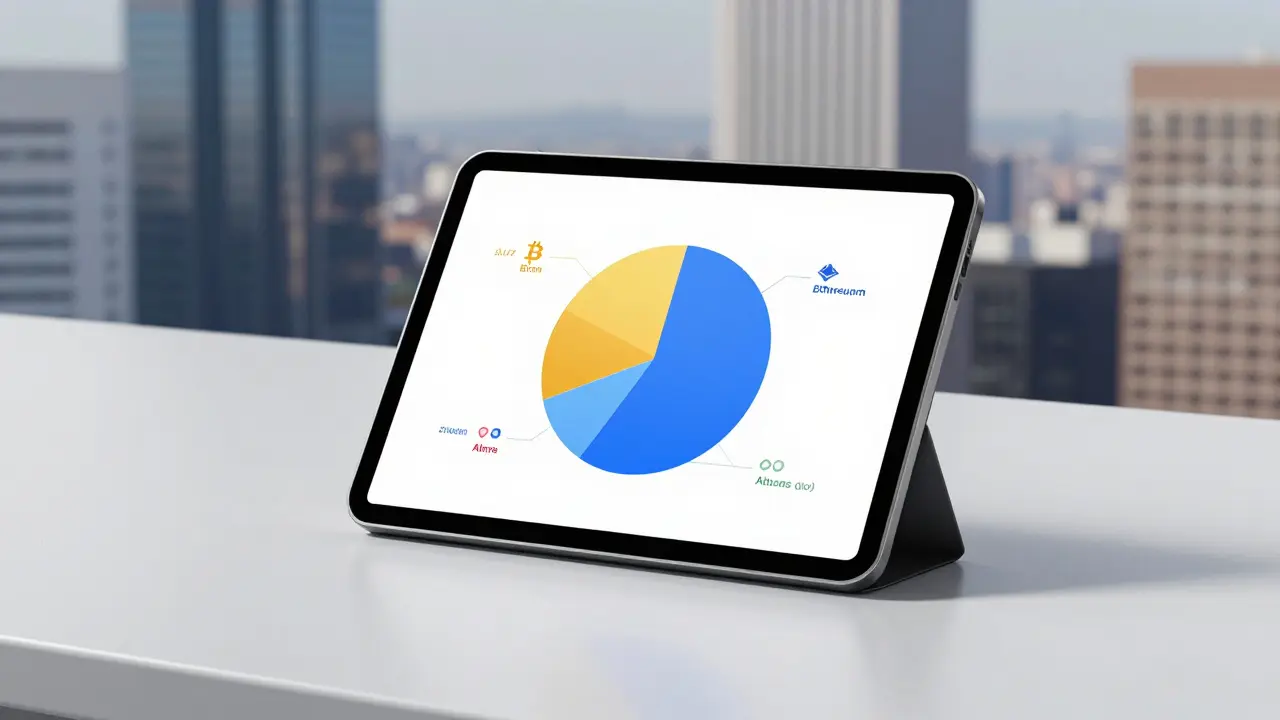
Putting all your money into one cryptocurrency is like betting everything on a single horse race. It feels exciting until the market turns against you. Most investors know they should spread their risk, but when it comes to digital assets, the question isn't just if you should diversify, but how. You have Bitcoin, the giant; Ethereum, the engine of smart contracts; and thousands of altcoins promising the next big thing. Getting the mix right is the difference between surviving a crash and watching your gains vanish.
Diversifying a crypto portfolio means distributing your capital across these different categories to balance volatility with potential returns. It’s not about picking winners; it’s about structuring your holdings so that if one sector crashes, your entire financial future doesn’t go down with it. This guide breaks down exactly how to allocate your funds across Bitcoin, Ethereum, and altcoins based on current market data and institutional advice.
The Core Foundation: Bitcoin and Ethereum
Think of Bitcoin (BTCis often treated as the 'blue-chip' store-of-value asset in crypto portfolios) and Ethereum (ETHis the leading platform for smart contracts and decentralized applications) as the bedrock of any serious crypto strategy. They are not just coins; they represent two distinct utilities within the blockchain ecosystem.
Bitcoin acts as digital gold. With a hard cap of 21 million coins, its primary value proposition is scarcity and security. In most diversified models, Bitcoin serves as the "safe" harbor relative to the rest of the volatile crypto market. Ethereum, launched in 2015, powers the infrastructure for DeFi (Decentralized Finance), NFTs, and other dApps. While BTC is about preserving value, ETH is about generating utility and yield through staking or lending protocols.
Research from VanEck’s digital assets team suggests an optimal internal mix for a crypto-only sleeve is roughly 71% Bitcoin and 29% Ethereum. Why this split? Historically, this ratio has offered the best risk-adjusted returns. Bitcoin provides stability during downturns, while Ethereum offers higher growth potential due to its expanding ecosystem. For beginners, a simpler 50/30 split (50% BTC, 30% ETH) is often recommended to keep things manageable while maintaining strong exposure to the two largest market caps.
The Growth Engine: Allocating to Altcoins
Altcoins are all cryptocurrencies that are not Bitcoin or Ethereum. This category is where you find both massive opportunities and catastrophic risks. Altcoins are typically segmented by market capitalization and sector:
- Large-Cap Altcoins: Coins like Solana (SOL) or Polkadot (DOT). These are established layer-1 blockchains with significant adoption.
- Mid-Cap & Small-Cap: Newer projects in sectors like DeFi (Uniswap, Aave), Gaming (Axie Infinity), or Metaverse (The Sandbox).
- Micro-Caps & ICOs: Extremely high-risk tokens, often from Initial Coin Offerings. Many fail or turn out to be scams.
A common mistake is treating all altcoins the same. You shouldn’t. A robust portfolio diversifies by sector as well as by coin. For example, instead of putting 20% of your portfolio into one gaming token, you might split that 20% across three different sectors: 7% in Layer-1 infrastructure, 7% in DeFi protocols, and 6% in consumer-facing apps like gaming or social media.
Institutional guides, such as those from AvaTrade, suggest allocating around 30% of your total crypto portfolio to altcoins. This leaves room for upside without exposing you to the idiosyncratic risk of a single project failing. If you are more aggressive, you might push this to 40%, but remember: higher reward always comes with higher volatility.

The Safety Net: The Role of Stablecoins
Stablecoins like Tether (USDT) and USD Coin (USDC) are pegged to the US dollar. They don’t offer growth, but they offer something equally valuable in crypto: liquidity and preservation.
Why hold stablecoins in a portfolio meant for growth? Because crypto markets are cyclical. When a bear market hits, prices can drop 50-70%. If you are fully invested in volatile assets, you are forced to sell at a loss to cover expenses or miss the chance to buy back in at lower prices. Holding 5% to 20% of your portfolio in stablecoins gives you "dry powder." You can use this cash reserve to rebalance your portfolio when other assets dip significantly.
However, treat stablecoins as a tactical tool, not a long-term holding. Their value relies on the issuer’s reserves. While USDC and USDT are generally considered safe, they carry counterparty risk. Use them to park cash temporarily, not as a substitute for a savings account.
| Asset Class | Conservative Model | Balanced Model | Aggressive Model |
|---|---|---|---|
| Bitcoin (BTC) | 50% | 40% | 20% |
| Ethereum (ETH) | 30% | 30% | 20% |
| Altcoins (Mid/Large Cap) | 10% | 20% | 30% |
| Small-Cap/High-Risk Alts | 0% | 10% | 25% |
| Stablecoins | 10% | 0% | 5% |
Managing Risk: How Much Crypto Should You Own?
This is the most critical question. Even if your internal crypto allocation is perfect, having too much crypto in your overall net worth is dangerous. Traditional finance institutions like Morgan Stanley categorize crypto as a high-volatility "real asset." Their analysis shows that crypto’s annualized volatility is roughly 55%, which is four times higher than the S&P 500.
Because of this extreme volatility, adding just 6% crypto to a traditional stock-and-bond portfolio can nearly double the portfolio’s overall risk. Consequently, major investment firms recommend keeping total crypto exposure low:
- Conservative Investors: 0-2% of total investable assets.
- Balanced Growth: 2-3% of total investable assets.
- Opportunistic/Aggressive: Up to 4% of total investable assets.
If you are young and have a high income with no debt, you might feel comfortable going higher. But for most people, treating crypto as a "satellite" portion of your wealth-small enough that a 50% crash won’t ruin your life-is the wisest approach. Fund your crypto positions with money you can afford to lose, not with rent money or emergency savings.

Rebalancing: Keeping Your Strategy on Track
Setting up a portfolio is easy. Maintaining it is hard. Crypto prices move fast. Imagine you start with a 50% BTC / 30% ETH / 20% Altcoin split. If Bitcoin surges 100% while altcoins stay flat, your new allocation might look like 70% BTC / 15% ETH / 15% Altcoins. You are now overexposed to Bitcoin and missing out on altcoin recovery potential.
You need a rebalancing strategy. Two common methods are:
- Time-Based Rebalancing: Review your portfolio quarterly. Sell assets that have grown beyond their target percentage and buy those that have lagged. This forces you to "buy low and sell high" systematically.
- Threshold-Based Rebalancing: Set a trigger. For example, if any asset deviates by more than 5% from its target weight, you rebalance immediately. This method reacts faster to market swings but may incur more transaction fees.
Use portfolio tracking tools to visualize these shifts. Don’t let emotions drive your trades. If your plan says 20% in altcoins, stick to it even when FOMO (Fear Of Missing Out) tells you to dump everything into the latest trending meme coin.
Pitfalls to Avoid
Even experienced investors make mistakes. Here are the biggest traps in crypto diversification:
- Over-Diversification: Holding 50 different small-cap coins dilutes your returns and makes monitoring impossible. Stick to 5-10 high-conviction altcoins maximum.
- Sector Concentration: Putting all your altcoin money into DeFi tokens exposes you to regulatory crackdowns on lending protocols. Spread across layers, storage, gaming, and infrastructure.
- Ignoring Stablecoin Risk: Assuming USDT or USDC is risk-free. Always research the issuer’s reserve transparency.
- Leverage Abuse: Using futures or options to hedge or speculate adds complexity and can wipe out your principal instantly. Leave derivatives to professionals.
Diversification is not a magic shield against losses. It is a tool to manage risk so you can stay in the game long enough for the market to recover and grow. By anchoring your portfolio in Bitcoin and Ethereum, carefully selecting altcoins, and using stablecoins as a buffer, you build a resilient structure capable of weathering crypto’s inevitable storms.
What is the safest way to diversify a crypto portfolio?
The safest approach involves limiting total crypto exposure to 2-4% of your overall net worth. Within that crypto allocation, prioritize large-cap assets: aim for 50-70% in Bitcoin and Ethereum combined. Keep altcoin exposure below 30% and maintain a 5-10% stablecoin buffer for liquidity. This minimizes volatility while retaining growth potential.
Should I include stablecoins in my crypto portfolio?
Yes. Stablecoins like USDC and USDT provide a "cash equivalent" within the crypto ecosystem. They allow you to exit volatile positions without converting to fiat currency, protecting you from taxes and withdrawal delays. They also serve as dry powder to buy dips when other assets crash. However, only allocate what you need for short-term liquidity or rebalancing.
How often should I rebalance my crypto portfolio?
Most experts recommend rebalancing quarterly or whenever an asset’s weight drifts by more than 5% from its target. Frequent rebalancing ensures you consistently sell high and buy low, preventing any single asset from dominating your risk profile after a major price surge.
Is it better to hold Bitcoin or Ethereum?
It depends on your goals. Bitcoin is superior for capital preservation and lower volatility, acting as digital gold. Ethereum offers higher growth potential due to its utility in smart contracts and DeFi. A balanced portfolio typically holds both, with a heavier weighting toward Bitcoin (e.g., 70/30 or 50/30) to anchor stability.
What are the risks of investing in altcoins?
Altcoins carry higher risks including project failure, regulatory scrutiny, and liquidity issues. Many small-cap altcoins can drop 90% or more in a bear market. To mitigate this, limit altcoin exposure to 20-30% of your crypto portfolio, diversify across different sectors (DeFi, Layer-1, Gaming), and avoid unproven ICOs unless you are prepared to lose that capital entirely.
9 Responses
oh look another guide telling us how to not lose our shirts because we cant handle the volatility of actual speculation. you people treat crypto like its a retirement plan instead of a casino with better graphics. i mean sure keep your 71% in btc if you want to be boring and safe but where is the fun in that. the real alpha is in the microcaps that everyone here is too scared to touch because they have actual risk tolerance unlike these portfolio optimization nerds.
it is fascinating how western finance tries to impose order on chaos. back home we understand that value is often subjective and tied to community rather than just some arbitrary market cap metric. this article reads like it was written by someone who has never actually lived through a hyperinflationary event where cash loses value faster than any altcoin dump. still nice to see people trying though even if their methods are quite rigid.
i totally get what the article is saying about diversification but honestly i find myself getting overwhelmed by all the different sectors mentioned like defi and gaming and layer ones. it feels like there are so many options that picking the right mix becomes paralyzing especially when you consider that some of these projects might fail completely which adds another layer of complexity to an already complex situation. maybe sticking to just btc and eth is simpler for most people who dont want to spend hours researching whitepapers every weekend.
i noticed that the table suggests keeping stablecoins at 0% for the balanced model which seems counterintuitive given how volatile the market can get. having dry powder really does help during those sudden crashes where everything drops simultaneously. i wonder if more people would feel comfortable holding crypto if they knew they had a safety net within the ecosystem itself rather than converting back to fiat which takes time and fees.
let's be real here most of you reading this are going to ignore the rebalancing advice the second fomo kicks in. you'll dump your entire stablecoin reserve into whatever meme coin is trending on twitter today then cry when it rug pulls. the data says 2-4% exposure but nobody listens to data when emotions are running high. it's human nature to chase gains and avoid losses until it's too late.
the philosophical underpinning of diversification is essentially hedging against uncertainty in a system designed to be unpredictable. by anchoring with bitcoin and ethereum you are acknowledging the current hierarchy of trust while allowing for speculative upside through altcoins. it is a pragmatic approach that balances the desire for growth with the necessity of preservation. think of it as building a foundation before constructing the house.
OMG!!! I cannot believe how stressful it sounds to manage all these percentages!! What if I mess up the rebalancing?? It seems like so much work just to potentially make money that could disappear anyway!!! I think I will just stick to buying one coin and hoping for the best because math is hard and anxiety is real!!
value is perception and perception shifts with narrative. the models presented are static representations of dynamic markets. true wealth comes from understanding the underlying technology not just the allocation percentages. yet here we are discussing percentages as if they hold intrinsic power over market forces.
the moral decay of society is evident in our obsession with quick riches through digital tokens rather than honest labor. we have become a culture of gamblers believing that algorithms will save us from the consequences of our greed. this portfolio strategy is merely a sophisticated way to justify participation in a system built on speculation and fear. we should focus on creating real value not trading pixels.