
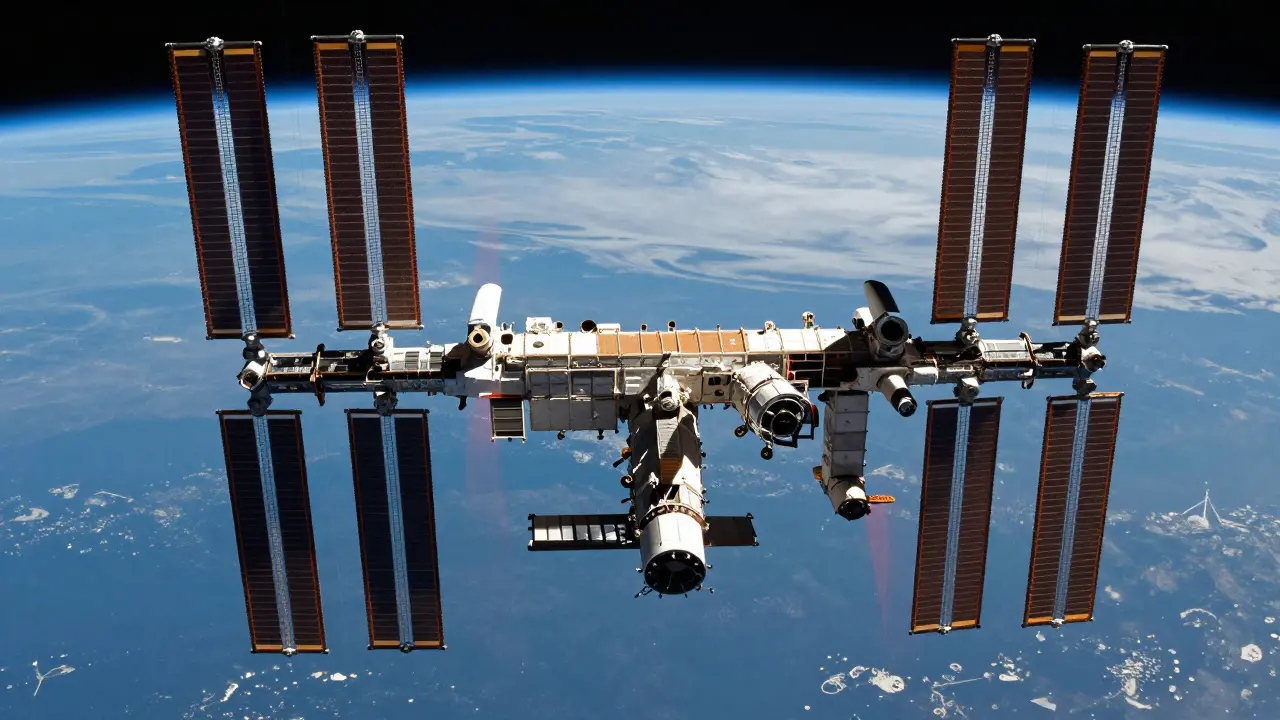
Imagine living in a house that is constantly sinking into the mud. Every hour, you have to pump water out or prop up the foundation just to stay above ground level. That is essentially what happens to the International Space Station (ISS), a massive laboratory orbiting Earth at roughly 400 kilometers (250 miles) altitude. Despite being in space, the station is not free from gravity’s pull or atmospheric interference. It experiences continuous drag from the thin upper atmosphere, causing it to lose altitude every single day. Without intervention, the ISS would spiral down and burn up in the atmosphere within months. To prevent this, mission controllers perform regular reboost maneuvers, which are precise engine burns designed to push the station back into a higher, safer orbit.
The Physics of Staying Up: Why Reboosts Are Necessary
You might think that once an object reaches space, it stays there forever because there is no air resistance. But at the ISS’s altitude of about 255 to 265 statute miles (410-430 km), there is still a very thin layer of atmosphere. This residual air creates drag, slowing the station down slightly with each orbit. As the station slows, its orbital energy decreases, causing it to drop lower. If left unchecked, this process-known as orbital decay-would eventually lead to reentry.
To counteract this, engineers use a concept called prograde burn. In simple terms, when a spacecraft fires its engines in the direction it is traveling, it speeds up. Counterintuitively, speeding up makes the orbit higher. Think of swinging a ball on a string: if you give it a quick tug forward, the circle gets bigger. The same principle applies to the ISS. By adding a small amount of velocity (delta-v), usually just a few meters per second, the station’s orbit expands, raising both its highest point (apogee) and lowest point (perigee).
This isn’t a one-time fix. Atmospheric density changes based on solar activity. During periods of high solar flare activity, the upper atmosphere heats up and expands, increasing drag significantly. This means reboosts might need to happen more frequently during active solar cycles. Mission planners monitor these conditions closely, adjusting their schedule to keep the station within its optimal operational window.
Who Does the Pushing? Vehicles Used for Reboosts
The ISS doesn’t have a giant rocket permanently attached to its side for routine pushes. Instead, it relies on visiting vehicles or its own built-in systems. Over the years, several spacecraft have taken on this responsibility:
- Russian Progress Spacecraft: For decades, the workhorse of ISS reboosts has been the Progress cargo vehicle. These uncrewed ships dock to the rear of the station and fire their main engines to push the entire complex forward. They are reliable, cost-effective, and carry enough propellant to make significant adjustments.
- Zvezda Service Module: The Zvezda module, the Russian service core of the ISS, has its own main engines and thrusters. In the early days, Zvezda did most of the pushing. Today, it serves as a backup system to preserve its limited fuel reserves and extend the life of its aging hardware.
- European ATV (Historical): Between 2008 and 2015, the European Space Agency’s Automated Transfer Vehicle (ATV) performed reboosts. These large cargo ships were powerful but are no longer in operation.
- SpaceX Cargo Dragon (New Addition): As of late 2025, SpaceX’s Cargo Dragon has joined the roster. Unlike earlier versions, this modified Dragon features additional propellant tanks and rear-facing Draco thrusters in its trunk section, allowing it to safely push the station while docked.
| Vehicle | Origin | Status | Key Feature |
|---|---|---|---|
| Progress | Russia | Active (Primary) | Reliable, frequent missions, dedicated propulsion |
| Zvezda Engines | Russia | Active (Backup) | Built-in, preserves visiting vehicle fuel |
| ATV | Europe | Retired (2015) | High power, large mass capacity |
| Cargo Dragon | USA (SpaceX) | Active (Secondary) | Modified trunk thrusters, adds redundancy |
A Typical Reboost: What Happens During the Burn?
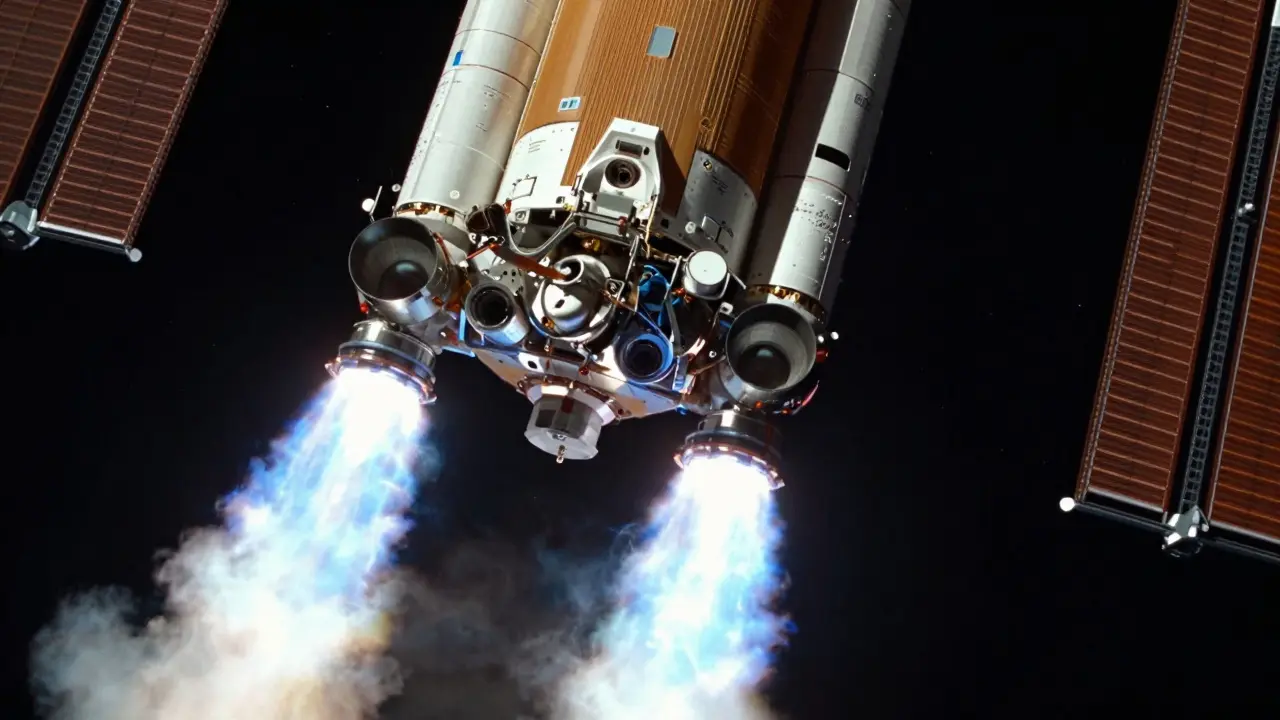
Let’s look at a real-world example to understand how smooth and routine these operations are. On November 19, 2025, the Progress 93 spacecraft was docked to the aft port of the Zvezda module. At 8:04 a.m. EST, its engines ignited. The burn lasted exactly 14 minutes and 7 seconds.
During this time, the entire ISS structure-a rigid body weighing between 420 and 460 metric tons-accelerated gently. The goal wasn’t to shoot the station into deep space, but to make a tiny, precise adjustment. The result? The station’s apogee (highest point) rose by 1 mile, and its perigee (lowest point) rose by 2.3 miles. The new orbit settled at 265.5 × 255.9 statute miles.
You might wonder if the crew feels anything. Generally, no. The acceleration is so gradual that astronauts can continue exercising, conducting experiments, and eating lunch without interruption. However, sensitive instruments might be paused briefly to avoid vibration interference. The key is control: Russian mission control in Korolyov and NASA trajectory specialists calculate the exact thrust levels to ensure structural loads remain within safe limits for the station’s trusses and solar arrays.
Why Add SpaceX Dragon to the Mix?
For years, the ISS relied heavily on Russian Progress vehicles for reboosts. While effective, this created a single point of failure. Geopolitical tensions or technical issues with Progress launches could leave the station vulnerable to rapid orbital decay. Enter SpaceX.
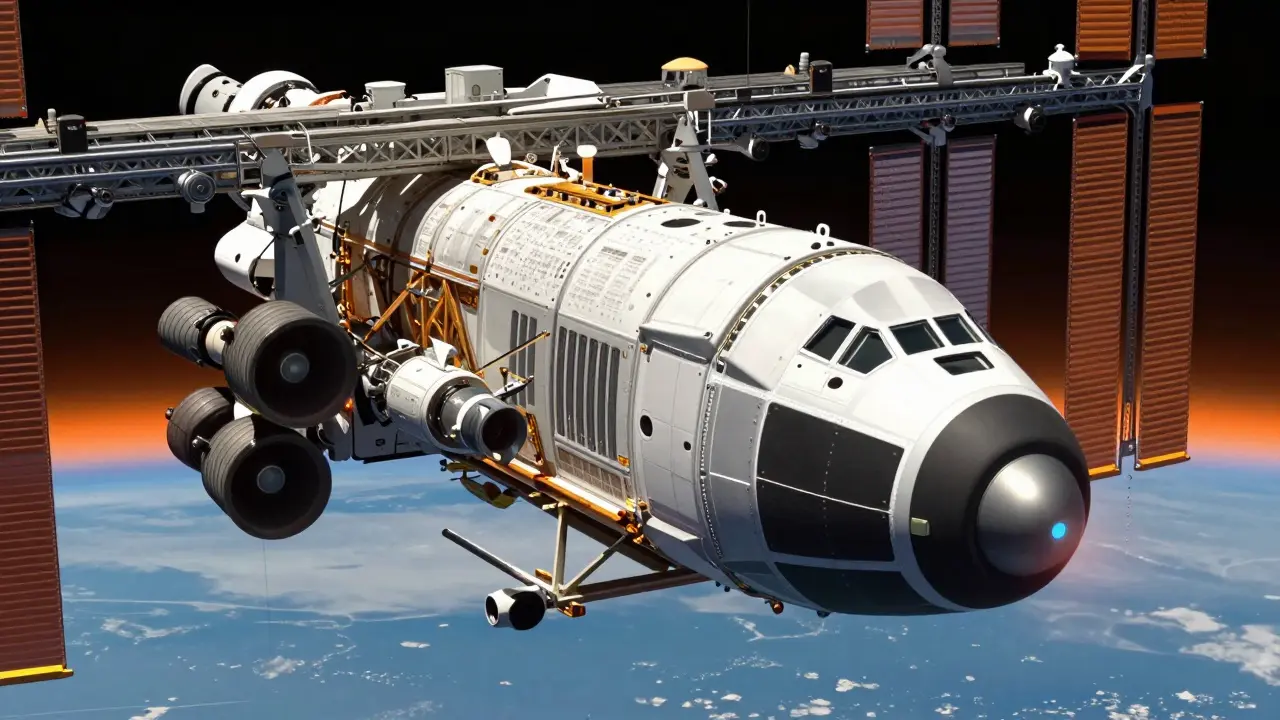
Earlier versions of the Dragon capsule had thrusters only on the front (fore-mounted), used for steering and deorbiting. These weren’t suitable for pushing the station backward. To solve this, SpaceX engineered a special version of the Cargo Dragon. They added extra propellant tanks and installed a pair of Draco thrusters in the unpressurized "trunk" module, facing rearward. This allows the Dragon to fire prograde while docked, transferring thrust efficiently through the docking mechanism.
This modification, validated in early 2025, provides crucial redundancy. Now, if Progress is unavailable, NASA can call on SpaceX. It also reduces wear on the aging Zvezda module, extending the lifespan of the Russian segment. This diversification is a strategic move to ensure the station remains safe and operational regardless of external political or logistical challenges.
Beyond Altitude: Debris Avoidance and Phasing
Reboosts aren’t just about fighting gravity. They are also a tool for safety and scheduling. Sometimes, the station needs to dodge space debris. When tracking data shows a potential collision with a piece of junk or defunct satellite, controllers may execute a Debris Avoidance Maneuver (DAM). This is similar to a reboost but often more urgent and specifically timed to change the station’s path relative to the debris.
Additionally, reboosts help with "phasing." If a new crew or cargo ship is launching, the ISS might need to adjust its orbit to meet them at the right place and time. Raising or lowering the orbit changes how fast the station moves relative to the launch site, making rendezvous easier and saving fuel for the visiting vehicle. It’s a delicate balance: too low, and drag increases; too high, and radiation exposure rises while rendezvous becomes harder. The current target band of 255-265 miles is the sweet spot.
The Future of ISS Propulsion
As we move through 2026, the ISS is nearing the end of its planned operational life. No new reboost-capable vehicles are expected to join the fleet. The combination of Progress, Zvezda, and the modified Cargo Dragon will carry the station until its final deorbit. When that day comes, the same propulsion systems will be used in reverse-to deliberately slow the station down and guide it safely into the Pacific Ocean, ensuring it doesn’t pose a risk to people on the ground.
Until then, these quiet, incremental pushes keep one of humanity’s greatest engineering achievements aloft. Each burn is a testament to international cooperation and precise orbital mechanics, turning the invisible force of drag into a manageable challenge rather than an inevitable doom.
How often does the ISS need a reboost?
The frequency varies depending on solar activity and atmospheric density. Typically, reboosts occur every few weeks to a few months. During periods of high solar activity, the atmosphere expands, increasing drag and requiring more frequent boosts to maintain altitude.
Do astronauts feel the reboost maneuver?
Generally, no. The acceleration is very gentle and gradual, designed to minimize structural stress and vibration. Crew members can usually continue their daily activities, such as exercise and research, without noticing any significant disturbance.
Why can't the ISS just stay at a higher altitude to avoid drag?
A higher orbit would reduce drag, but it comes with trade-offs. It increases radiation exposure for the crew, makes communications geometry more difficult, and requires significantly more energy (fuel) for visiting spacecraft to reach the station. The current altitude is a balanced compromise between safety, accessibility, and operational efficiency.
What happens if the ISS runs out of propellant for reboosts?
If the station cannot perform reboosts, it will begin to lose altitude rapidly due to atmospheric drag. Eventually, it would reenter the Earth's atmosphere and burn up. To prevent this, mission planners carefully manage propellant supplies and have multiple redundant systems (Progress, Zvezda, Dragon) to ensure continuity.
How does SpaceX's Cargo Dragon differ from older versions for reboosts?
Older Dragon capsules had thrusters only on the front, used for steering. The modified Cargo Dragon includes additional propellant tanks and rear-facing Draco thrusters in its trunk section. This allows it to push the station forward (prograde) while docked, a capability essential for safe and effective reboost maneuvers.