
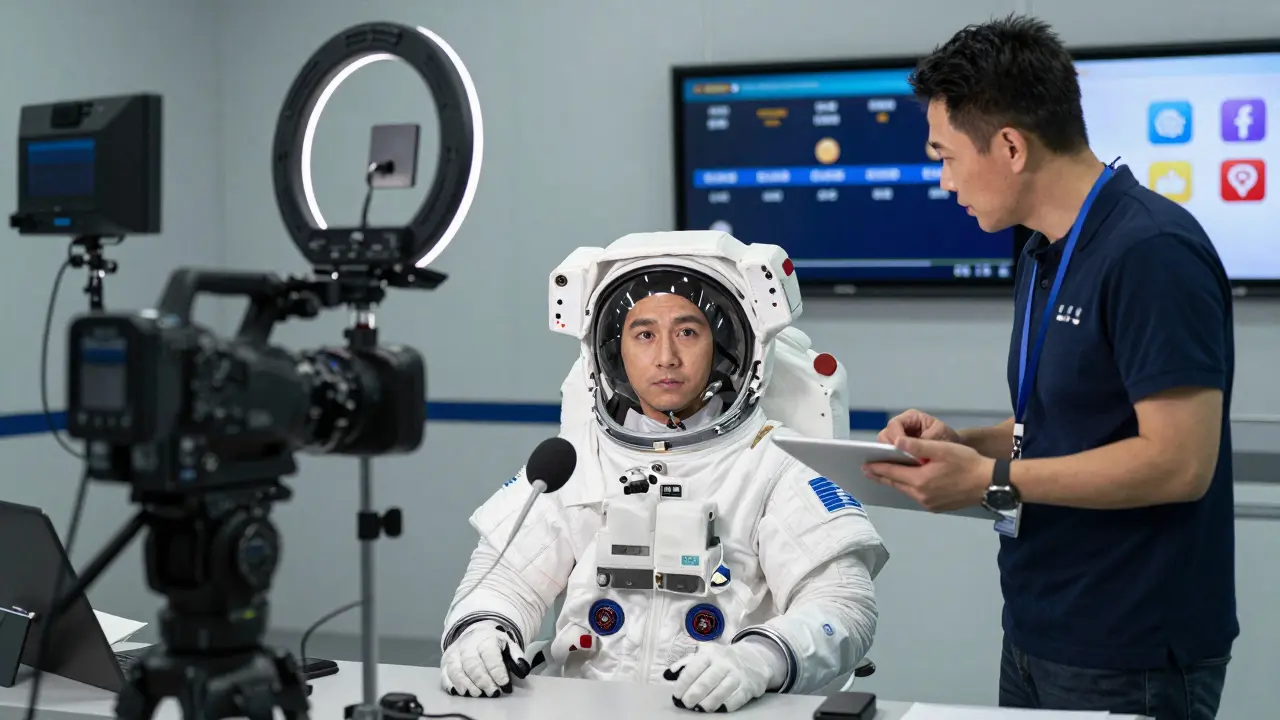
When you see an astronaut smiling through a helmet on live TV or posting a stunning photo of Earth from the International Space Station (ISS), it looks effortless. But that calm presence is actually the result of intense, specialized preparation. Being an astronaut isn't just about piloting spacecraft or conducting science experiments; it’s also about being a global ambassador. Before they ever leave the ground, astronauts undergo rigorous media and public engagement training to ensure they can communicate complex ideas clearly, handle crisis situations with grace, and inspire millions around the world.
The Evolution from Test Pilots to Global Ambassadors
The roots of this training go back to the very beginning of human spaceflight. When NASA selected the Mercury 7 astronauts in April 1959, these men were primarily test pilots chosen for their technical skills. However, they were quickly thrust into the spotlight. There was no formal curriculum then, but NASA public affairs staff and external media advisers began coaching them on how to handle press conferences and manage their public image. They had to learn that their personal lives were now part of the national narrative.
As the space program grew, so did the need for structured communication. High-profile events like the Apollo 1 fire in 1967 and the Apollo 13 crisis in 1970 showed agencies that how astronauts spoke during emergencies mattered as much as their technical actions. By the time other agencies like the European Space Agency (ESA) and the Canadian Space Agency (CSA) joined the effort, media engagement became a formal part of the job description. Astronauts were no longer just operators; they were explicitly defined as ambassadors for their countries and agencies.
Did early astronauts receive formal media training?
Initially, no. The Mercury 7 astronauts received ad-hoc coaching from NASA public affairs staff and external advisers because there was no formalized curriculum yet. Formal training structures developed later, particularly after crises like Apollo 1 and Apollo 13 highlighted the importance of clear communication.
Core Components of Modern Media Training
Today, while detailed syllabi are rarely published in full, we know from astronaut autobiographies and agency communications that the training covers several critical areas. It’s not just about memorizing facts; it’s about mastering the art of storytelling under pressure.
- Media Literacy and Interview Skills: Astronauts spend time in classroom sessions learning how newsrooms operate. They practice distinguishing between on-record, background, and off-record conversations. A key technique they learn is "bridging," which allows them to move smoothly from a difficult question back to their prepared key messages without sounding evasive. They also practice "flagging" to highlight crucial information and condensing complex spacecraft systems into 30-90 second sound bites.
- On-Camera Performance: This involves working with television-style studio setups that simulate press conferences or live downlinks from orbit. Astronauts practice maintaining eye contact with cameras, managing body language, and keeping facial expressions clear even when dealing with the physical stress of microgravity simulations.
- Crisis Communication: Preparing for anomalies is vital. Training programs, sometimes developed by firms like Pierpont for NASA’s Johnson Space Center, teach astronauts how to acknowledge uncertainty without speculating. They learn to defer technical details until they are verified and to express empathy if incidents affect the crew or public. Crucially, they are briefed on when to stay silent and direct media to official statements from agency leadership.
- Public Speaking and Outreach: Astronauts are expected to give dozens of talks to schools, museums, and conferences. They receive coaching on building 20-60 minute presentations that mix personal narrative with mission science. This mirrors competencies found in university programs like the Master of Arts in Media and Public Engagement at the University of Colorado Boulder, though astronauts learn these skills in a condensed timeframe.
The Digital Frontier: Social Media and Real-Time Engagement
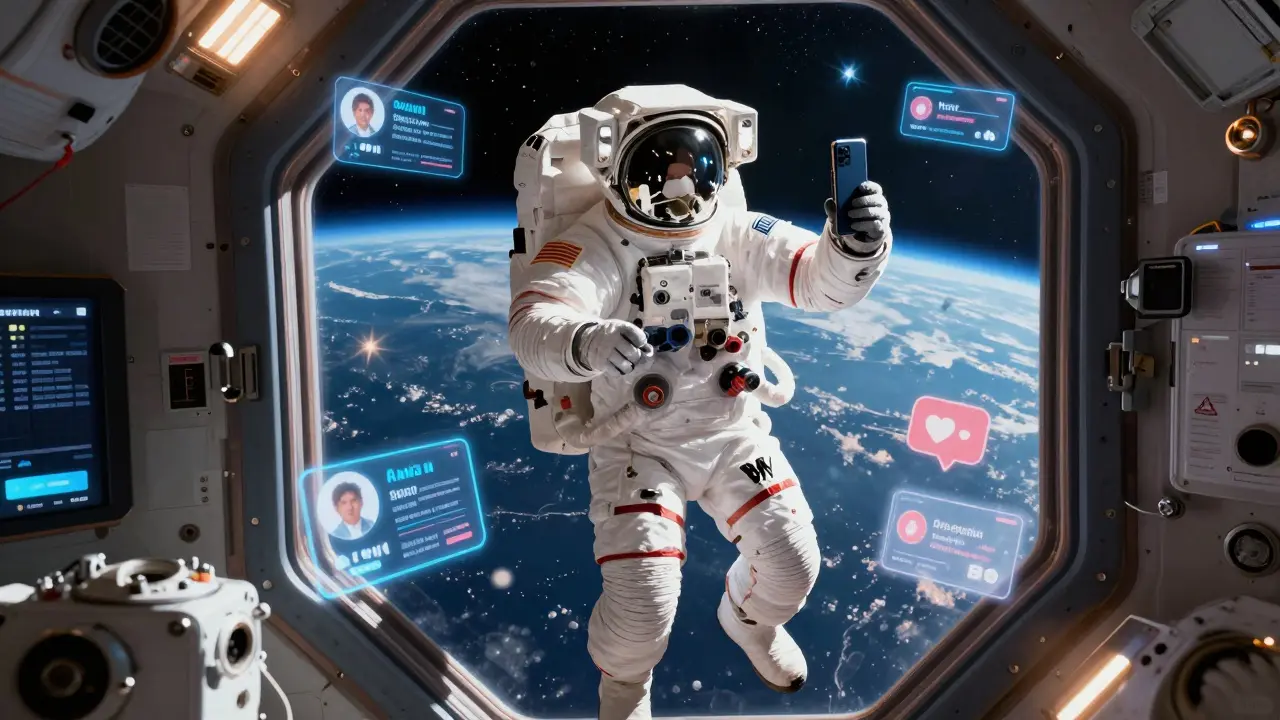
The rise of social media has transformed how astronauts connect with the public. Since the early 2010s, platforms like Twitter (launched 2006) and Instagram (launched 2010) have become central tools. We saw this explode during Expedition 35 in 2013, when Canadian astronaut Chris Hadfield posted regular images and commentary, becoming one of the most followed people in space. Similarly, European astronaut Samantha Cristoforetti used her ISS missions to engage millions online.
Agency communications offices now provide specific briefings on platform security, content planning, and brand consistency. Astronauts must coordinate posts with central teams, follow pre-approved hashtags, and align their Earth photography with ongoing outreach campaigns. There are strict safety guidelines too: certain operational details or images cannot be posted in real-time for security or proprietary reasons. Training also addresses handling negative comments, harassment, and misinformation, which has become increasingly important as space policy debates grow more polarized.
Differences Across Agencies and Commercial Missions
Not all agencies approach media training the same way. The structure and duration vary based on cultural priorities and institutional history.
| Agency | Key Focus | Unique Characteristics |
|---|---|---|
| NASA (USA) | Structured STEM Outreach | Large communications teams, extensive school partnerships, integration with broader educational strategies. |
| ESA (Europe) | International Collaboration | Training spread across basic and advanced phases, heavy focus on simulating ISS live events and European outreach tours. |
| CSA (Canada) | Bilingual Communication | Additional effort devoted to bilingual media training, rehearsing with both English and Quebec French-speaking journalists. |
| Roscosmos (Russia) | Operational Security | Historically emphasized technical secrecy; increased digital outreach only in the late 2010s. |
| JAXA (Japan) | Cultural Storytelling | Highlights Japanese food, art, and educational content in astronaut outreach. |
| MBRSC (UAE) | National STEM Campaigns | Media training tailored to Arabic-language outlets and regional educational networks, using first missions as focal points. |
Commercial missions add another layer of complexity. While SpaceX’s Crew Dragon missions carrying NASA astronauts follow standard agency frameworks, fully commercial missions like Inspiration4 (2021) or Polaris Dawn require different approaches. Non-career astronauts-often entrepreneurs or doctors-undergo compressed media boot camps focused on brand alignment with sponsors, coordination with documentary production teams, and integrating philanthropic messages, such as fundraising for St. Jude Children’s Research Hospital. Their training includes storytelling workshops centered on personal motivations rather than just technical mission objectives.
Preparing for a "Space-Ready" Society
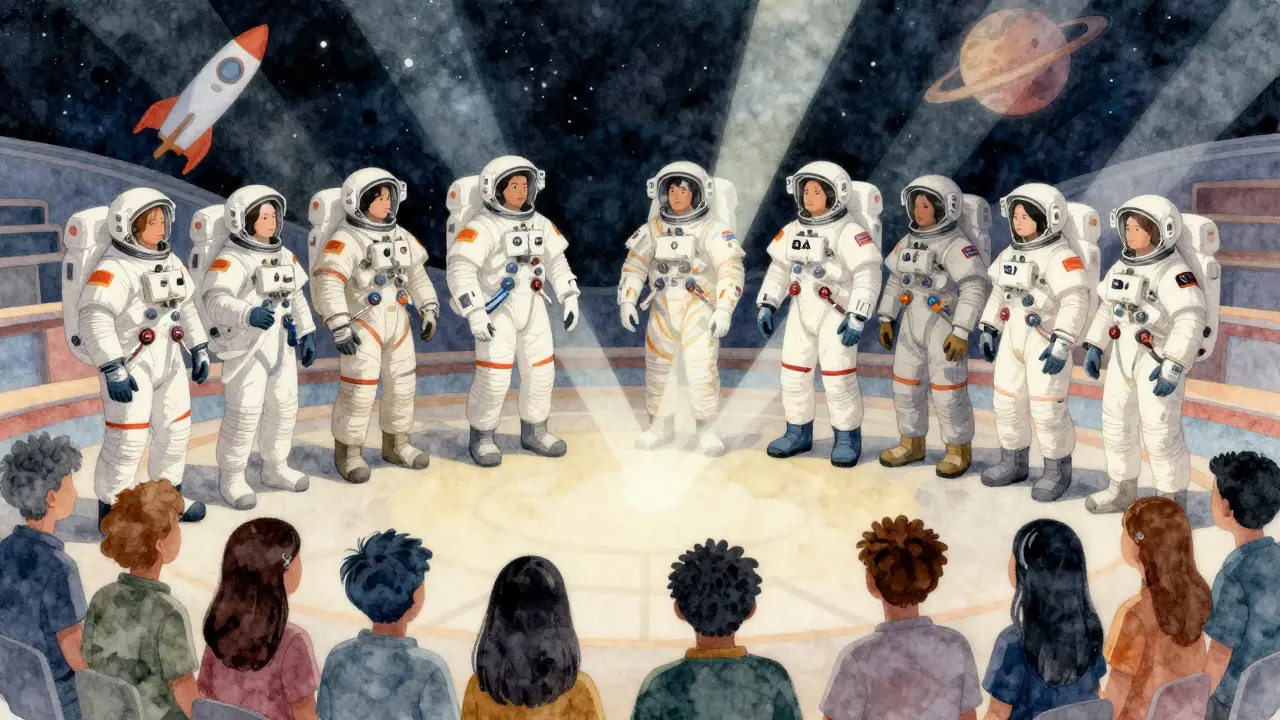
As the space sector expands beyond government agencies into a global ecosystem of private firms, the role of the astronaut is evolving. Experts argue that future missions to the Moon and Mars will face intense scrutiny regarding environmental impacts, orbital debris, and equity in access to space careers. Therefore, media training is shifting from one-way broadcasts to interactive, participatory engagements.
Astronauts are now trained to listen and respond to societal concerns, not just inspire awe. They serve as uniquely credible messengers who can address topics like the commercialization of low Earth orbit with specific facts and acknowledgment of uncertainties. This aligns with broader science communication frameworks, such as those promoted by AAAS SciLine, which coach technical experts to deliver accurate, accessible messages under political and public scrutiny.
Practical Implementation and Challenges
Implementing this training requires balancing many demands. At NASA, astronaut candidates (ASCANs) undergo approximately two years of basic training covering spacecraft systems, robotics, EVA, T-38 jet training, Russian language, and survival skills. Within this period, media modules are concentrated in short courses lasting one to a few days, combined with repeated practice opportunities during public introductions and simulated mission events.
Mission-specific coaching begins roughly 6-12 months before launch. Post-flight debriefs and media tours can last several months after return. Astronauts often describe this workload as demanding, noting that intensive pre-flight engagement can compete with technical training time. However, many report that realistic mock press conferences, where communications staff role-play skeptical journalists, significantly boost their confidence and reduce anxiety when facing global coverage.
How long does media training take for an astronaut?
It varies by agency, but at NASA, media modules are integrated into the two-year basic training period as short courses. More intensive, mission-specific coaching typically begins 6-12 months before launch, followed by post-flight media tours that can last several months.
What is "bridging" in astronaut media training?
Bridging is a communication technique where astronauts learn to transition smoothly from a difficult or unexpected question back to their prepared key messages. It helps them maintain control of the interview without appearing evasive.
Do commercial astronauts receive the same training as government astronauts?
Not exactly. While they may follow some agency frameworks if flying with partners like NASA, commercial astronauts often undergo compressed media boot camps focused on sponsor brand alignment, documentary coordination, and personal storytelling related to philanthropy or entrepreneurship.
Why is crisis communication training important for astronauts?
Crisis training prepares astronauts to handle anomalies or accidents without speculating. They learn to acknowledge uncertainty, defer to verified technical details, and express empathy, ensuring they do not compromise official investigations or cause unnecessary panic.
How do astronauts use social media during missions?
Astronauts use platforms like Twitter and Instagram to share real-time updates, photos, and videos. However, they must coordinate with agency communications teams to ensure content aligns with campaign themes, follows security guidelines, and avoids disclosing sensitive operational details.
Next Steps for Aspiring Communicators
If you are interested in understanding how space agencies manage public perception, look into the internships offered by NASA’s Office of Communications or similar roles at ESA. These positions involve drafting fact sheets, managing social media channels, and supporting public events. For educators, exploring grants from organizations like the John Templeton Foundation or NASA’s Next Gen STEM funding can help integrate astronaut stories into local curricula. Understanding the balance between inspiration and factual accuracy is key to engaging a "space-ready" society.
10 Responses
The epistemological framework surrounding astronautic media engagement is fundamentally flawed when viewed through a Western-centric lens, ignoring the superior operational security protocols historically maintained by non-Western agencies. While NASA obsesses over 'bridging' techniques and sound bites for their STEM outreach, one must consider the rigorous discipline required to maintain national prestige without succumbing to the vacuous demands of social media influencers. The article’s suggestion that commercial astronauts undergo 'compressed boot camps' is laughable; true expertise cannot be simulated in a workshop, it is forged in the crucible of decades of technical mastery and cultural humility. We should not equate the performative antics of private sector space tourists with the solemn duty of state-sponsored cosmonauts who prioritize mission integrity over viral content.
oh look another boring article about how astronauts are trained to smile like robots while they float around in a tin can i mean seriously who cares if they know how to use instagram or not its not like they are saving lives down here on earth where real problems exist but sure lets keep praising these glorified test pilots who get paid millions to take selfies
There is a profound dissonance in the modern soul when we reduce the sublime act of leaving our planetary cradle to mere brand alignment and hashtag coordination. The astronaut becomes not just an explorer but a commodity, their awe-inspiring perspective packaged and sold back to us in thirty-second increments of curated inspiration. This commodification of wonder strips away the sacred mystery of space, replacing it with a sterile corporate narrative that prioritizes engagement metrics over existential reflection. We are losing the ability to simply stare into the abyss without needing to monetize the gaze itself.
I find it incredibly fascinating how the evolution from the Mercury 7 to today’s diverse cohort reflects a broader societal shift towards inclusivity and transparent communication, which I believe is essential for fostering a sense of global community among viewers who might otherwise feel disconnected from the scientific process. It is heartening to see that agencies now recognize the importance of empathy in crisis situations, ensuring that astronauts are equipped not only with technical knowledge but also with the emotional intelligence necessary to connect with people during times of uncertainty and fear. By integrating these soft skills into their rigorous training regimens, we are essentially preparing our ambassadors to bridge the gap between complex aerospace engineering and the everyday experiences of citizens worldwide, thereby making space exploration more accessible and relatable to everyone regardless of their background or educational level.
It is important to acknowledge the immense pressure placed on individuals who are expected to represent humanity while simultaneously managing their own psychological well-being in such an isolated environment. The transition from being a specialist engineer to a public figure requires a significant adjustment period that many may not fully appreciate until they experience it firsthand. Respecting the boundaries of their personal lives while demanding public transparency creates a delicate balance that must be navigated with care and understanding from both the agencies and the media outlets covering their missions.
From a South African perspective, watching the UAE and Japan lead in specific cultural storytelling aspects of media training is quite amusing given the historical dominance of Western narratives in space communication. It highlights how space agencies are finally realizing that 'global ambassador' means something different depending on which continent you are broadcasting from, rather than just exporting a monolithic American ideal of heroism.
i think its really cool how they have to learn all this stuff because normally engineers arent taught how to talk to cameras and its pretty hard to do both at the same time especially when you are tired or stressed out so having those mock press conferences must help a lot even though it probably feels awkward at first i can imagine wanting to just focus on the tech side but yeah they need to reach out to schools and stuff too
typical elite nonsense pretending that learning to say nice things on camera is some kind of noble skill its just PR spin designed to keep the masses distracted from the fact that these people are getting rich off taxpayer money while the rest of us struggle to pay rent but sure let them have their fancy media training sessions
the part about handling negative comments online seems pretty relevant to everyone these days not just astronauts
The silence imposed during crises is as loud as the words spoken afterward.