
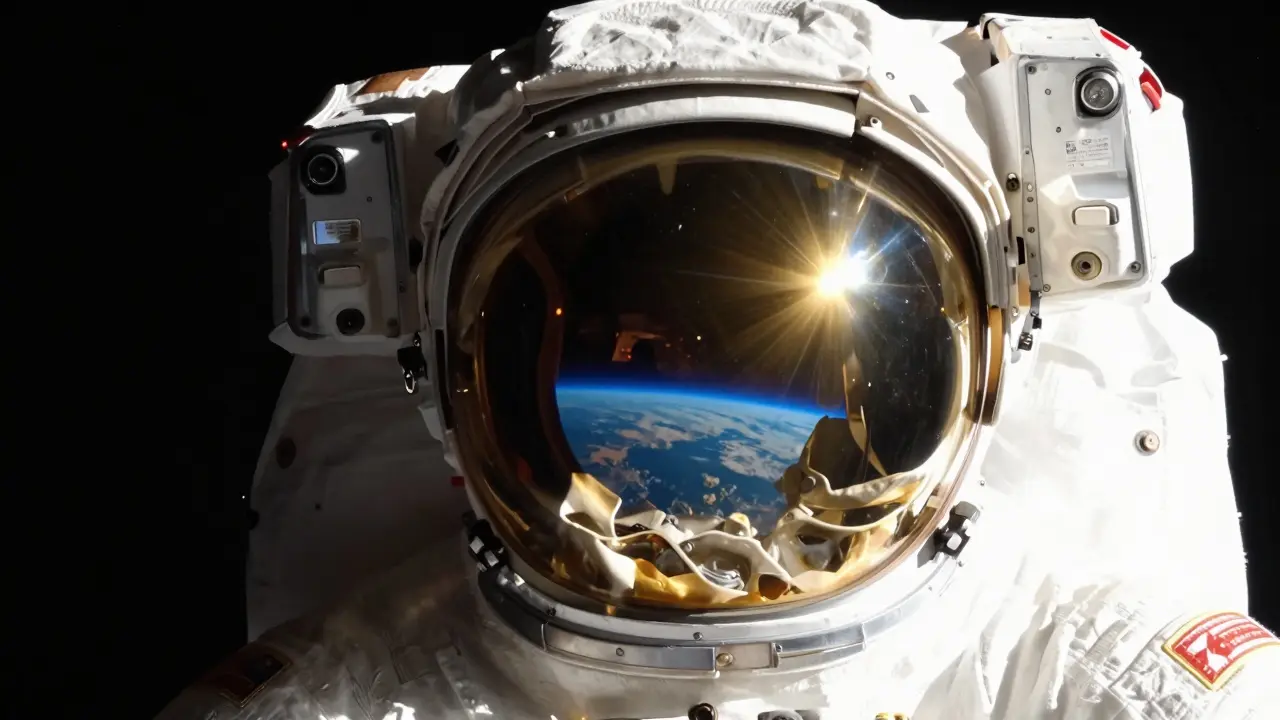
Imagine standing on the Moon. The sun is blazing directly overhead, unfiltered by any atmosphere. It’s bright enough to blind you instantly. Then, you turn your head slightly, and you’re staring into a shadow so deep it looks like absolute blackness. There is no twilight, no soft transition-just harsh glare and pitch-black voids. This is the visual reality for astronauts during spacewalks, or Extravehicular Activities (EVAs). Their survival depends not just on oxygen and pressure, but on what they can see.
The astronaut helmet visor is a critical optical assembly that balances extreme solar radiation protection with clear visibility is the window between life and disorientation. It isn’t just a piece of plastic; it’s a complex layering of materials designed to block harmful ultraviolet rays, reduce blinding glare, and maintain color perception so astronauts can read instruments and manipulate tools. From the current systems on the International Space Station to the next-generation gear for Artemis missions, these visors represent some of the most advanced optics ever built for human use.
The Current Standard: How the ISS EMU Helmet Works
If you’ve seen photos of astronauts floating around the International Space Station, you’ve likely noticed their helmets look like large, clear bubbles with a golden-tinted shield attached. This system belongs to the Extravehicular Mobility Unit (EMU) is NASA's current standard spacesuit for spacewalks in low Earth orbit. The helmet itself is a rigid polycarbonate shell that holds the breathable oxygen pressure. Without this bubble, the astronaut’s body would not survive the vacuum.
Attached to this pressure bubble is the visor assembly. NASA designs this system with two main goals: protect the eyes from the sun’s strong rays while keeping a clear field of view. The setup includes several layers:
- The Pressure Bubble: A clear, hard inner shell made of impact-resistant polycarbonate. It keeps the suit pressurized and protects against small debris.
- The Gold-Layered Visor: An outer visor coated with a thin layer of gold. This coating reflects infrared heat and blocks harmful ultraviolet radiation. It also reduces glare significantly.
- Movable Sun Shades: Physical flaps or additional tinted layers that astronauts can manually deploy when facing direct sunlight.
- Internal Sunglasses: In some configurations, astronauts wear specialized sunglasses inside the helmet to further manage contrast when working in shadowed areas near bright spacecraft surfaces.
This multi-layer approach works well for the relatively stable lighting conditions of Low Earth Orbit (LEO). However, it has limitations. Astronauts must physically move parts of their visor to adjust to changing light, which takes time and dexterity-both precious resources during a complex repair task outside the station.
Why Space Lighting Is So Difficult
On Earth, our atmosphere scatters sunlight, creating diffuse light that fills shadows and reduces contrast. In space, there is no atmosphere. Light travels in straight lines only. This creates an environment of extreme contrast.
When an astronaut looks toward the sun or at a white surface reflecting sunlight, the intensity is overwhelming. Direct solar illumination can produce glare that washes out details, making it impossible to see bolts, cables, or instrument readings. Conversely, when they look away from the sun, even nearby structures cast deep, opaque shadows. The human eye cannot adjust quickly enough to handle such drastic shifts in brightness. If an astronaut moves from a shadowed area into direct sunlight without proper shading, the sudden glare can cause temporary blindness or severe eye strain, increasing the risk of accidents.
Therefore, the visor must filter specific wavelengths. It needs to block UV and IR radiation completely while allowing just enough visible light through to maintain depth perception and color recognition. Too dark, and the astronaut can’t see their hands. Too light, and they get blinded by reflections off the station’s solar panels.
Next-Generation Optics: The AxEMU and Oakley Partnership
As we move beyond the ISS to the Moon and eventually Mars, the lighting challenges become more severe. Lunar missions require suits that can handle the stark contrast of the lunar surface, where bright regolith sits next to crater shadows. For these future missions, NASA is partnering with commercial companies to develop new equipment.
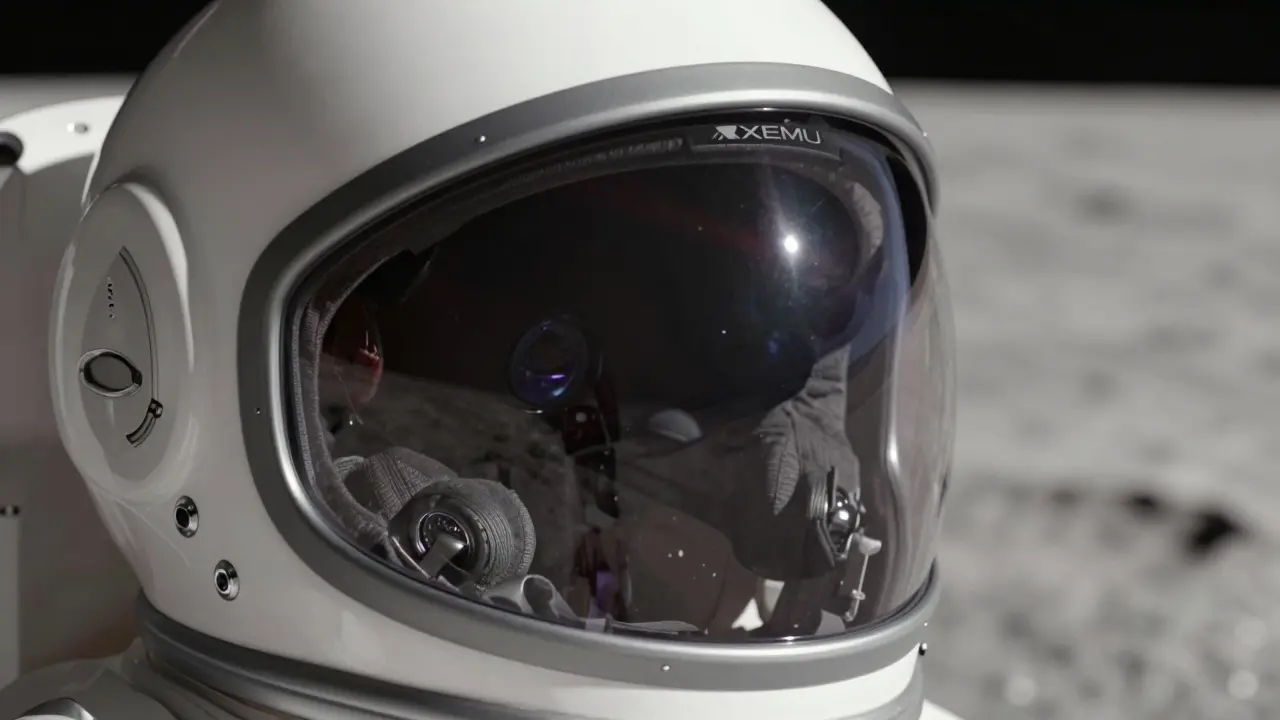
A key player here is Axiom Space is a private company developing commercial spacesuits and space stations for NASA's Artemis program, which is building the AxEMU (Axiom Extravehicular Mobility Unit) is the next-generation commercial spacesuit designed for lunar surface operations. To improve visibility, Axiom partnered with Oakley is a performance eyewear company providing advanced optical design for the AxEMU visor.
Oakley brings decades of experience in sports optics, where athletes need lenses that enhance contrast and reduce fatigue under varying light conditions. For the AxEMU, they developed a "next-gen visor system" featuring:
- Tuned Visible Light Transmittance: Unlike the generic tint of older visors, this lens is engineered to let through specific colors and intensities that help astronauts distinguish terrain features and equipment details.
- Advanced Gold Coating: The reflective layer is optimized specifically for the extreme light conditions found on the Moon and in cislunar space, shielding the eyes from intense solar radiation.
- Enhanced Contrast: The optical design aims to make objects stand out more clearly against the background, reducing eye strain during long-duration tasks.
This collaboration marks a shift from purely military-style engineering to incorporating consumer-grade optical innovations. By leveraging Oakley’s expertise, the AxEMU visor promises better visual ergonomics, meaning astronauts will be able to work longer and safer because their eyes won’t tire as quickly.
The Future: Electrochromic Visors That Change Instantly
Even with improved passive coatings, mechanical sun shades have a flaw: they are manual. You have to flip them up or down. What if the visor could change its darkness automatically, like smart glasses?
This concept is being explored through electrochromic visor technology is a dynamic material that changes opacity when an electrical voltage is applied. Research organizations like Giner, Inc. is a company developing electrochromic visors for NASA's next-generation spacesuit helmets are working on prototypes that integrate directly into helmet designs.
Electrochromic materials darken instantly when exposed to sunlight or when a small electric current is applied. Imagine walking from indoors to outdoors, and your sunglasses darken immediately without you touching them. Now apply that to a spacewalk. As an astronaut turns their head toward the sun, the visor darkens automatically to prevent glare. When they turn back into the shade, it clears up to restore full visibility.
This technology offers several advantages over traditional mechanical visors:
- Continuous Adjustment: Instead of binary states (shade up/shade down), the tint can vary smoothly based on light intensity.
- Reduced Cognitive Load: Astronauts don’t have to think about adjusting their visor; they can focus entirely on the task at hand.
- Better Situational Awareness: Rapid transitions between light and dark are handled seamlessly, preventing moments of temporary blindness.
However, integrating electronics into a spacesuit adds complexity. The system must survive vacuum, extreme temperature swings, and radiation without failing. Giner’s research focuses on ensuring these dynamic visors meet NASA’s strict reliability standards before they can replace or supplement mechanical shades.
Comparing Visor Systems: EMU vs. AxEMU vs. Electrochromic
| Feature | EMU (Current ISS) | AxEMU/Oakley (Lunar) | Electrochromic (Future) |
|---|---|---|---|
| Light Control Method | Manual mechanical shades + fixed tint | Fixed optimized optical coating | Dynamic electronic tint adjustment |
| Glare Protection | Good, but requires manual action | Excellent passive reflection | Instant automatic response |
| Visibility in Shadow | Requires removing shades manually | Optimized for balance, less adjustable | Clears instantly when light drops |
| Complexity | Low (mechanical only) | Medium (advanced materials) | High (requires power/electronics) |
| Primary Use Case | Low Earth Orbit (ISS) | Lunar Surface (Artemis) | Future Deep Space/Mars |
The table above highlights the trade-offs. The EMU system is proven and reliable, having supported hundreds of spacewalks. Its simplicity is its strength. The AxEMU represents a step forward in optical quality, using better materials to enhance vision without adding moving parts. The electrochromic option offers the best user experience but introduces new risks related to electronic failure in a hostile environment.
Why Material Science Matters for Visors
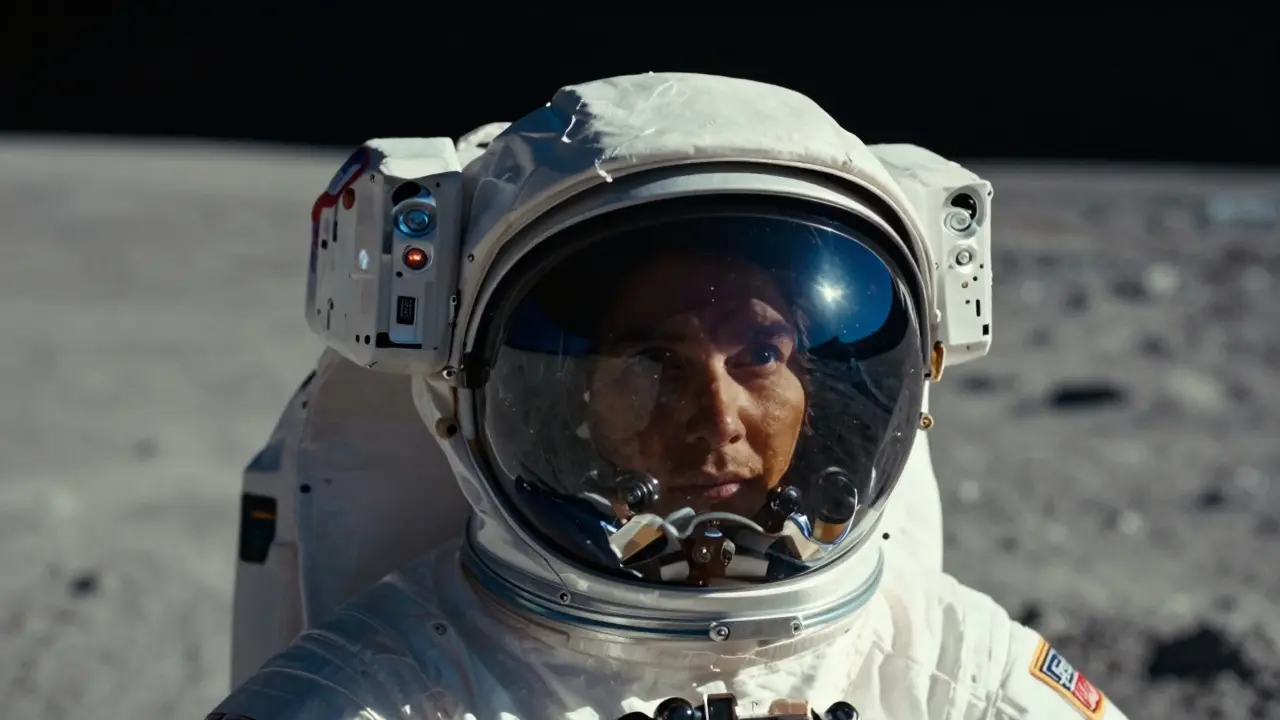
Beyond optics, the physical durability of the visor is paramount. The visor must withstand impacts from micrometeoroids and orbital debris traveling at thousands of miles per hour. It also faces thermal cycling, swinging from hundreds of degrees Fahrenheit in sunlight to below zero in shadow.
Polycarbonate is the go-to material because it is incredibly tough and transparent. However, raw polycarbonate scratches easily and degrades under UV exposure. That’s why coatings are essential. The gold layer isn’t just for style; it acts as a mirror for infrared heat, keeping the astronaut cooler and protecting the underlying plastic from thermal stress. Other layers may include anti-scratch coatings and anti-static treatments to prevent dust from sticking to the surface-a major issue on the Moon, where static electricity makes fine dust cling to everything.
Every layer adds weight and potential points of failure. Engineers must balance protection with clarity. If the visor is too thick or has too many layers, reflections and distortions can occur, making it hard to judge distances. Precision manufacturing ensures that the curvature of the visor matches the helmet perfectly, minimizing optical aberrations.
Training and Operational Realities
Having the right gear is only half the battle. Astronauts spend months training to use their helmets effectively. They practice in neutral buoyancy labs underwater, simulating the weightlessness of space. Part of this training involves learning how to manage their visors.
In the EMU system, astronauts learn when to deploy sun shades based on their orientation relative to the sun. They also practice cleaning fog or condensation from the inside of the helmet, which can happen due to body heat and humidity. Mismanaging the visor can lead to reduced visibility, which increases stress and error rates during critical repairs.
For future systems like the AxEMU, training will likely focus less on mechanical adjustments and more on interpreting the enhanced visual data provided by the tuned optics. With electrochromic visors, training might involve understanding the automatic responses of the system and knowing how to override them if necessary.
The goal is always the same: keep the astronaut safe, comfortable, and focused. A good visor disappears from the astronaut’s awareness, becoming simply a clear window to the universe. A bad one becomes a constant obstacle, forcing them to fight against glare and darkness instead of working on their mission.
Why are astronaut visors gold?
The gold coating on astronaut visors serves two main purposes. First, it reflects infrared radiation, which helps keep the astronaut cool and protects the visor material from heat damage. Second, it blocks harmful ultraviolet (UV) rays and reduces intense glare from the sun, acting like high-performance sunglasses. While other metals can be used, gold is highly effective at reflecting IR and is durable in the vacuum of space.
Can astronauts see clearly in the dark with their helmets?
Yes, but it depends on the visor configuration. In deep shadow, astronauts often raise their sun shades or remove internal sunglasses to maximize light intake. The clear pressure bubble allows maximum visibility in low-light conditions. However, space shadows are extremely dark, so external lighting from spacecraft or suits is often needed to illuminate work areas.
What is the difference between the EMU and AxEMU helmets?
The EMU helmet is the current standard for the International Space Station, relying on mechanical sun shades and standard optical coatings. The AxEMU helmet, developed for lunar missions, features advanced optics designed by Oakley. It uses tuned visible light transmittance and optimized gold coatings to provide better contrast and clarity in the harsh lighting conditions of the Moon, reducing eye strain and improving task performance.
How do electrochromic visors work?
Electrochromic visors use special materials that change their opacity when an electrical voltage is applied. When exposed to bright sunlight, the visor can automatically darken to reduce glare. When the light level drops, it clears up. This allows for instant, continuous adjustment without the need for manual mechanical shades, offering superior convenience and safety for astronauts.
Why is visibility so important during spacewalks?
Visibility is critical for safety and efficiency. Astronauts perform complex tasks like repairing satellites, replacing batteries, and conducting experiments. Poor visibility due to glare or darkness can lead to mistakes, dropped tools, or injuries. Clear vision allows astronauts to read instruments, identify components, and maintain situational awareness, which is vital in the hazardous environment of space.
9 Responses
hey there, just wanted to say this is a really interesting read and i think we can all learn something from it about how these things work in space which is pretty cool
i mean when you think about it the whole concept of having to manually flip shades up and down while floating in zero gravity seems like such an old school way of doing things but maybe that's just because im not used to thinking about the constraints of engineering in a vacuum
it makes me wonder if there are other parts of the suit that could be automated too like maybe the gloves or something because handling tools with bulky gloves must be super frustrating especially if you're trying to do delicate work on solar panels or whatever
anyway i just thought id share my thoughts since i found the section on the oakley partnership quite fascinating and it shows how commercial tech can actually help out in serious scientific endeavors which is always a good thing for everyone involved
hopefully we see more collaborations like this in the future because innovation comes from everywhere not just big government labs so lets keep supporting those kinds of initiatives wherever we can
The philosophical implication of the visor as a mediator between human perception and cosmic reality is profound. We often take for granted the atmosphere's role in scattering light, creating a soft buffer that allows our eyes to function comfortably. In space, that buffer is removed, exposing the raw, unfiltered intensity of the sun and the absolute void of shadow.
This duality forces us to confront the limits of biological adaptation. The gold coating isn't merely a technical solution; it's a symbolic shield against the sublime terror of the universe. It reminds us that without technology, we are fragile creatures ill-equipped for the harshness of existence beyond Earth.
I appreciate the detailed breakdown of the optical challenges. It highlights how much of our daily experience is constructed by environmental factors we rarely notice. When those factors change, our entire sensory world collapses unless we engineer new ways to perceive it.
omg can we talk about how absolutely RIDICULOUS it is that they are partnering with OAKLEY?? like seriously??
i mean sure they make sunglasses for jerry maguire but this is NASA we are talking about here!! the pinnacle of human achievement and engineering prowess!!
its like hiring a guy who fixes bikes to design the engine for a rocket ship!!! its insulting to the engineers who have been working on this stuff for decades!!
and dont even get me started on the electrochromic stuff its probably gonna fail within five minutes anyway because everything electronic fails in space its just basic physics you idiots!!
i bet half the budget went to marketing fees for oakley instead of actual research!!! typical corporate greed ruining science again!!!
Wow Joe, calm down a bit would you? You're being incredibly rude and missing the point entirely.
Oakley has legitimate expertise in high-performance optics and contrast enhancement, which is exactly what astronauts need. Dismissing their contribution because of brand recognition is lazy and unhelpful.
We should be celebrating innovative partnerships that improve safety and efficiency for astronauts. Your conspiracy theories about budgets are baseless and distracting from the actual technological advancements being discussed.
Let's keep this conversation respectful and focused on the science, okay? Everyone deserves to feel included and heard without being attacked.
Actually, Laura, you are fundamentally misunderstanding the strategic value of the Oakley partnership. While your sentiment regarding respectability is noted, it lacks technical depth. The AxEMU visor utilizes tuned visible light transmittance (TLT) lenses, a proprietary technology developed by Oakley specifically for variable lighting conditions.
This is not merely 'marketing'; it is the application of advanced photonic engineering to solve specific ergonomic issues related to visual fatigue during Extravehicular Activities (EVAs). The collaboration leverages commercial sector agility and specialized optical R&D that traditional aerospace contractors may lack.
Furthermore, the integration of electrochromic materials represents a significant leap in adaptive optics. To dismiss these innovations as mere branding is to ignore the complex interplay between material science and human factors engineering. One should educate themselves before making such reductive claims.
nah the gold is just to hide the fact that the suits are falling apart inside
nasa has been lying about radiation levels for years and now they want us to believe some fancy sunglasses will save them
the electrochromic stuff is definitely a cover up for the real reason they cant go back to the moon which is because the government doesnt want people to find out what they found there last time
just look at the dates and the funding cuts its all connected
the visor is a metaphor for the human condition
we build shields to protect ourselves from the truth
the gold reflects the ego
the darkness hides the fear
we float in the void pretending we are safe
You guys are all completely wrong about the electrochromic tech being the future. Its actually a terrible idea because electronics fail in space. Always have always will.
The mechanical shades are superior because they are simple and reliable. If a wire breaks you are blind. If a hinge sticks you can break it open.
Also the Oakley partnership is overrated because sports optics are not the same as space optics. The spectrum requirements are totally different.
Stop listening to PR releases and start reading the actual engineering specs. They are hiding the failure rates of the prototypes.
In France, we have a saying: 'Le mieux est l'ennemi du bien' - the best is the enemy of the good. This post beautifully illustrates that tension. The current EMU system is imperfect, requiring manual dexterity and cognitive load, yet it has kept astronauts safe for decades. The push for electrochromic visors is driven by the desire for perfection, but as Edward Nigma points out, simplicity often wins in hostile environments.
However, I must disagree with the dismissal of commercial partnerships. Innovation thrives at the intersection of disciplines. Oakley’s expertise in dynamic lens technology is precisely what is needed to enhance contrast in the lunar environment. It is not about replacing engineering rigor but augmenting it with specialized knowledge.
The drama surrounding these developments is understandable, given the stakes. But let us remember that every advancement, from the gold coating to the potential electrochromic shifts, is a testament to human ingenuity. We are learning to see the universe clearly, one layer at a time. This is a triumph of international and interdisciplinary cooperation, not a source of division.