
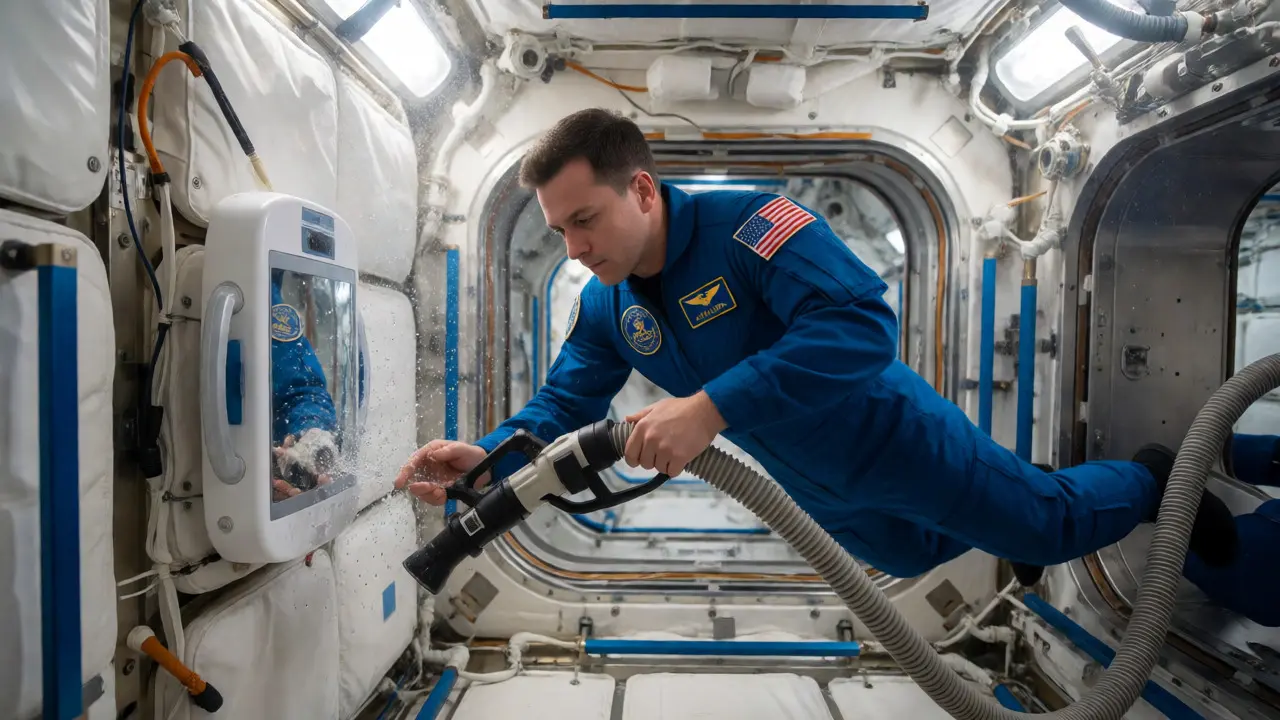
Imagine trying to clean your kitchen while floating in mid-air. Your sponge floats away, water droplets turn into wobbling spheres that stick to everything, and dust doesn't settle-it just hangs there, waiting for you to breathe it in. This isn't a nightmare; it's Tuesday on the International Space Station (ISS). For the astronauts living there, keeping the habitat clean is a critical survival task, not just a chore. With missions lasting six months or more, a dirty station can mean more than just a bad smell-it can mean equipment failure, corrosion, and health risks from harmful microbes.
Why Cleaning in Microgravity Is Different
On Earth, gravity does half the work. It pulls dirt down, drains water away, and keeps particles out of the air we breathe. In space, none of that happens. Without gravity, fluids don't drain; they cling to surfaces due to surface tension. Dust doesn't fall; it accumulates in ventilation grilles and on equipment backs. This makes standard cleaning methods useless. You can't mop a floor because the water would float around and potentially short-circuit electronics. You can't shower normally because the water wouldn't run off your body. Instead, housekeeping becomes a precise engineering challenge. The goal is to keep microbial levels below strict limits set by agencies like NASA and ESA. For instance, interior surfaces must be kept below 10,000 colony-forming units (CFU) of bacteria per 100 cm². If you exceed this, you risk biofilms-slimy layers of microbes that can corrode metal and degrade plastic components. A study on ISS materials showed that without regular cleaning, these biofilms could form rapidly, especially in humid areas like the bathroom or near condensation points.
The Weekly Housekeeping Routine
Astronauts don't clean randomly. They follow a strict schedule. Every Saturday, the crew dedicates about three hours to deep cleaning. This block is sacred. During this time, they vacuum every accessible surface, change air filters, and wipe down high-touch areas with disinfectant wipes. These wipes aren't your average supermarket brand; they contain benzalkonium chloride (BZK), a chemical effective against bacteria and fungi but safe for the sensitive electronics and plastics used on the station. Vacuuming is tricky. Standard vacuums rely on airflow to pull debris into a bag, but in microgravity, the debris might just float back out if the seal isn't perfect. Specialized vacuum cleaners are designed to capture particulates efficiently. Crew members pay close attention to vents and fans, where dust loves to accumulate. If these get clogged, airflow drops, humidity rises, and mold gets a chance to grow. It’s a vicious cycle that routine maintenance breaks.
| Task | Earth Method | Space Station Method | Reason for Change |
|---|---|---|---|
| Bathing | Shower with running water | Sponge bath with no-rinse soap | Water conservation and lack of drainage |
| Toilet Use | Flush with water | Suction airflow system | Water weight and fluid management |
| Dust Removal | Mopping/Dusting | Vacuuming with HEPA filters | Dust floats instead of settling |
| Disinfection | Bleach/Sprays | BZK Wipes/UVC Lamps | Material compatibility and fume control |
Personal Hygiene: The Sponge Bath Reality
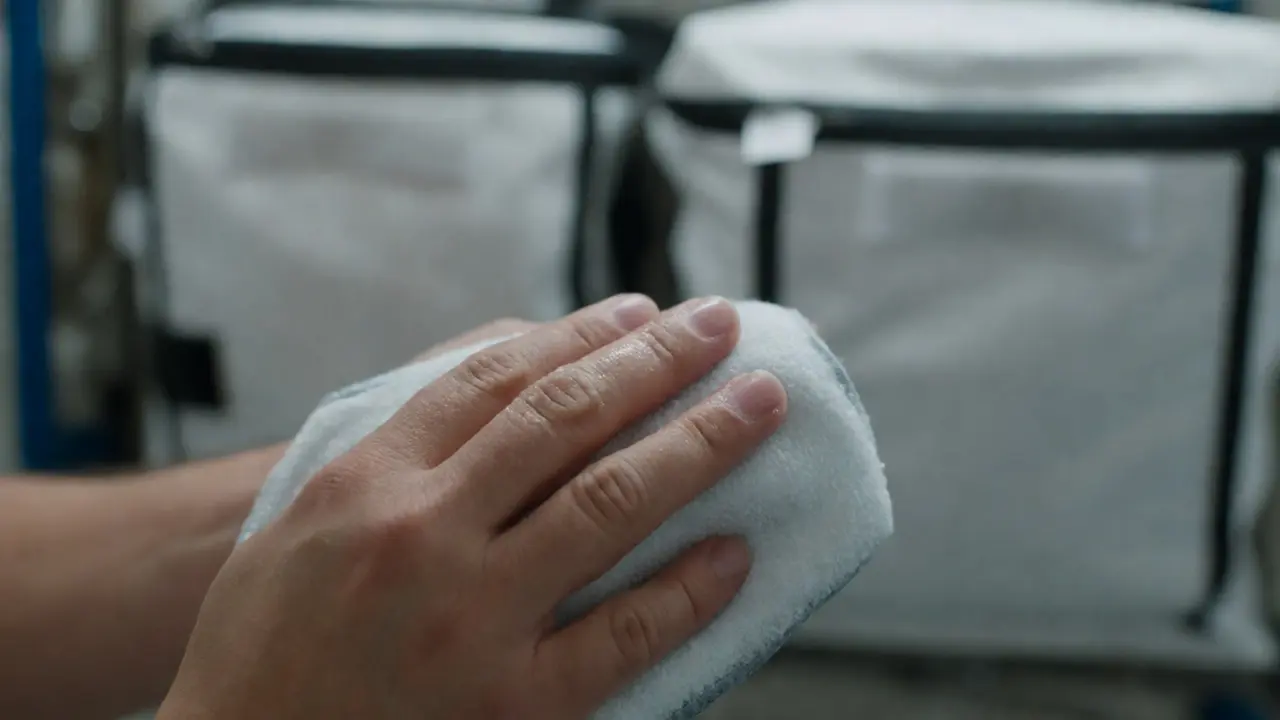
Let’s talk about the elephant in the room-or rather, the astronaut in the hygiene corner. There are no showers on the ISS. That might sound grim, but it’s actually quite efficient. Astronauts use washcloths and no-rinse soap. They wet the cloth, apply soap, scrub their body, and then rinse with another wet cloth. Since the soap doesn’t need rinsing, residue stays minimal. Hair washing involves applying shampoo, massaging the scalp, and drying with a towel. No water runs down the drain because there is no drain. This method saves massive amounts of water. On Skylab, the first US space station with a shower (1973-1974), astronauts used liters of water per session. Today, an ISS crew member uses tens of milliliters. German astronaut Hans Schlegel once described it as "more like a cat lick," highlighting how little water is involved. While it lacks the luxury of a hot shower, it’s practical. Daily hygiene takes about 30 minutes, including brushing teeth (using swallowable toothpaste or spitting into a towel) and using deodorant. It’s a trade-off between comfort and operational necessity.
Fighting Biofilms and Mold
The biggest enemy of a space station isn't dirt; it's invisible life. Microbes love warm, moist environments. The ISS is filled with polymers, metals, and crevices where bacteria like *Pseudomonas aeruginosa* and fungi like *Penicillium rubens* can thrive. When these microbes form biofilms, they become resistant to cleaning agents. A recent experiment called Space Biofilms tested how these organisms behave in microgravity. Surprisingly, biofilms formed in space were less robust than those on Earth, but they still posed a threat to hardware integrity.
To combat this, engineers are looking at new materials. Lubricant-Impregnated Surfaces (LIS) have shown promise, reducing biofilm formation by up to 86% in space tests. Another approach involves laser-structured copper surfaces, which naturally kill bacteria upon contact. These innovations aim to reduce the manual cleaning burden. Instead of wiping every inch daily, future habitats might rely on self-cleaning surfaces. However, until those technologies are fully integrated, astronauts must remain vigilant. Regular sampling of air, water, and surfaces ensures that contamination levels stay within the acceptable limits defined by the Environmental Health System (EHS).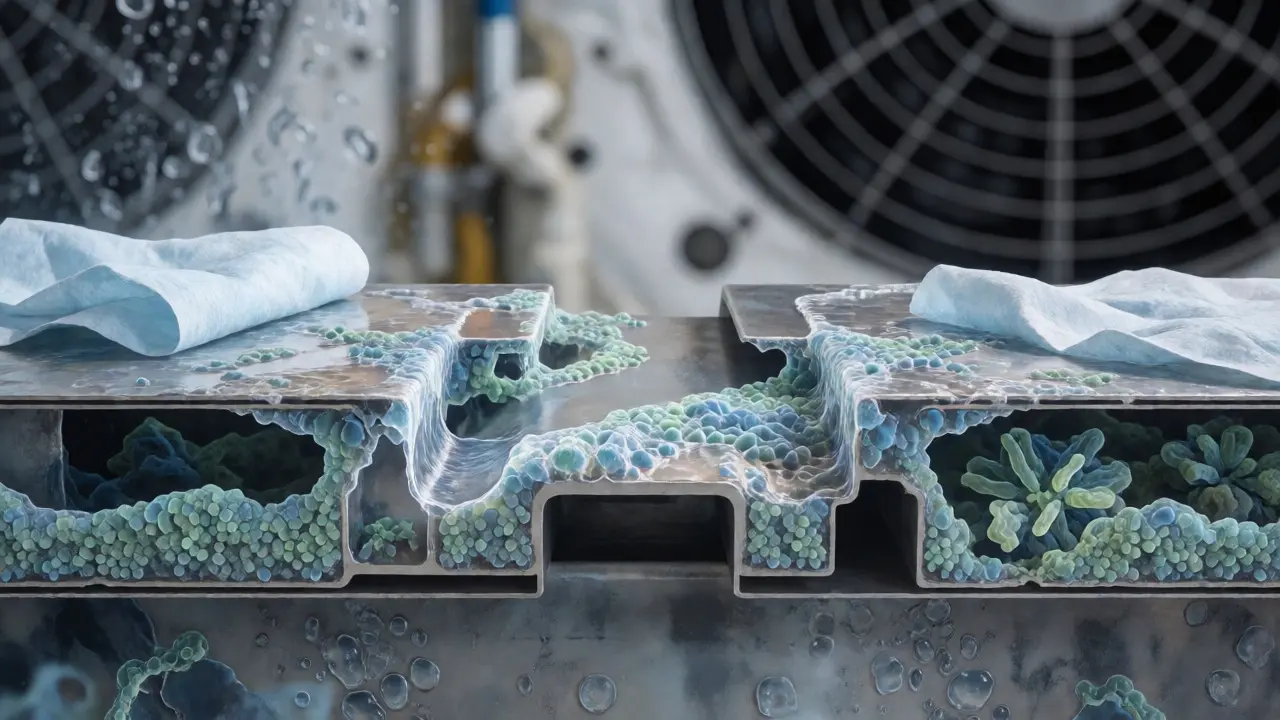
Water and Air Recycling Systems
You might wonder where all the water goes. On the ISS, nothing is wasted. Urine and sweat are collected and processed through the Water Recovery System. This system uses a catalytic oxidizer to break down organic contaminants, followed by iodine disinfection and filtration through a 0.2-micron filter. The result? Potable water that is cleaner than most tap water on Earth. But this system needs care. If biofilms build up inside the pipes, flow rates drop, and filters clog. Crew members regularly check drip pans and condensate collectors, wiping them down to prevent stagnant water pockets.
Air quality is equally critical. The Environmental Control and Life Support System (ECLSS) circulates cabin air through HEPA filters to remove particulates and microbes. Humidity is tightly controlled to prevent condensation. If humidity spikes, moisture forms on cold surfaces, creating perfect breeding grounds for mold. Astronauts monitor CO2 levels and trace contaminants, ensuring the air remains breathable and free of harmful spores. It’s a delicate balance of temperature, pressure, and chemistry, all monitored continuously.Future Habitats and Automation
As we look toward the Moon Gateway and Mars missions, housekeeping will evolve. Longer missions mean more wear and tear on systems. Manual cleaning consumes valuable crew time that could be spent on science. Researchers are developing automated cleaning robots and UV-C lamps that can sterilize hard-to-reach corners without human intervention. UVC light damages microbial DNA, offering a chemical-free way to sanitize surfaces. Early tests show these devices can significantly reduce bacterial loads when used alongside traditional wipes. The goal is to create habitats that maintain themselves. Imagine a station where sensors detect rising microbial counts and trigger localized UV sterilization automatically. Or surfaces coated with antimicrobial compounds that release slowly over time. These advancements won't eliminate the need for human oversight, but they will make life in orbit more sustainable. For now, though, the weekly Saturday cleanup remains a cornerstone of station operations, reminding us that even among the stars, cleanliness is next to godliness-and survival.
Do astronauts take showers on the International Space Station?
No, there are no showers on the ISS. Astronauts use sponge baths with washcloths and no-rinse soap. Water is too precious and difficult to manage in microgravity to allow for running showers. They wash their hair with no-rinse shampoo and dry it with towels.
How do astronauts flush the toilet in space?
Space toilets use suction airflow instead of water. Astronauts secure themselves to the seat, and a fan pulls waste into a storage container. Urine is diverted into a separate tube and eventually recycled into drinking water. Solid waste is compressed and stored until disposal.
What chemicals are used to clean the space station?
The primary disinfectant used is benzalkonium chloride (BZK), found in special wipes. For cargo pre-treatment, 6% hydrogen peroxide is often used. Ultraviolet-C (UVC) lamps are also employed to sterilize surfaces without chemicals.
Why is dust dangerous on a space station?
Dust doesn't settle in microgravity; it floats. It can accumulate in ventilation systems, blocking airflow and causing overheating. It can also irritate astronauts' eyes and lungs if inhaled. Furthermore, dust particles can serve as carriers for microbes, spreading contamination throughout the habitat.
How often do astronauts clean the ISS?
Major housekeeping occurs once a week, typically on Saturdays, lasting about three hours. This includes vacuuming, changing filters, and wiping down surfaces. Daily tasks include tidying personal areas and managing food waste.
8 Responses
It is worth noting that the CFU limits mentioned are strictly enforced by international standards. While the article mentions BZK, it omits that silver ion technology has been used in some water filtration components for years to inhibit bacterial growth. The reliance on manual cleaning is indeed a bottleneck for long-duration missions.
oh wow i never realized how much work goes into just keeping the air breathable
i think its so cool that they recycle the urine too but does it really taste like water? also the part about dust not settling is crazy imagine trying to eat without crumbs floating into your nose lol
The article overstates the danger of biofilms.
Biofilm resistance is overstated.
Cleaning is trivial compared to radiation shielding issues.
Most microbes die in vacuum anyway.
The station is already sterile enough.
No one cares about mold.
It is all marketing fluff from NASA.
Real problems are fuel leaks.
Crews are overpaid for wiping walls.
Hygiene is secondary to survival.
This is basic knowledge.
You missed the point entirely.
Stop worrying about germs.
Focus on engineering failures.
The data is cherry-picked.
this makes me wonder if cleanliness affects mental health more than physical health 🤔
we associate order with safety and chaos with anxiety right? so maybe scrubbing the vents is actually therapy for them? 😌
its like making your bed to feel productive but in space
do you think they miss the smell of rain or earth? 🌧️
the lack of gravity must change our perception of 'clean' too
on earth clean means dry and settled
in space clean might mean suspended and controlled
its a philosophical shift in what we value
we judge cleanliness by visual cues usually
but here its invisible threats
that changes the moral weight of chores
it becomes an act of care rather than vanity
beautiful thought 💭
Wrong.
Vacuum seals fail often.
Microbes adapt fast.
Manual labor is inefficient.
Radiation is the real killer.
Ignore this fluff.
hey great point about the mental aspect sarah
its totally true that routine helps keep us grounded
even when there is no ground lol
keep up the good thoughts
OMG THE HORROR OF FLOATING DUST!!! 😱😱😱 I can barely handle my own cat hair falling on the floor let alone having it stick to my eyeballs!! It’s absolutely TERRIFYING to think about breathing in those tiny particles forever!! No shower?! That sounds like a NIGHTMARE! I would go INSANE without hot water!! Poor astronauts!! They are literally living in a dirty bubble in space!! It’s SO sad!! 😭😭😭 But hey at least they don’t have to mop!! Right?? RIGHT?? This is the most insane thing I’ve read today!! My brain is melting!! 🤯🤯🤯
I appreciate the detailed breakdown of the hygiene protocols; it provides a clear understanding of the operational constraints.
However, I believe the emphasis on automation should be highlighted further as the primary solution for future deep-space missions.
Human time is a critical resource that cannot be wasted on repetitive maintenance tasks indefinitely.
The transition to self-cleaning surfaces represents a necessary evolution in habitat design.
We must prioritize technological solutions over procedural adjustments to ensure crew well-being.
The current methods are effective but unsustainable for Mars transit durations.
Investment in LIS materials appears to be a promising avenue for reducing microbial loads.
Furthermore, psychological comfort derived from automated systems may reduce crew fatigue.
It is essential to view these innovations through the lens of long-term mission viability.
Let us continue to support research into autonomous environmental control systems.
Thank you for sharing this insightful perspective on daily life in orbit.
Best regards.