
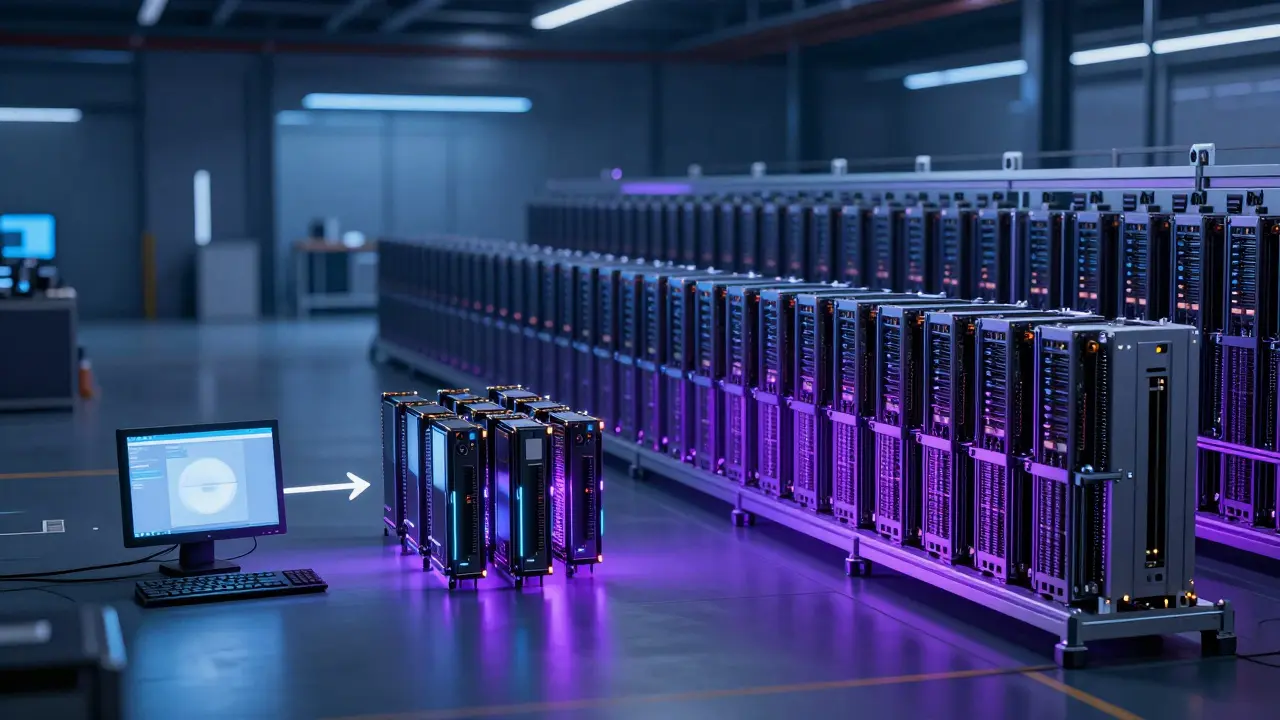
Imagine spending thousands of dollars on a high-end rig only to realize you're spending more on electricity than you're earning in crypto. In the world of proof-of-work mining, your hardware isn't just a tool-it's the difference between a profitable business and a very expensive space heater. Since Bitcoin's launch, the race for hash power has moved from basic home computers to massive industrial warehouses. If you're looking to enter this space in 2026, you need to understand that not all chips are created equal.
The Spectrum of Mining Hardware
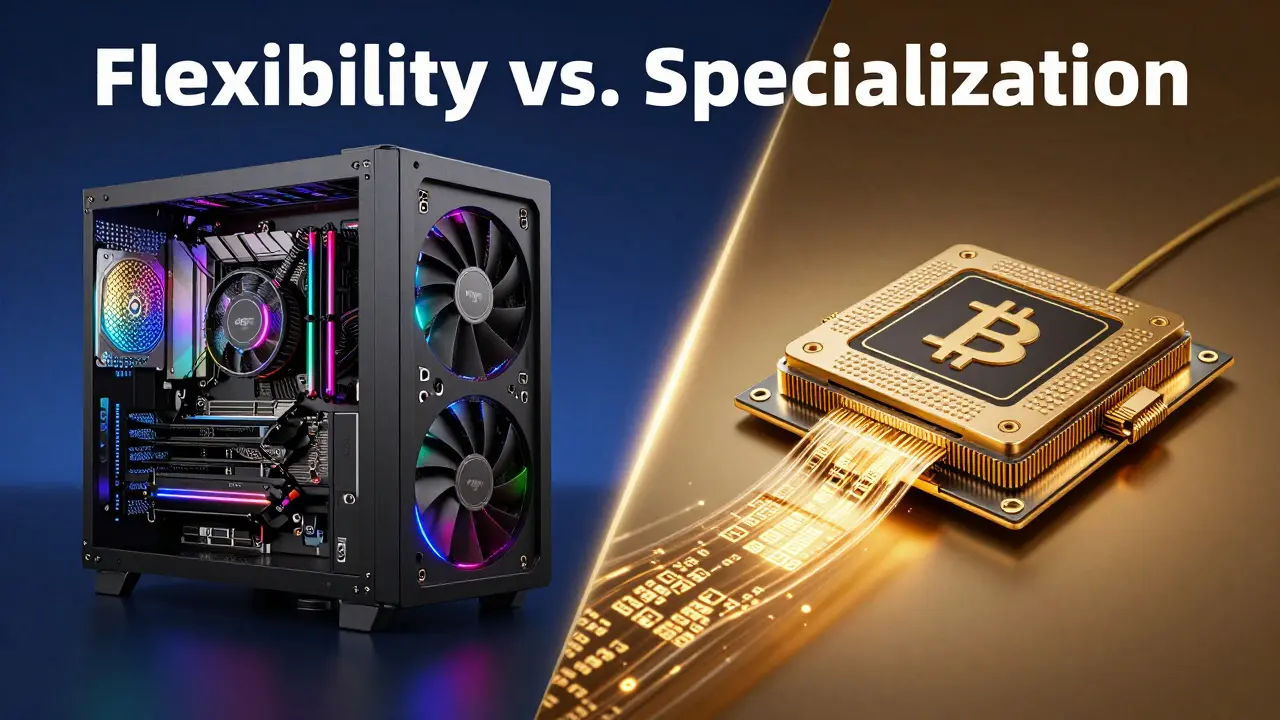
When we talk about mining, we're really talking about solving a mathematical puzzle as fast as possible. The hardware you choose determines how many "guesses" (hashes) you can make per second. This is a trade-off between flexibility and raw power. On one end, you have devices that can do anything but are slow at mining. On the other, you have devices that do exactly one thing but do it with terrifying efficiency.
To get our bearings, let's look at the four main players. CPU is the Central Processing Unit, the general-purpose brain of your computer . While these started the whole movement, they are now completely useless for competitive mining. Then there are GPUs, or Graphics Processing Units, designed for parallel workloads like gaming and AI . They are the go-to for hobbyists and those mining "altcoins."
Moving deeper into specialization, we find FPGAs, which are Field-Programmable Gate Arrays-chips that can be reconfigured after manufacturing . They were a bridge between GPUs and ASICs, though they've mostly faded into a niche technical curiosity. Finally, we have the heavy hitters: ASICs, or Application-Specific Integrated Circuits, hardware hard-wired for one specific algorithm . If you want to mine Bitcoin today, this is your only real option.
Why ASICs Dominate the Bitcoin Race
If you're targeting Bitcoin's SHA-256 algorithm, the math is brutal. An ASIC isn't just "better" than a GPU; it's in a different league entirely. Modern units like the Bitmain Antminer S21 series can push over 200 TH/s. To put that in perspective, a top-tier GPU attempting the same work is roughly 100,000 times slower. You would need a warehouse full of GPUs to match a few ASIC racks, and your electricity bill would bankrupt you in days.
The secret is in the silicon. While a GPU wastes energy on circuitry for rendering 3D graphics and managing textures, an ASIC has stripped everything away. It only contains the logic gates necessary to compute the hash. This results in an energy efficiency of about 15-17 joules per terahash. For a mining hardware setup to be viable, you have to minimize the cost per hash. When you compare the electricity cost of an ASIC to a GPU for SHA-256, the GPU is over 10,000 times more expensive per computational unit. It's not just inefficient; it's mathematically impossible to profit.
| Hardware Type | Typical Hashrate | Energy Efficiency (J/TH) | Economic Viability (2026) |
|---|---|---|---|
| CPU | ~20 MH/s | 500,000 | None |
| GPU | 1-2 GH/s | 50,000 | None (for BTC) |
| FPGA | 5-25 GH/s | 10,000 | Minimal |
| ASIC | 200+ TH/s | 15-17 | Dominant |
The Case for GPUs: Flexibility and Risk Management
If ASICs are so much faster, why does anyone still buy GPUs? Because ASICs are "one-trick ponies." If you buy an ASIC for Bitcoin and Bitcoin changes its algorithm or the price crashes, you own a very expensive brick. You cannot use an Antminer to mine a different coin if that coin doesn't use SHA-256.
GPUs offer a safety net. They are used for mining alternative cryptocurrencies-like Ravencoin or certain Monero-family coins-that are specifically designed to be "ASIC-resistant." These coins use memory-hard algorithms that neutralize the speed advantage of custom chips. For the hobbyist, the appeal is adaptability. If one coin stops being profitable, you can switch your software to a different algorithm in minutes. Plus, there's the resale value. If mining fails, you can sell your GPUs to gamers or AI researchers. An ASIC has zero value outside of the mining market.
FPGAs: The Technical Middle Ground
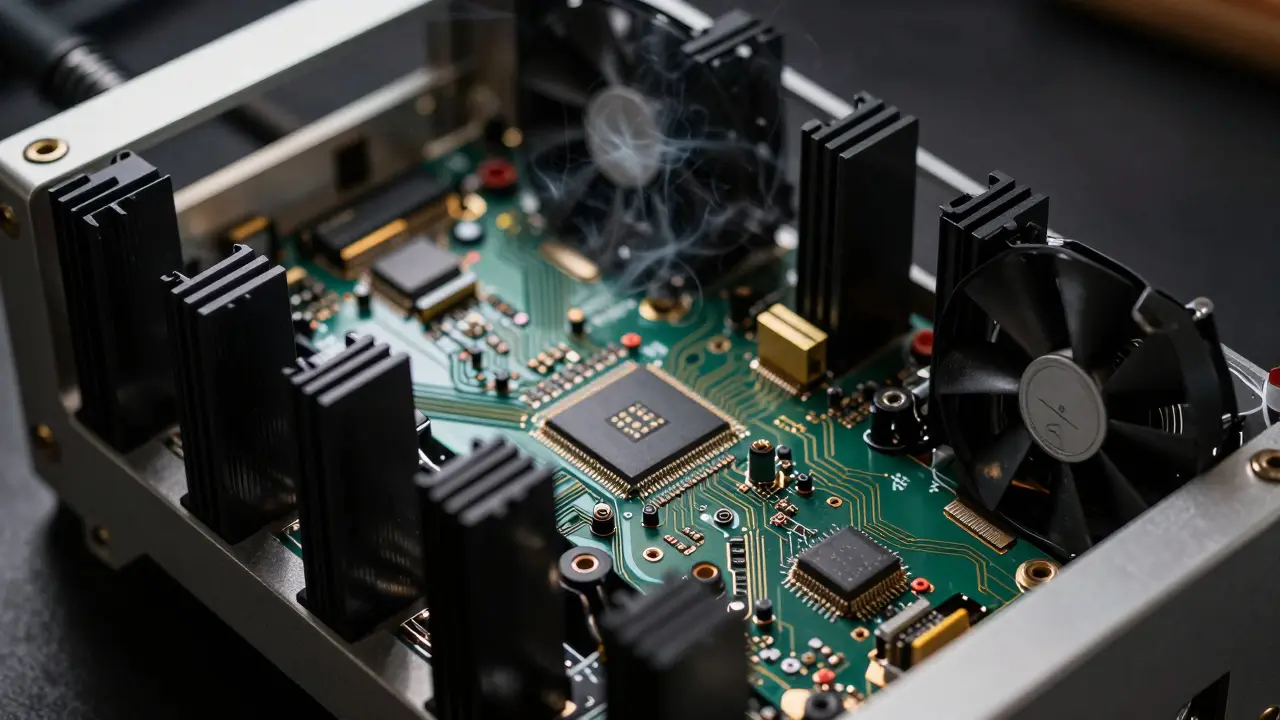
FPGAs occupy a strange space. Because they can be reprogrammed at the hardware level using Hardware Description Language (HDL), they offer a middle path. They are more efficient than GPUs because you can strip away the graphics fluff, but they aren't as rigid as ASICs.
In the early 2010s, FPGAs were a goldmine for those who could code them. Today, they are mostly used for very niche, new coins that haven't been hit by ASICs yet. However, the learning curve is a vertical cliff. To get an FPGA to perform well, you don't just install software; you essentially design the chip's logic. Unless you are a hardware engineer, the effort rarely outweighs the reward compared to just buying a specialized ASIC or a flexible GPU.
Calculating the Real Cost of Ownership
The sticker price is the least important part of your budget. The real battle is fought with your electric meter. Let's look at a real-world scenario. A modern ASIC might pull 3,500 watts. At a cheap rate of $0.05 per kWh, that's about $4.20 a day in power. If you have a low-cost energy source, that's a manageable overhead for the massive amount of Bitcoin it produces.
Contrast that with a high-end GPU rig. While a single card only uses about 350 watts, its output for SHA-256 is negligible. You'd be paying $0.42 a day to earn a fraction of a cent. This is why the industry has shifted toward industrial-scale operations. The only way to make the numbers work is to find regions with incredibly cheap, often renewable, electricity. If you're mining in a residential area with high peak rates, you're essentially donating money to the power company.
Implementation and Setup: What to Expect
The "time to profit" varies wildly by hardware. ASIC mining is almost plug-and-play. You buy the unit, plug it into a heavy-duty power supply, connect it to a pool, and it starts hashing. The technical challenge here isn't the software; it's the heat and noise. These machines sound like jet engines and put out enough heat to warm a small house in winter.
GPU mining is a bit more involved. You'll spend a few days tweaking overclocking settings-balancing core clock and memory frequency-to find the "sweet spot" where you get the most hashes per watt. Then there's the software side: choosing the right mining pool and OS. FPGA mining is a different beast entirely, often requiring weeks of custom firmware development before you see a single coin.
Can I mine Bitcoin with my gaming PC?
Technically, yes, but you will lose money. Because ASICs are so efficient, the "difficulty" of the network is too high for GPUs. You will spend significantly more on electricity than you will earn in Bitcoin.
What is the best hardware for altcoins?
For most alternative coins, GPUs are the best choice due to their flexibility and the fact that many altcoins are designed to be ASIC-resistant. However, always check if a specific ASIC exists for that coin's algorithm first.
How long do ASICs last before they become obsolete?
ASICs typically have a viable window of 2-4 years. As newer, more efficient models (like moving from 7nm to 3nm chips) are released, older models become less profitable as the network difficulty rises.
Is FPGA mining still worth it in 2026?
Only for a very small number of highly technical users mining niche coins. For 99% of people, the complexity of HDL programming makes FPGAs an irrational choice compared to GPUs or ASICs.
What happens if the algorithm changes?
If an algorithm changes, ASICs become useless because their logic is hard-wired. GPUs and FPGAs can simply be updated with new software or firmware to adapt to the new rules.
Next Steps for New Miners
Before you buy any hardware, run a profitability calculator using your actual electricity rate. If you have zero technical experience and want the highest possible returns on Bitcoin, look into ASICs from reputable brands like Bitmain or Whatsminer. Just ensure your electrical panel can handle the load.
If you're a hobbyist who wants to experiment with different coins and doesn't want to risk total capital loss, start with a GPU rig. It's a safer entry point with better resale options. Finally, if you're a hardware engineer looking for a challenge, FPGAs might be your playground, but don't expect them to be a "get rich quick" scheme.
11 Responses
definitely agree on the gpu part!! it's just way more chill to be able to swap coins if one goes south lol
Imagine actually thinking a GPU rig is a "strategy" in 2026... absolutely laughable!!! The sheer ignorance of the industrial scale is staggering, honestly... only a novice would cling to such quaint, outdated notions of "flexibility" while the real players are optimizing terahashes in arctic warehouses... simply pathetic!!!
it really makes you think about how we value things... like, is the speed worth the loss of freedom?? :)
I already know all this! Everyone knows ASICs are for BTC :) My cousin has three of them and he makes way more than you probably do! 🤑
The noise level of an ASIC is literally a nightmare. I can't believe anyone would actually put one of those in a residential home without losing their mind. It's a total disaster waiting to happen to your sanity and your marriage.
Your grammar in that last section is a complete wreck! Fix your damn punctuation before you try to give financial advice to people! It's embarrassing to read!
I think we can all find a middle ground here!! maybe someone can share a proftability calcualtor to help us all out? :D
It is absolutely preposterous that so many people in this thread are ignoring the basic rules of syntax and punctuation while discussing complex hardware, and frankly, I find it an utter travesty that I have to sit here and witness such a linguistic meltdown when the original post was attempting to be informative in a way that should have commanded a higher standard of discourse from the community at large!
Oh sure, just throw some LHR cards in a rig and pray for a 10x on some obscure shitcoin, that's totally a viable hedge against ASIC dominance 🙄. The synergistic delta between your electricity overhead and the network difficulty is just... chef's kiss 🤌.
Efficiency is just a social construct designed to make us feel bad about our electricity bills 🙃. Why run a race toward zero anyway? The void is where the real gains are.
I'm literally drowning in the cost of my current setup and it's an emotional void that no amount of BTC can fill... it's a parasitic relationship with the power grid that's eating my soul alive while I stare at these flickering LEDs in the dark.