
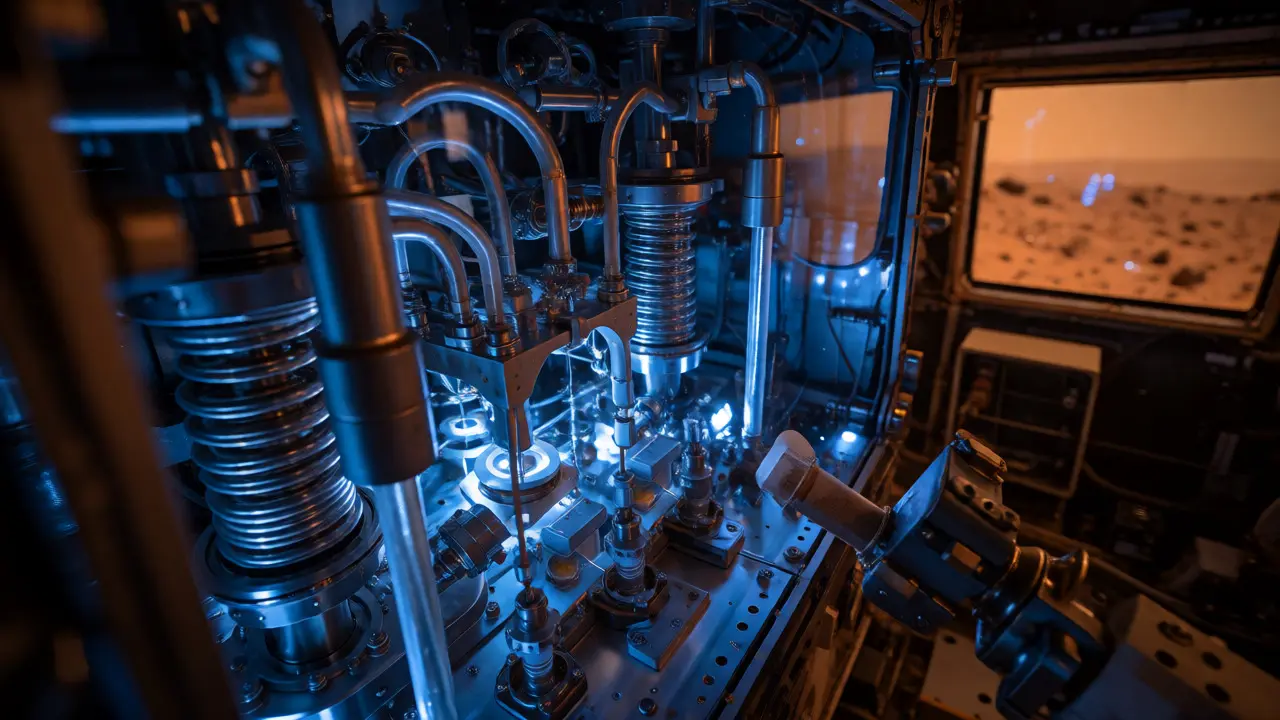
Imagine trying to identify a specific perfume scent while standing inside a burning building. You need to separate the individual notes from the smoke, ash, and heat before you can even start smelling them properly. That is essentially the job of a gas chromatograph an analytical instrument that separates compounds based on their volatility and interaction with a stationary phase when it operates in the vacuum of space or on another planet. Unlike a simple mass spectrometer, which just weighs molecules, a gas chromatograph (GC) acts as a molecular sorting machine. It untangles complex mixtures so scientists can see exactly what is there, not just how heavy the pieces are.
This technology has been the backbone of planetary exploration for decades. From the dusty soils of Mars to the thick atmosphere of Titan, GCs have helped us find organic molecules, noble gases, and potential signs of life. But building one for space is a nightmare of engineering constraints. You cannot plug it into a wall outlet, you cannot change the filter every week, and if it breaks, no technician is flying out to fix it. So, how do these tiny laboratories actually work when millions of miles away?
The Core Mechanism: Sorting Molecules by Speed
At its heart, gas chromatography relies on a simple physical principle: different molecules move at different speeds through a tube. Inside the instrument, there is a long, thin column coated with a special liquid or polymer, known as the stationary phase. A carrier gas-usually helium or hydrogen-pushes the sample through this column. As the sample travels, some molecules interact strongly with the coating and slow down, while others glide past quickly. This separation happens over time, creating distinct "peaks" as each compound exits the column.
On Earth, we might use a GC to check the purity of pharmaceuticals or analyze wine components. In space, the stakes are higher. The most common configuration found on missions is GC-MS a hybrid system combining gas chromatography with mass spectrometry for detailed molecular identification. Here’s why they are paired: GC separates the mixture, but it doesn’t always tell you exactly what the separated parts are. Two different chemicals might exit the column at the same time (co-elution). The Mass Spectrometer (MS) then ionizes these separated chunks and measures their mass-to-charge ratio, giving a fingerprint that confirms identity. Without the GC, the MS would be overwhelmed by a jumbled mess of signals. Without the MS, the GC would give you timing data but no definitive chemical names.
Viking and Pioneer: The Early Pioneers
The first major test of this tech happened in 1976 with NASA’s Viking landers. They carried a GC-MS package designed to sniff Martian soil. The setup used a Tenax column swept by hydrogen. Before the hydrogen could enter the mass spectrometer (which hates hydrogen), it had to be removed using a palladium membrane. It was clunky, heavy, and consumed significant power, but it worked. It detected chloromethane and dichloromethane after heating the soil. However, later debates revealed that some of these findings might have been artifacts of terrestrial contamination rather than native Martian chemistry. This taught engineers a harsh lesson: your blank runs must be perfect, because in space, everything you bring with you becomes part of the experiment.
Around the same time, the Pioneer Venus mission used a GC to profile the dense atmosphere of Venus. It measured neon, nitrogen, argon, and carbon dioxide. This wasn’t about finding life; it was about understanding planetary formation. By measuring noble gas ratios like Argon-36 and Argon-40, scientists could infer whether Venus lost its original atmosphere or retained it. The instrument proved that GCs could handle high-pressure environments and provide precise atmospheric composition data, setting the stage for future atmospheric probes.
Huygens and Rosetta: Analyzing Worlds Far Away
Fast forward to 2005, and the Huygens probe descended through Titan’s orange haze. Its GCMS instrument operated during the two-and-a-half-hour fall and for an hour on the surface. It confirmed that Titan’s lower atmosphere is mostly nitrogen and methane. More importantly, it acted as a detector for pyrolysis products-gases released when solid samples were heated. This dual role showed that a single GC could serve multiple functions: analyzing ambient air and analyzing solids processed by other instruments.
Then came Rosetta and Philae in 2014. The COSAC instrument on Philae was designed to hunt for organics on Comet 67P. After a bumpy landing that left Philae in shadow, COSAC managed to get one chromatogram. Initially, ESA reported 16 organic compounds. Later reanalysis, using better statistical models, narrowed this down to 12 confident detections. This highlights a critical aspect of space GC: interpretation is hard. When you only get one shot, noise looks like signal. It underscores the need for robust algorithms and cross-validation with other instruments.
Curiosity’s SAM: The Gold Standard
If you want to see modern space GC done right, look at Curiosity rover’s Sample Analysis at Mars (SAM). Weighing about 40 kg, SAM is a mini-lab. It includes six different GC columns, each optimized for different types of molecules. One column uses a chiral stationary phase to detect enantiomers-mirror-image molecules that could hint at biological processes. Another is a porous-layer-open-tubular column for volatile compounds.
SAM accepts powdered rock, heats it in a pyrolysis oven, and sends the evolved gases through the columns. Since 2012, it has identified various organic molecules on Mars. Crucially, SAM integrates multiple techniques: GC, MS, and Tunable Laser Spectroscopy. This multimodal approach reduces ambiguity. If the GC says a peak is at a certain time, and the MS confirms the mass, and the laser checks the isotopic ratio, you have strong evidence. SAM proves that redundancy isn’t just nice-to-have; it’s essential for defending scientific claims against skepticism.
Miniaturization: The Future is Microchip
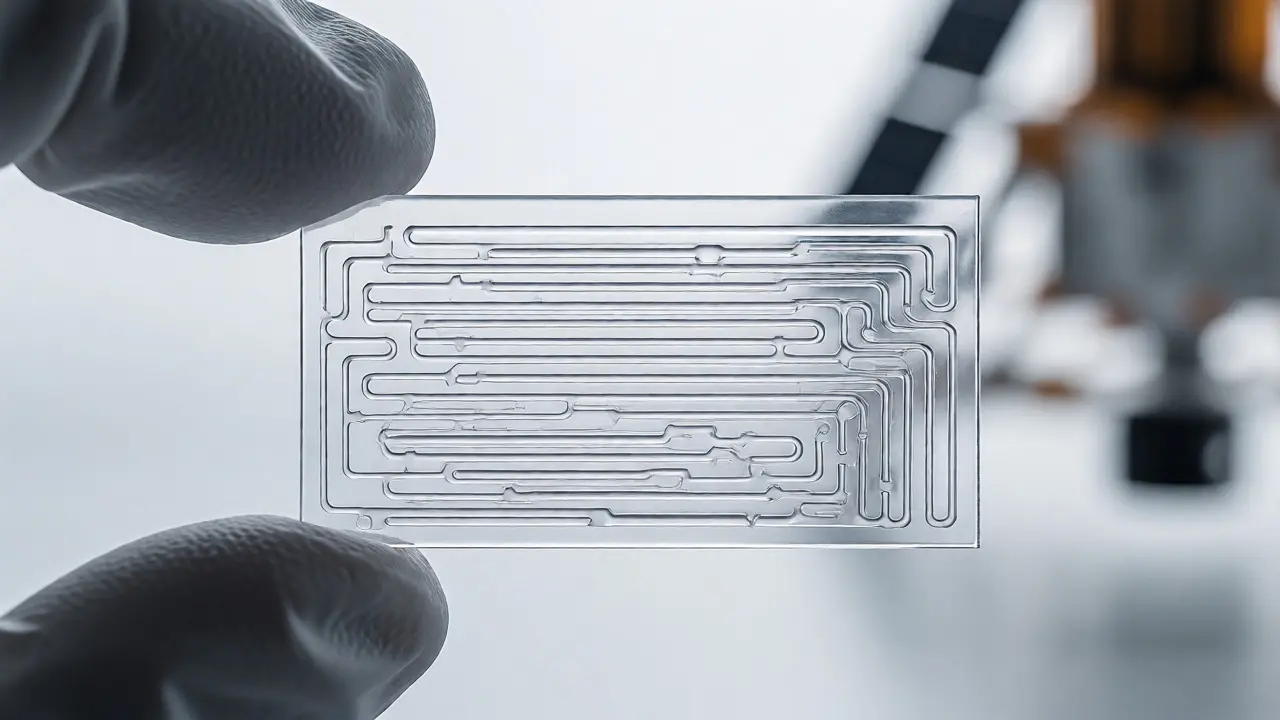
The biggest hurdle for future missions is size and power. Traditional GCs are bulky. Enter MEMS (Micro-Electro-Mechanical Systems) technology. Engineers are now printing meter-long separation channels onto centimeter-scale chips. These micro-GCs drastically reduce volume and thermal inertia. A prototype developed recently integrated a preconcentrator, column, and detector into a tiny package. This allows for deployment on smaller spacecraft or even swarms of satellites.
However, miniaturization brings risks. Smaller columns have less capacity, meaning they saturate faster. Stationary phases on chips can degrade differently than those in glass tubes. And calibration drift is harder to correct without regular maintenance. Despite these challenges, the trend is clear: we are moving toward chip-scale analyzers that can fly on more missions, monitoring cabin air on the ISS or sniffing exoplanet atmospheres in real-time.
Comparison of Key Space GC Instruments
| Mission/Instrument | Target Body | Primary Function | Notable Achievement/Limitation |
|---|---|---|---|
| Viking GC-MS | Mars (1976) | Soil organics search | Detected chlorinated hydrocarbons; debated due to possible contamination. |
| Pioneer Venus GC | Venus (1978) | Atmospheric profiling | Measured noble gases; demonstrated high-pressure capability. |
| Huygens GCMS | Titan (2005) | Atmosphere & surface volatiles | Confirmed N2/CH4 dominance; operated during descent and landing. |
| Curiosity SAM | Mars (2012-present) | Multi-mode organic analysis | Six columns + MS + Laser; highly successful long-term operation. |
| Rosetta COSAC | Comet 67P (2014) | Cometary organics | Single chromatogram due to landing issues; required careful reanalysis. |
| ISS VCAM/SAM | Earth Orbit (ISS) | Cabin air quality | Monitored trace contaminants; validated miniaturized designs. |
Why GC Still Matters Despite Alternatives
You might ask, why not just use direct mass spectrometry? Direct MS is faster and simpler. It can handle non-volatile materials via laser desorption. But it struggles with complex mixtures. If you have ten different molecules with similar masses, direct MS sees one big blob. GC pulls them apart first. For astrobiology, where we look for subtle biosignatures among thousands of abiotic background chemicals, that separation is non-negotiable.
Also, consider isotope ratios. Life tends to prefer lighter isotopes. Distinguishing Carbon-12 from Carbon-13 requires precision that GC helps achieve by isolating specific compounds before measurement. Wet chemistry methods can also derivatize polar compounds to make them volatile, but adding reagents adds mass and complexity. GC sits in the sweet spot: it handles volatiles well, provides structural info via fragmentation patterns, and pairs perfectly with MS.
Practical Challenges and Best Practices
Operating a GC in space isn’t just about hardware; it’s about procedure. Mission teams follow strict protocols:
- Blanks are king: Run empty cycles to know what the instrument itself emits.
- Calibration gases: Store known mixtures to check performance over years.
- Thermal history: Record temperature profiles because retention times shift with heat.
- Raw data preservation: Save everything. Reanalyzing old data with new algorithms often reveals missed discoveries, as seen with COSAC.
Contamination is the enemy. Terrestrial microbes or solvents can mimic extraterrestrial organics. That’s why cleanroom assembly and rigorous bake-out procedures are standard. Every gram of material sent to space carries the risk of being mistaken for alien biology.
Frequently Asked Questions
What is the main difference between a gas chromatograph and a mass spectrometer?
A gas chromatograph (GC) separates a mixture of chemicals into individual components based on how fast they travel through a column. A mass spectrometer (MS) identifies those components by measuring their mass and charge. They are often combined (GC-MS) because GC provides separation while MS provides identification, offering much higher confidence in results than either alone.
Why do space missions use carrier gases like helium or hydrogen?
Carrier gases push the sample through the GC column. Helium is preferred because it is inert, lightweight, and easy to detect. Hydrogen is sometimes used for its efficiency but must be removed before entering the mass spectrometer because it interferes with ionization. The choice depends on the detector type and mission constraints like gas supply limits.
Can gas chromatographs detect life directly?
No, they don't detect "life" directly. They detect chemical compounds. Scientists look for patterns in these compounds-such as specific organic molecules or unusual isotope ratios-that suggest biological activity. Definitive proof of life usually requires multiple lines of evidence, including context from geology and other instruments.
How small can space gas chromatographs get?
Modern efforts focus on MEMS (Micro-Electro-Mechanical Systems) technology, which can shrink traditional meter-long columns onto centimeter-sized chips. Prototypes exist that weigh under 10 kg and occupy less than 10 liters, compared to older systems like Viking's which weighed nearly 20 kg. Further miniaturization aims for chip-scale devices suitable for CubeSats.
What happens if a GC fails in space?
If a GC fails, the mission loses its ability to separate complex mixtures. Often, the mass spectrometer can still operate in direct mode, providing rough compositional data but lacking specificity. Redundant systems or complementary instruments (like lasers or spectrometers) help mitigate this loss, ensuring the mission still returns valuable scientific data.