
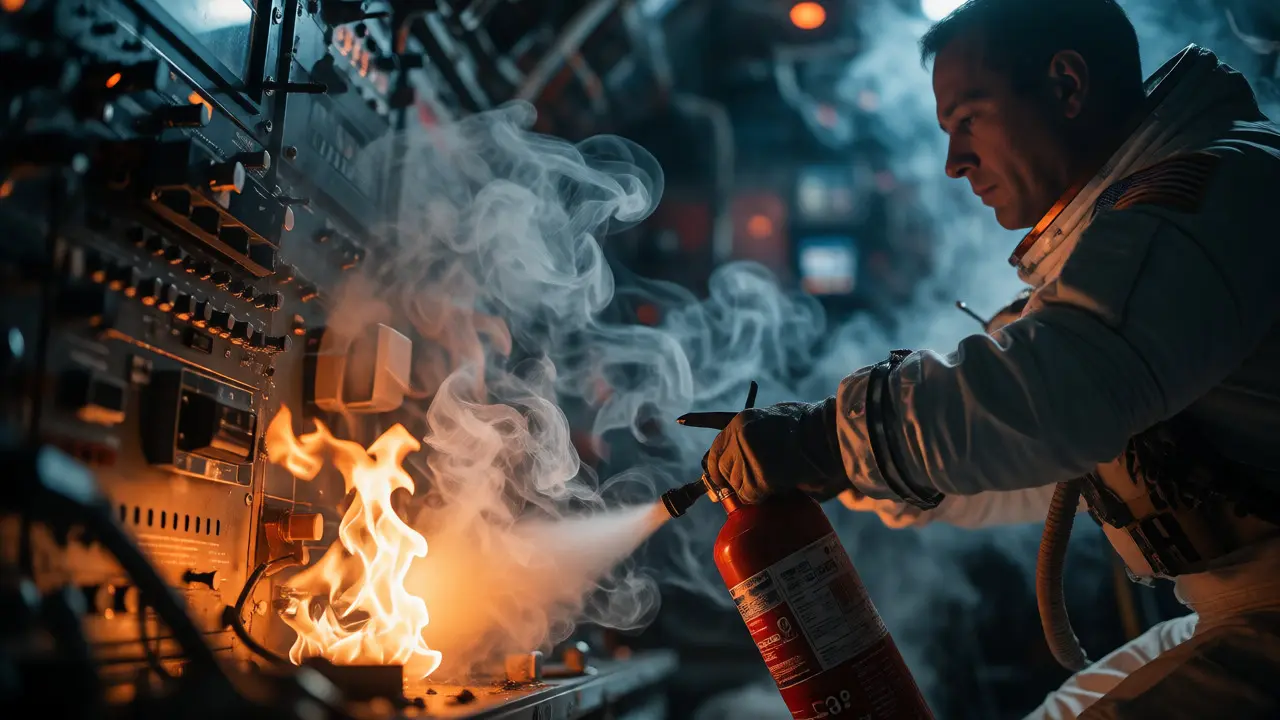
Imagine you are strapped into a spacecraft capsule. The air is recycled, the walls are inches away, and if a wire shorts out, there is no open window to crack. In that confined space, fire isn't just a hazard; it is an existential threat. Spacecraft fire safety relies on rigorous fire response and smoke management drills because, unlike on Earth, you cannot simply run outside. You have to fight the fire, manage the toxic smoke, and survive in a pressurized environment where oxygen feeds flames differently than it does at sea level.
If you are an aspiring astronaut, an aerospace engineer, or just someone fascinated by how we keep humans alive in the void, understanding these drills is key. It’s not just about putting out flames. It’s about a complex dance of detection, suppression, atmospheric control, and interagency coordination. Let’s break down exactly how these life-saving protocols work, using real-world examples like the Falcon 9 incident and standard NASA procedures.
The Unique Challenge of Fire in Microgravity and Confined Spaces
On Earth, hot air rises. This convection current helps spread smoke but also helps firefighters predict where the fire will go. In a spacecraft, especially during microgravity operations, this physics changes. Hot air doesn’t rise; it stays put or moves only due to forced ventilation fans. This means smoke can linger in pockets, obscuring vision and choking crew members faster than expected.
Combustion behavior in spacecraft is fundamentally different from terrestrial applications. Research indicates that unless evacuation time is short, enhanced combustion due to air motion during pressurization changes could cause considerable damage before extinguishment occurs. When you change pressure levels-say, during a launch abort or cabin depressurization-the airflow dynamics shift dramatically. A small flame can suddenly grow larger as fresh oxygen mixes with fuel sources in unexpected ways.
This is why smoke management drills focus heavily on containment rather than just extinction. Crews practice isolating sections of the spacecraft to prevent smoke from spreading to critical avionics bays or life-support systems. They learn to use portable smoke scrubbers and HEPA filters designed specifically for closed-loop environments. These devices don’t just filter particles; they often include chemical absorbents to neutralize toxic gases released by burning plastics and composites, which are common in modern spacecraft interiors.
Core Components of Fire Response Protocols
A robust fire response plan rests on four pillars: prevention, detection, extinguishment, and atmospheric control. Each pillar requires specific training and equipment tailored to the unique constraints of spaceflight.
Prevention starts long before the astronauts board. Engineers minimize combustible materials in spacecraft design. Every cable, seat fabric, and panel material must meet strict flammability standards. During ground operations, teams conduct thorough inspections to eliminate ignition sources. For example, in facilities like the Spacecraft Fire Safety Facility, researchers test how different materials burn under controlled conditions. This facility maintains emergency procedures including emergency vent solenoid operation and spring-loaded relief valves that open when chamber pressure exceeds 4.4 atmospheres (64.7 psia) to prevent catastrophic overpressure.
Detection systems must be hyper-sensitive yet reliable. False alarms are dangerous because they trigger unnecessary evacuations or system shutdowns. Modern spacecraft use multi-sensor detectors that monitor for smoke particles, carbon monoxide levels, and temperature spikes simultaneously. If one sensor triggers alone, it might be a glitch. If all three align, the system assumes a fire and alerts the crew immediately.
Extinguishment in space rarely involves water hoses. Water adds weight and can damage sensitive electronics. Instead, crews rely on handheld extinguishers containing clean agents like Halon alternatives or CO2. These agents suppress fire without leaving residue. However, using them fills the cabin with gas, which displaces oxygen. This leads directly to the fourth pillar: Atmospheric Control.
Real-World Application: Lessons from the Falcon 9 Incident
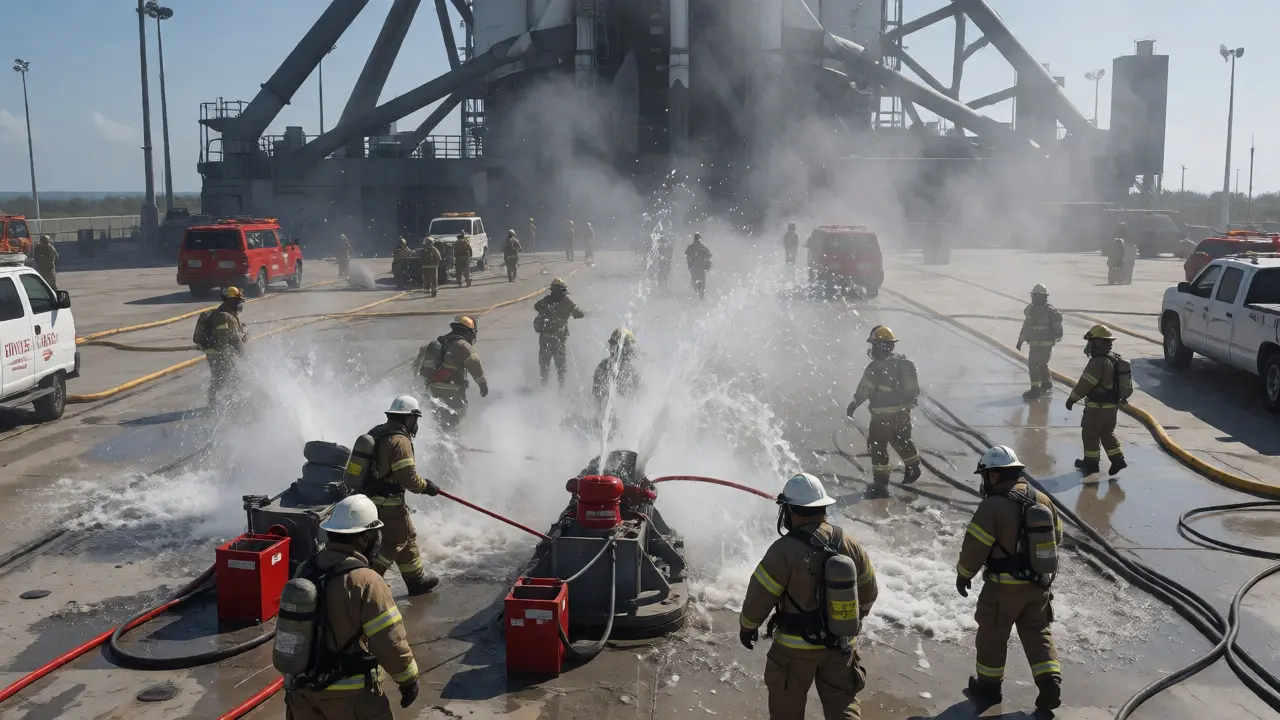
Theory is good, but reality is messy. The September 2016 Falcon 9 Static Test Fire anomaly at Cape Canaveral provides a masterclass in how fire response protocols function under extreme stress. Although this was a ground-based test, the principles apply directly to spacecraft operations involving hazardous propellants and high-pressure systems.
When the explosion occurred, the 45th Space Wing's Incident Management Team activated comprehensive emergency response procedures. The sequence began with immediate fire truck dispatch and evacuation of nearby facilities. But here is where it gets interesting: the deluge system, designed to douse the pad with water, sustained damage. Water discharged upward instead of across the pad.
Responders faced a critical decision. Should they keep running the high-capacity pumps? If they ran the tanks dry, the pump motors would burn out, rendering the deluge system useless for other pads. This could jeopardize upcoming missions, including those by United Launch Alliance (ULA). The team deployed an Initial Response Team (IRT) to shut down the pumps manually. This required entering a potentially unstable zone, highlighting the risk-benefit analysis inherent in every drill.
| Feature | Terrestrial Building | Spacecraft/Aerospace Facility |
|---|---|---|
| Primary Suppression Agent | Water Sprinklers/Hoses | Clean Agents (CO2, Halon Alternatives) |
| Smoke Movement | Rises via Convection | Lingering/Forced Airflow Only |
| Evacuation Route | Exit Doors/Stairwells | Escape Capsules/Abort Systems |
| Atmospheric Risk | Toxic Smoke Inhalation | Oxygen Depletion + Toxic Off-gassing |
| Coordination | Local Fire Dept | Multi-Agency (NASA, USAF, Contractors) |
Another critical aspect of the Falcon 9 response was atmospheric monitoring. Environmental Health personnel continuously monitored air quality to ensure safety for responders and the public. They checked for flare-ups in liquid holding tanks and pressure issues. This prevented secondary hazards from combustion byproducts. Without this step, responders could have been overcome by invisible toxic gases while focusing on visible flames.
The Role of Interagency Coordination and Drills
Fire response in aerospace isn’t a solo act. It involves military personnel, government civilians, and contracted staff. At Cape Canaveral, the Emergency Operations Center (EOC) coordinates across multiple functions: fire department, security, emergency management, Explosive Ordnance Disposal (EOD), and Pad Safety representatives.
Drills simulate these complex interactions. One key protocol established prior to incidents is the definition of Blast Danger Areas (BDAs). These are predetermined safe zones coordinated between agencies. Before the Falcon 9 test, the Pad Safety representative verified the BDA was clear. Because of this structured drill and coordination, there were zero injuries despite the massive explosion.
Interagency coordination proved vital again when neighboring Space Launch Complex 41 experienced pressure loss in spacecraft chillers during the same incident. The 45th Space Wing’s EOC had to coordinate with Kennedy Space Center’s EOC to gain access through roadblocks and dispatch technical teams. They successfully preserved the spacecraft for the next scheduled launch. This demonstrates how relationships built during drills enable rapid response to cascading emergencies.
Standard Operating Procedures for Astronauts and Ground Crews
For astronauts inside the vehicle, the procedures are drilled until they become muscle memory. Upon discovering fire, smoke, or an alarm, the priority is communication and isolation.
- Stay Calm: Panic consumes oxygen and clouds judgment. Training emphasizes controlled breathing.
- Activate Alarms: Pull stations or digital alerts notify the entire crew and ground control.
- Isolate the Source: Close hatches to contain smoke. Shut off ventilation fans feeding the affected area to starve the fire of oxygen flow.
- Use Extinguishers Correctly: Aim at the base of the fire. Use short bursts to conserve agent.
- Monitor Atmosphere: Check oxygen levels. If too low, switch to emergency masks.
Ground crews follow similar logic but with more resources. Emergency procedures handbooks from NASA facilities, such as the Michoud Assembly Facility, dictate specific actions. Personnel must call emergency numbers (like 911 or facility-specific lines) and provide details about chemical substances involved. For volatile material incidents, immediate evacuation is mandatory. Personnel proceed to pre-designated assembly areas, avoiding elevators in multi-story structures.
Chemical spills often accompany fires. If a leak occurs, trained personnel attempt to close valves to limit release. Untrained personnel must move upwind if outside or close windows and disable ventilation if indoors. This prevents atmospheric contamination from spreading throughout the building.
Visual Reconnaissance and Technology in Modern Drills
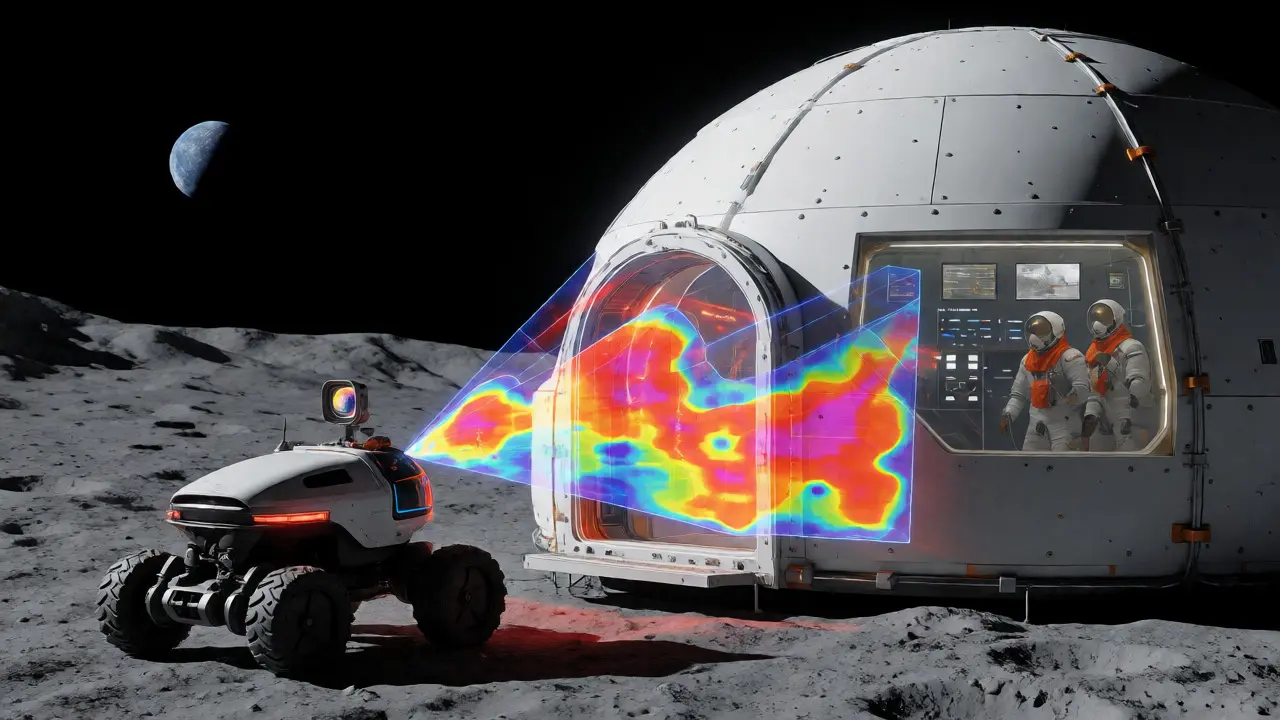
Technology has changed how we handle these crises. During the Falcon 9 response, incident commanders reviewed flight footage from aerial reconnaissance conducted prior to the Initial Response Team’s entry. This provided detailed visual information about pad conditions and hazards.
In future lunar or Mars missions, this technology will be even more critical. With no local fire department, robots and drones may perform initial assessments. Imagine a rover sending back thermal images of a habitat module showing a hotspot. The crew then decides whether to enter with suits or seal the module entirely. These scenarios are currently being tested in analog habitats on Earth, integrating visual reconnaissance capabilities into standard fire response workflows.
These drills aren’t just about reacting to disasters. They are about preserving infrastructure redundancy. Decisions made during acute phases impact whether subsequent missions can proceed. Protecting the deluge system at Cape Canaveral wasn’t just about saving money; it was about ensuring that the next rocket could launch safely. That level of strategic thinking is what separates amateur firefighting from professional aerospace emergency management.
Frequently Asked Questions
Why don't spacecraft use water sprinklers like buildings?
Water is heavy, which is a major cost factor in launching mass to orbit. Additionally, water conducts electricity and can cause significant damage to sensitive avionics and electronics inside a spacecraft. Clean agents like CO2 or Halon alternatives are preferred because they leave no residue and do not conduct electricity, allowing systems to restart quickly after the fire is out.
How does smoke behave differently in microgravity?
In microgravity, hot air does not rise because there is no gravity to create buoyancy-driven convection currents. Instead, smoke spreads slowly and evenly in all directions, driven primarily by fan ventilation. This means smoke can accumulate in unexpected places and stay suspended longer, requiring active filtration systems rather than passive rising mechanisms used on Earth.
What happens if a fire breaks out during launch?
If a fire occurs during the early stages of launch, the Launch Escape System (LES) or Abort System activates. This pulls the crew capsule away from the failing booster rapidly. If the fire occurs later in flight, the crew may need to isolate the affected module, reduce power to non-essential systems, and prepare for an early return to Earth depending on the severity and location of the fire.
Are astronauts trained to use fire extinguishers?
Yes, absolutely. Astronauts undergo extensive training in the Neutral Buoyancy Laboratory and simulators. They practice deploying various types of extinguishers, managing smoke inhalation risks, and coordinating with mission control. These drills are repeated regularly to ensure proficiency, as mistakes in a closed environment can be fatal.
What role do ground teams play in spacecraft fire safety?
Ground teams are responsible for prevention during assembly and testing, monitoring atmospheric conditions during launches, and providing immediate support if an accident occurs on the pad. They coordinate with emergency services, manage blast danger areas, and ensure that infrastructure like deluge systems remains operational for subsequent missions.
1 Responses
Actually, you're oversimplifying the convection issue. In microgravity, combustion is diffusion-limited, not buoyancy-driven. The flames are spherical and blue, not yellow like on Earth because soot doesn't form the same way. Your article implies smoke just 'lingers' but it's more about lack of thermal plume. Also, Halon was phased out due to ozone depletion, we use Novec 1230 or similar now. You should double check your sources before posting.