
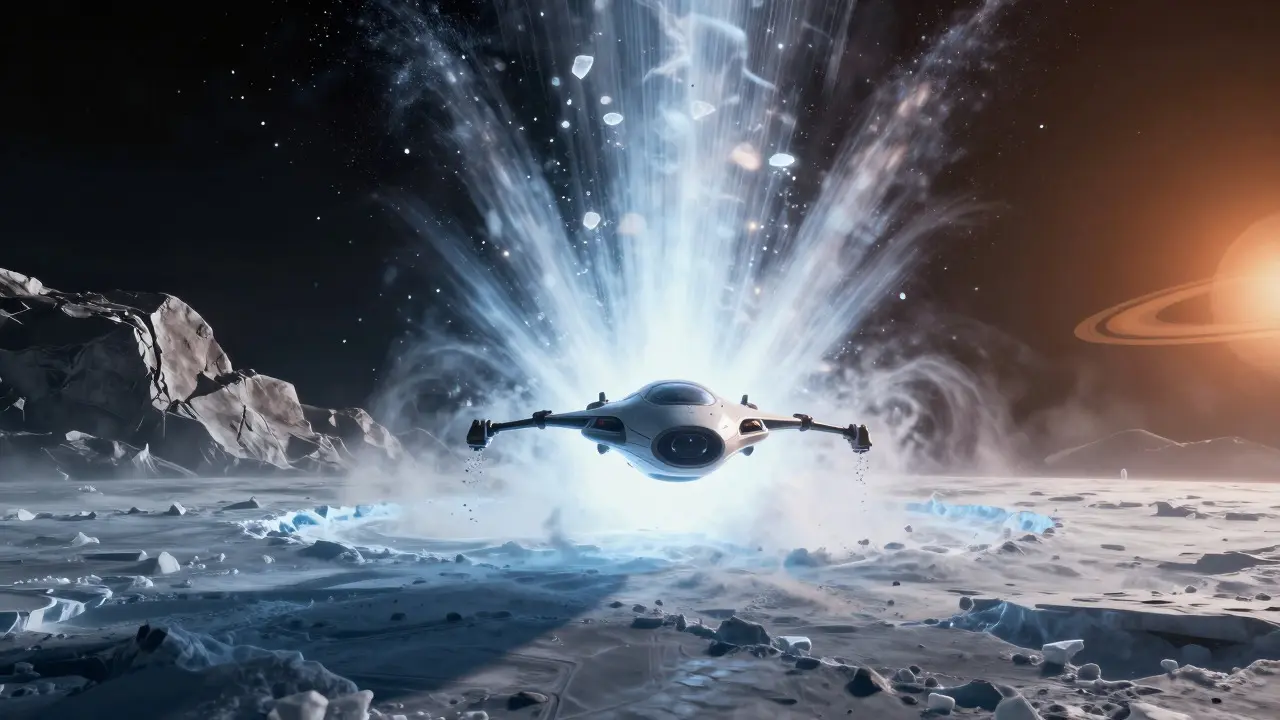
Imagine flying a spacecraft through a geyser of alien ocean water at thousands of miles per hour. That is the core challenge of plume sampling on moons like Enceladus and Europa. These icy worlds hide vast subsurface oceans beneath their frozen crusts, but we cannot drill through miles of ice with current technology. Instead, we wait for nature to do the work for us. Cryovolcanic vents shoot plumes of ice particles, vapor, and organic compounds into space. By flying directly through these jets, spacecraft can collect samples without ever landing. But this isn't just about catching snowflakes in space. It requires precise trajectory planning, ultra-clean hardware, and strict rules to prevent Earth microbes from contaminating alien ecosystems-or worse, bringing unknown extraterrestrial material back to our planet.
The Physics of Catching Ice in Space
To understand why flyby strategies are so complex, you have to look at the numbers. The Cassini mission gave us our first real data on Enceladus. Between 2005 and 2015, Cassini performed 22 flybys of the moon. During its deepest dives, it passed through the south polar plume at altitudes as low as 48 kilometers (about 30 miles). Even then, the yield was tiny. Modeling suggests that a single pass at 50 km altitude collects only about 2 microliters of ice per square meter of collector area. If you go higher, above 50 km, you get more non-ocean material, which scientists use as negative controls to check for background noise. To get enough sample for serious life detection, future missions need multiple passes-likely 10 to 20 flybys-to accumulate tens of microliters or even milliliters of liquid-water equivalent material.
The speed of the encounter matters just as much as the altitude. At high speeds, impact damages the very molecules scientists want to study. Laboratory tests show that capturing particles at hypervelocity causes thermal and mechanical alteration of organics. This means amino acids and other potential biosignatures could be destroyed upon impact. For instruments like the Cosmic Dust Analyzer (CDA) or the Surface Dust Analyser (SUDA), which rely on impact-induced ionization, speeds between 3 and 5 km/s are actually optimal because they generate enough energy to vaporize the particle for analysis. But if you want to bring the sample back to Earth intact, you need slower speeds. An orbiter around Enceladus could sample at just 0.2 km/s (200 m/s), preserving complex structures. A Saturn orbiter, however, faces encounter speeds closer to 4 km/s, requiring shock-mitigating materials like silica aerogel to cushion the blow.
Flyby Architectures: Orbit vs. Fly-Through
Mission designers generally consider three main architectures for sampling these plumes. Each has distinct trade-offs in fuel cost, sample quality, and risk.
- Free-Return Trajectory: This is the simplest option. The spacecraft flies by the moon once, collects what it can, and returns to Earth or orbits the sun. It uses less fuel but offers only one chance to catch a plume. If the plume is intermittent-as suspected for Europa-you might come away empty-handed.
- Saturn/Jupiter Orbiter (Pseudo-Orbiter): This approach involves orbiting the planet (Saturn or Jupiter) and using gravity assists from larger moons (like Titan) to repeatedly dip close to the target moon. The 2023 Enceladus Multiple Flybys (EMF) concept study proposes this method. It allows for multiple low-altitude passes (≤50 km) at manageable speeds (≤4 km/s). Recent 2026 trajectory studies show that "pseudo-orbiters" can emulate orbital sampling without the massive fuel penalty of actual orbit insertion. This is currently the most favored strategy for Enceladus.
- Dedicated Moon Orbiter: Inserting a spacecraft into orbit around Enceladus or Europa is extremely difficult due to the gravitational pull of the parent planet and radiation environments. However, an orbiter would allow for very slow, repeated passes (around 150 m/s). This minimizes sample damage and maximizes collection efficiency. The downside is high complexity and propulsive cost.
| Architecture Type | Typical Encounter Speed | Sample Integrity | Fuel Cost | Best For |
|---|---|---|---|---|
| Free-Return Flyby | > 5 km/s | Low (High Shock) | Low | Quick reconnaissance |
| Pseudo-Orbiter (Planet Orbit) | 3-4 km/s | Medium (Requires Aerogel) | Medium | Multiple sampling passes |
| Moon Orbiter | < 0.2 km/s | High (Minimal Shock) | High | Intact biosignature preservation |
Collection Hardware and Materials
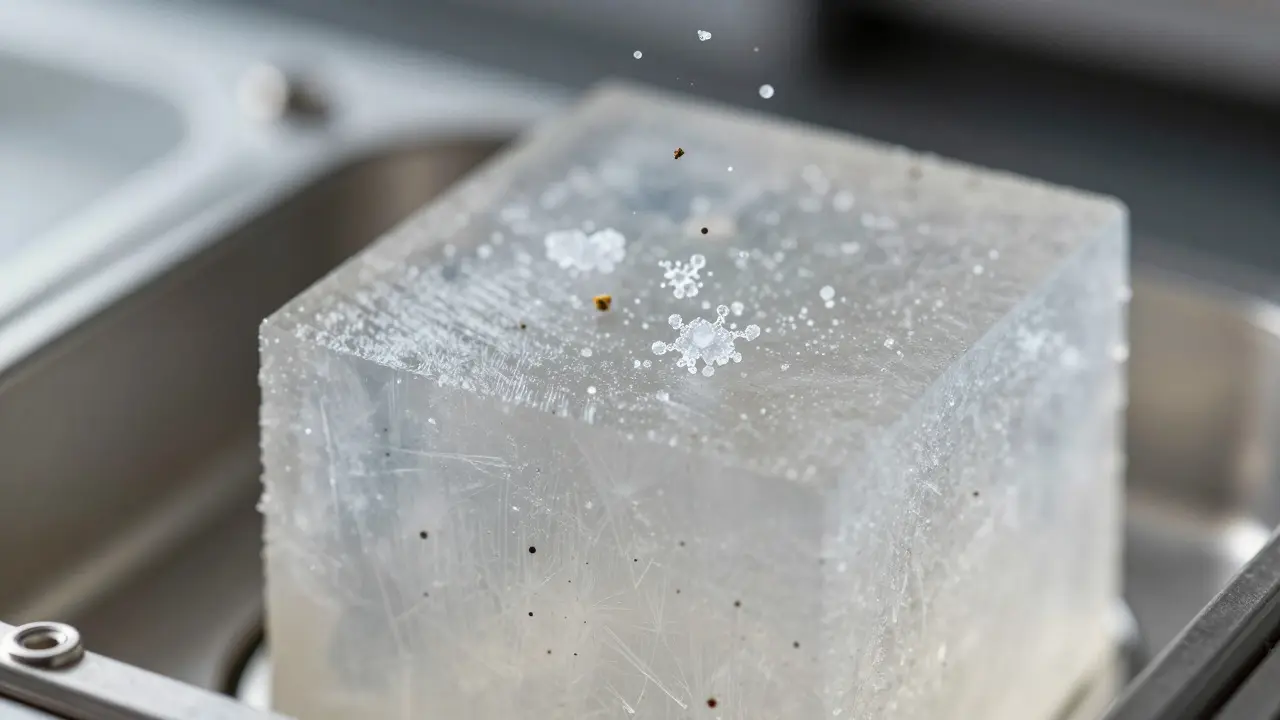
You can't just stick a jar out the window. The hardware must capture microscopic ice grains while surviving the vacuum of space and the heat of reentry if returning to Earth. Silica aerogel is the gold standard here. Proven by the Stardust mission, this ultra-lightweight solid captures hypervelocity particles by slowing them down gradually within its porous structure. It preserves silicate grains and volatile organics like amino acids. Future collectors will likely use rotating assemblies with different substrates-silica aerogel, stainless steel, and various adsorbents-to capture different types of particles. Some designs propose cycling covers to expose collectors to the plume and then to clean space, creating built-in negative controls to distinguish alien chemistry from spacecraft outgassing.
For Europa, the challenge is greater because the plumes are intermittent and possibly localized. We don't know exactly when or where they will erupt. Therefore, Europa sampling concepts emphasize broad coverage and robust containment. The hardware must be able to capture >10 µL of 1-10 µm ice particles at relative velocities up to several hundred meters per second. Because we can't guarantee a hit, the Sample Return Capsule (SRC) must remain sealed and pristine throughout the entire mission, ready to accept material if a plume appears during a planned flyby.
Contamination Control and Planetary Protection
This is perhaps the most critical aspect of modern deep-space exploration. Under COSPAR (Committee on Space Research) policies updated in 2021, missions to ocean worlds face stringent bioburden requirements. The goal is twofold: forward protection (keeping Earth microbes off the alien moon) and backward protection (keeping alien microbes off Earth).
For outbound missions, the probability of contaminating the subsurface ocean with a viable terrestrial organism must be kept below 1×10⁻⁴ (one in ten thousand) per mission. This means spacecraft components must be cleaned rigorously, often involving dry heat microbial reduction or hydrogen peroxide sterilization. Trajectory design also plays a role; engineers calculate "impact probabilities" to ensure that if the spacecraft fails, it won't crash into the moon's surface and breach the ice shell.
Inbound missions-those that bring samples back to Earth-are classified as Category V Restricted Earth Return. This triggers the highest level of caution. No uncontained hardware that touched plume material may reenter Earth's biosphere. Samples must be housed in double-walled capsules. Upon return, they go to secure curation facilities under quarantine. This prevents any hypothetical extraterrestrial pathogens from escaping. The DLR meeting reports emphasize that even dust collected from the plume is treated with extreme care, assuming it could contain viable biological agents until proven otherwise.
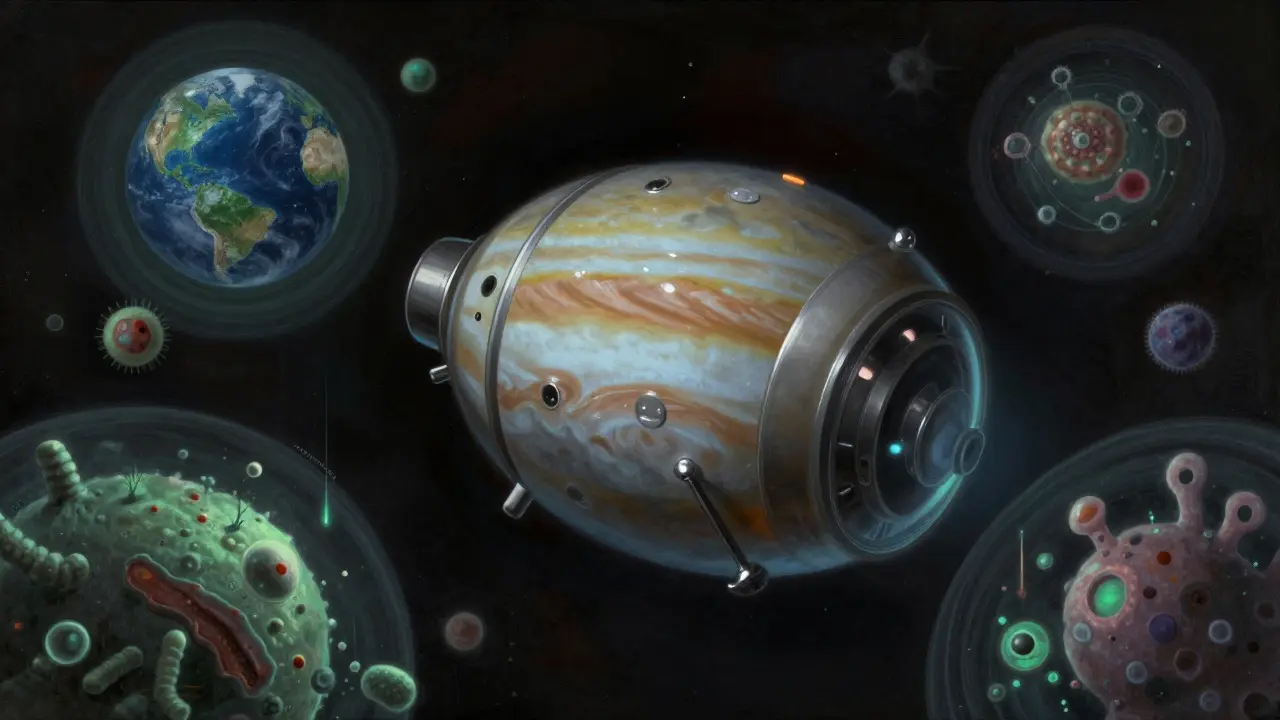
Enceladus vs. Europa: Different Challenges
While both are ocean worlds, their plume behaviors differ significantly. Enceladus has a continuous, well-characterized south polar plume. We know its density, particle size distribution, and velocity profile thanks to Cassini. This allows for precise modeling. Scientists predict that flying below 50 km yields 2-4 µL/m² of ocean-origin particles. This predictability makes Enceladus the easier target for initial sampling missions.
Europa is trickier. Hubble Space Telescope observations in the early 2010s hinted at intermittent water-vapor plumes, but they are not constant. They may be tied to tidal stresses or specific geological features. Because we can't predict them reliably, Europa missions must be designed for flexibility. They might spend more time in orbit monitoring for plume activity before committing to a fly-through. Additionally, Europa's environment is harsher due to Jupiter's intense radiation belts, which can degrade electronics and alter chemical signatures on the spacecraft surface. This adds another layer of complexity to contamination control, as radiation-induced changes in instrument backgrounds must be accounted for.
The Path Forward
As of mid-2026, no dedicated plume sample-return mission has been selected for flight. However, the technical groundwork is solid. The OPAG (Ocean Worlds Advisory Group) Roadmap recommends a stepwise approach. First, send a mission for in-situ analysis-flying through plumes with advanced mass spectrometers to detect complex organics. Second, follow up with a sample-return mission to bring material back to Earth for laboratory analysis. Earth-based labs offer far greater sensitivity than spacecraft instruments. We can use techniques like cryo-electron microscopy and isotopic ratio mass spectrometry that are too heavy or power-hungry for spaceflight.
The consensus among experts is clear: negative controls are essential. Every mission must include samples taken outside the plume or from known sterile regions (like the Saturn E-ring) to establish baselines. Without these, distinguishing true biosignatures from instrument artifacts becomes nearly impossible. The next two decades will likely see pseudo-orbiter missions to Enceladus, leveraging Titan gravity assists for repeated, low-cost flybys. Europa missions will lag slightly behind due to higher risks and uncertainties, but the drive to answer the question of whether life exists beyond Earth pushes these technologies forward every day.
Why is silica aerogel used for plume sampling?
Silica aerogel is used because it is incredibly lightweight yet structurally rigid. When a high-speed particle hits it, the aerogel slows the particle down gradually over a short distance, preventing it from shattering or vaporizing. This preserves delicate organic molecules and mineral structures that would otherwise be destroyed by the heat and shock of a direct impact on a metal plate.
What is the difference between Category III and Category V planetary protection?
Category III applies to missions that land on or fly near bodies of special interest (like Europa) but do not return samples to Earth. It focuses on forward contamination, ensuring the spacecraft doesn't carry Earth microbes to the target. Category V is for sample-return missions. It includes restricted Earth return protocols, meaning the sample must be contained in a sealed capsule and handled in a quarantine facility to protect Earth's biosphere from potential extraterrestrial organisms.
How fast does a spacecraft travel when sampling an Enceladus plume?
It depends on the mission architecture. A spacecraft orbiting Saturn and dipping down to Enceladus typically travels at 3 to 5 km/s (about 7,000 to 11,000 mph) during the flyby. A dedicated orbiter around Enceladus itself could sample at much slower speeds, around 0.2 km/s (200 m/s), which is better for preserving sample integrity but requires more fuel to achieve orbit.
Are Europa's plumes always active?
No, unlike Enceladus which has a continuous south polar plume, Europa's plumes appear to be intermittent. Observations from the Hubble Space Telescope suggest they may erupt periodically, possibly linked to tidal stresses from Jupiter. This unpredictability makes sampling Europa more challenging, as missions may need to monitor for plume activity before attempting a fly-through.
What is a "pseudo-orbiter" mission?
A pseudo-orbiter is a spacecraft that orbits a planet (like Saturn) rather than the moon itself (like Enceladus). It uses gravity assists from larger moons (like Titan) to repeatedly swing close to the target moon. This allows for multiple flybys at relatively low fuel costs compared to inserting into a true orbit around the small moon, while still enabling frequent sampling opportunities.