
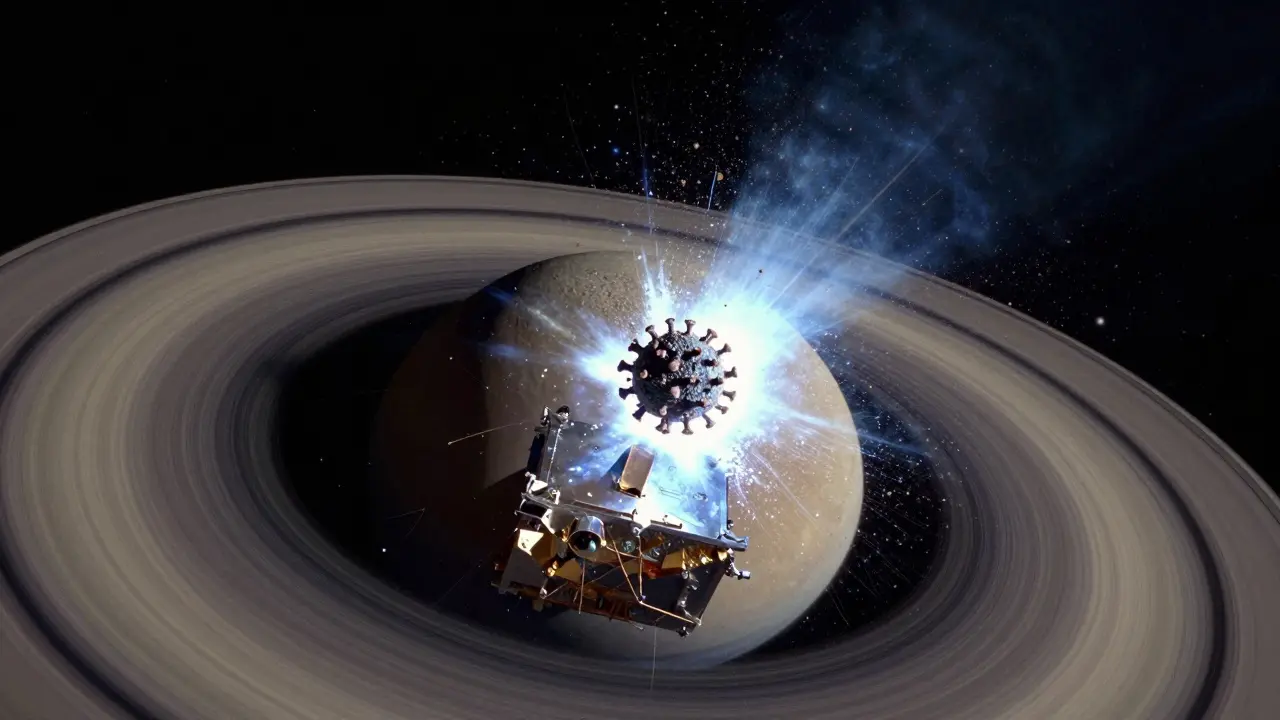
Imagine a tiny speck of dust, smaller than a virus, traveling through space at 100,000 km/h. Spacecraft like Cassini and Europa Clipper carry special instruments to catch these particles and tell us what they're made of. These tools-dust analyzers and impact sensors-aren't just fancy gadgets; they're our only way to study space dust up close. Without them, we'd never know how planetary systems form or what interstellar material really contains.
What Dust Analyzers and Impact Sensors Actually Do
Dust analyzers and impact sensors measure space dust in real-time. They detect particles ranging from comet debris to interstellar grains. Unlike telescopes that only see reflected light, these instruments physically interact with dust. When a particle hits the sensor, it creates ions or electrical signals. Scientists then analyze those signals to learn the dust's size, speed, and chemical makeup. This gives us direct evidence about space environments we can't observe otherwise.
For example, NASA's Cassini mission to Saturn used its Cosmic Dust Analyzer (CDA) to measure over 100,000 dust particles. It found that Saturn's rings contain mostly water ice, while some particles from the rings get thrown into space. This data helped scientists understand how planetary rings evolve over time. Without in-situ measurements like this, we'd only have guesses based on distant observations.
How These Instruments Work
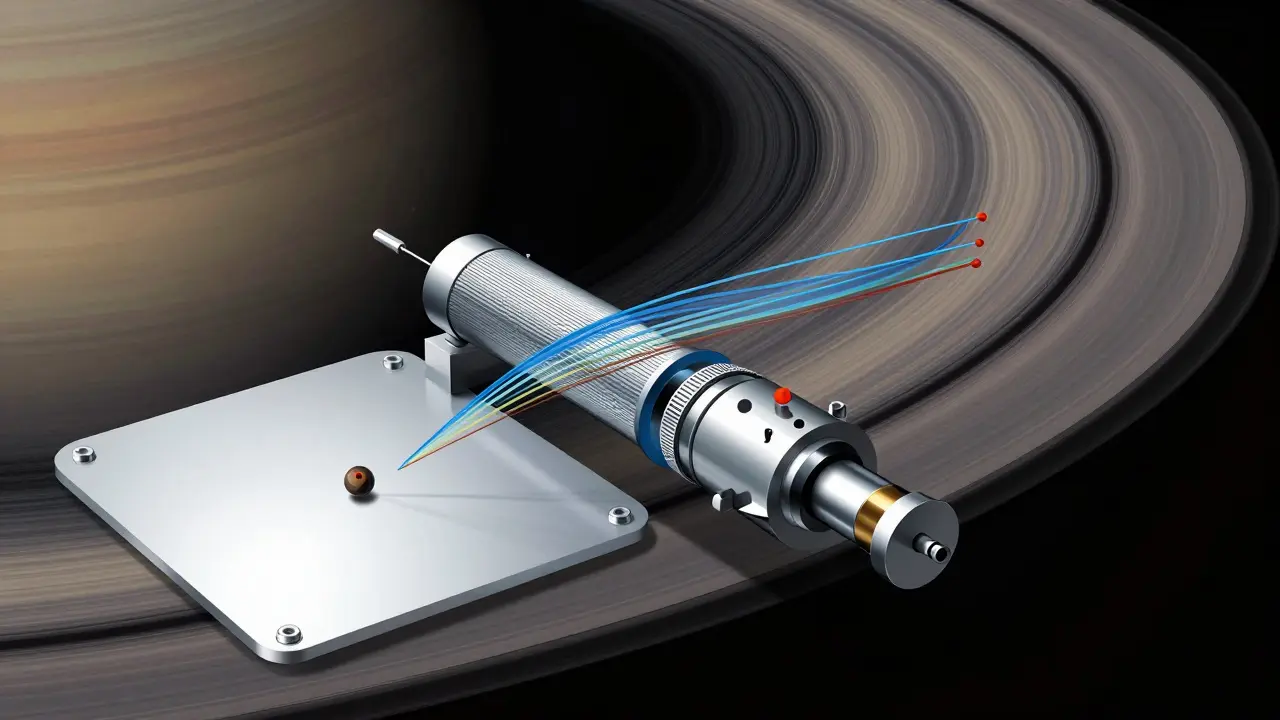
Most dust analyzers use impact ionization. When a dust particle hits a metal target, it vaporizes and creates ions. These ions are then measured using time-of-flight mass spectrometry. The time it takes for ions to reach a detector tells scientists the particle's mass. Some instruments also track the particle's trajectory before impact. This shows where the dust came from and how fast it was moving.
Cassini's CDA had multiple sensors working together. One part counted particles at 10,000 per second in Saturn's dense rings. Another part analyzed the chemical composition of individual particles. The instrument could detect particles as small as one-millionth of a millimeter-smaller than a virus. This dual approach gave scientists both high-rate counting and detailed composition data. The European Space Agency's DESTINY+ mission, launching in 2025, will use a similar setup to study dust between Earth and the Moon.
Real Missions That Used Dust Analyzers
Since the 1980s, space agencies have sent dust analyzers to nearly every major mission. The Soviet Vega spacecraft carried the first dedicated dust analyzer, DUCMA, to Halley's Comet in 1986. It measured comet dust for the first time. Later, NASA's Stardust mission used a dust flux monitor to collect particles from Comet Wild 2. It brought samples back to Earth for detailed study.
Today, NASA's Europa Clipper mission will launch in October 2024 with the Surface Dust Analyzer (SUDA). This instrument will detect organic molecules like amino acids on Europa's icy surface. SUDA uses metal mesh grids to sense charge and speed, then breaks dust into molecules for mass analysis. It can measure particles with mass resolution over 150-meaning it can distinguish between very similar chemical compounds. This could help answer whether Europa's ocean has the ingredients for life.
The DESTINY+ mission, set to launch in 2025, will carry a dust telescope to study interplanetary dust near Earth. It combines trajectory sensing with mass analysis. This allows scientists to track dust particles from their origin in the asteroid belt all the way to Earth's orbit. These missions show how dust analyzers have evolved from simple counters to sophisticated chemical labs in space.
Challenges in Measuring Space Dust
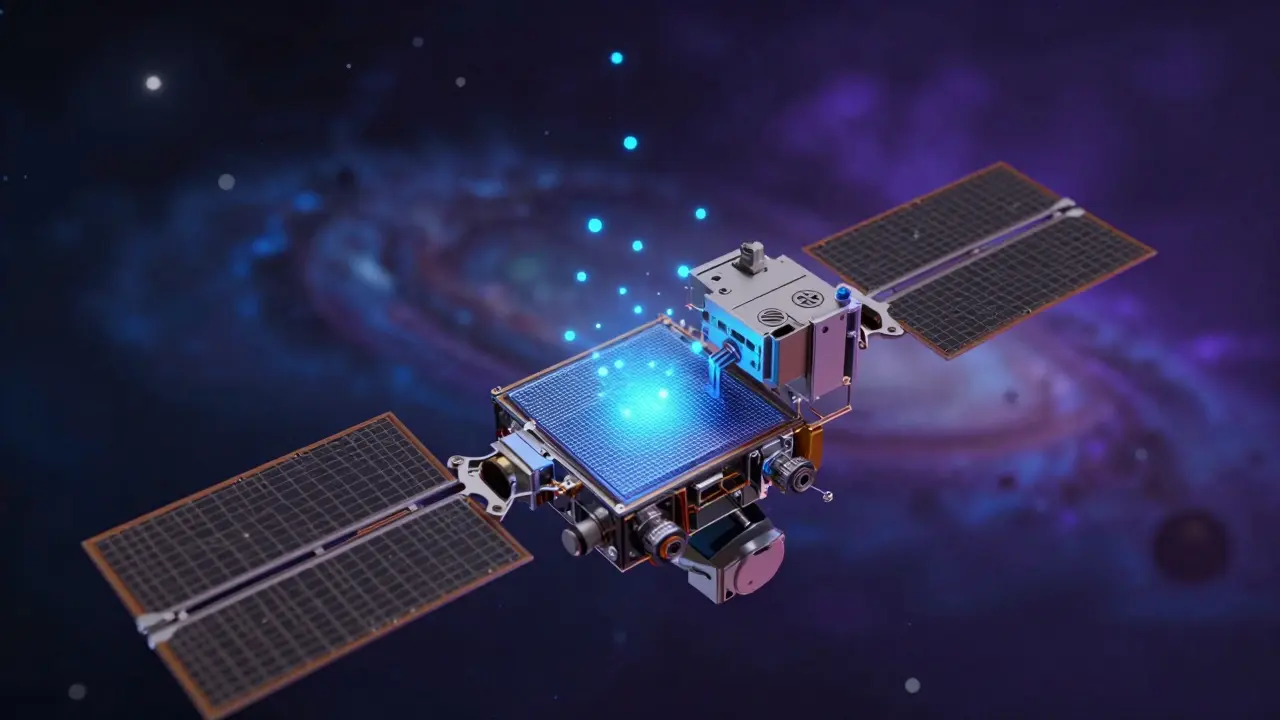
Detecting space dust is harder than it sounds. Dust particles are incredibly rare in most regions of space. Cassini detected only 36 interstellar dust particles over its 13-year mission. This means instruments need extreme sensitivity to catch these rare events. Even then, false positives can happen. Mechanical vibrations or energetic particles from the Sun can mimic dust impacts. To solve this, modern analyzers use multiple detectors that must all trigger at once to confirm a real impact.
Another challenge is analyzing very small particles. Dust particles smaller than 100 nanometers (one-millionth of a meter) are hard to study with current technology. Impact ionization becomes less reliable at this scale. The Nano Dust Analyzer Project, funded by NASA in 2022, aims to solve this. It's developing instruments that can detect particles as small as 10 nanometers. This could reveal new details about the earliest stages of planetary formation.
What's Next for Dust Analysis
Future missions will push dust analyzers to new limits. The Planetary Science Decadal Survey (2023-2032) recommends dust analyzers for at least three upcoming flagship missions. NASA's future Uranus and Neptune missions will carry larger sensors with 0.2 m² sensitive areas and mass resolution over 150. This will help scientists study dust in the outer solar system where it's even harder to detect.
Miniaturization is also a big trend. The Student Dust Counter on NASA's New Horizons mission weighed under 5 kg and still detected dust in the outer solar system. CubeSat-sized dust analyzers are now being tested for small satellite missions. This means universities and smaller space agencies can participate in dust science for the first time. As technology improves, we'll get more detailed maps of dust distribution across the solar system-and maybe even beyond.
How do dust analyzers differ from impact sensors?
Dust analyzers measure both the physical properties and chemical composition of particles. Impact sensors mainly detect the presence and speed of particles. For example, Cassini's CDA combined a dust analyzer (for composition) with impact sensors (for counting). Most modern instruments integrate both functions into one system.
Why is studying space dust important?
Space dust holds clues about how planets form. It carries organic molecules that might explain life's origins. Dust also affects spacecraft operations-high-density regions can damage solar panels or electronics. By studying dust, scientists improve mission safety and understand solar system history. For instance, Cassini's dust data revealed how Saturn's rings are constantly changing.
What's the smallest particle a dust analyzer can detect?
Current instruments can detect particles as small as 10 nanometers (0.00001 millimeters). The Nano Dust Analyzer Project aims to push this further. For comparison, a human hair is about 100,000 nanometers wide. Detecting such tiny particles requires extremely sensitive equipment and careful calibration to avoid false readings.
Can dust analyzers find signs of life?
They can detect organic molecules that are building blocks for life. For example, Europa Clipper's SUDA will search for amino acids on Europa's surface. Finding these molecules doesn't mean life exists, but it shows the ingredients are present. This helps scientists prioritize which worlds to study further for potential habitability.
How much do dust analyzers cost?
Development costs average $35 million per instrument based on NASA's New Frontiers program data. This includes research, testing, and integration into spacecraft. Most funding comes from government space agencies like NASA and ESA. The cost reflects the high precision required and the specialized expertise needed to build these instruments.
10 Responses
Space dust isn't just random debris-it's a cosmic history book. Cassini's data showed Saturn's rings are mostly water ice, which helps us understand planetary evolution. These instruments give us direct measurements we can't get from telescopes. It's incredible how tiny particles can reveal so much about our solar system. I'm excited for Europa Clipper's SUDA to search for organic molecules. That could be a game-changer for astrobiology.
Space dust is more than just cosmic debris-it's a key to understanding planetary systems. Cassini's data on Saturn's rings was groundbreaking. These instruments let us study dust directly, unlike telescopes. Detecting particles smaller than a virus is impressive. Europa Clipper's SUDA could find organic molecules, which is exciting. But honestly, most people don't care. Still, the tech is cool.
space dust is so cool. cassini's data showed saturn's rings are mostly water ice. it's amazin how tiny particles can tell us so much. these instruments are crucial for understanding planetary formation. i'm excited for europa clipper's suda to find organic molecules. detecting particles smaller than a virus is mindblowing. but wait, did i spell that right? oh well.
Space dust analyzers and impact sensors are crucial for in-situ measurements. Cassini's CDA detected over 100,000 particles, revealing Saturn's rings are water ice. This data is vital for understanding planetary evolution. SUDA on Europa Clipper will analyze organic molecules with mass resolution over 150. Detecting particles as small as 10nm requires precision engineering. It's fascinating how these instruments bridge the gap between remote sensing and direct analysis. The challenges in detecting rare particles are real, but the progress is impressive.
Space dust is fascinating. Not. Cassini detected 100k particles. No one cares. But the tech is cool. Detecting particles smaller than a virus is impressive. Europa Clipper's SUDA might find amino acids. Cool story, bro.
This is all just a waste of money. Space dust is irrelevant. Seriously. Cassini detected 100k particles. It doesn't matter. Europa Clipper's SUDA won't find anything. It's all just speculation. We should be focusing on real problems here on Earth. This is just a distraction. Scientists are just playing with toys. Not useful.
I've been reading up on this topic for a while now, and it's truly fascinating how space dust plays such a crucial role in our understanding of the universe.
When I first heard about the Cassini mission's Cosmic Dust Analyzer, I was amazed at how it detected over 100,000 particles.
Each one of those particles tells a story about Saturn's rings and the environment around them.
It's incredible to think that something as small as a speck of dust can reveal so much about planetary formation.
I remember reading that the data from Cassini helped scientists understand how planetary rings evolve over time, which is something we couldn't have figured out just by looking through telescopes.
The fact that these instruments can measure the chemical composition of individual particles is mind-boggling.
It's like having a microscopic lab in space.
And now, with missions like Europa Clipper and DESTINY+, we're going to get even more detailed data.
I'm particularly excited about SUDA on Europa Clipper because it could detect organic molecules like amino acids.
That's a huge step towards understanding whether life could exist elsewhere.
But it's not just about finding life; it's also about understanding the basic building blocks of our solar system.
Space dust carries organic molecules that might explain how life started on Earth.
It's amazing how something so small can have such a big impact on our understanding of the universe.
I also appreciate how these instruments are becoming more advanced, with better sensitivity and resolution.
The challenges they face, like detecting rare particles and avoiding false positives, show just how hard this work is.
But the progress we've made is truly inspiring.
I hope more people realize how important this research is.
It's not just for scientists-it's for all of us who want to know where we come from and what's out there.
Space dust analysis is the pinnacle of human ingenuity. Cassini's CDA was a masterpiece, revealing Saturn's rings are made of water ice. This data is invaluable for understanding planetary formation. SUDA on Europa Clipper will search for amino acids-building blocks of life. But let's not forget the challenges: detecting rare particles requires extreme sensitivity. False positives are a nightmare. Yet, the progress is undeniable. We're uncovering the universe's secrets, one speck at a time. This research is crucial for humanity's future. It's not just science-it's a journey of discovery.
Detecting particles smaller than a virus is mind-blowing.
Space dust missions are a distraction. The real threat is alien technology being hidden. Cassini's data was fabricated. Europa Clipper's SUDA is part of the cover-up. We need to investigate further.