
You watch the price of Bitcoin is the world's largest cryptocurrency by market capitalization, known for extreme price volatility and status as a store of value drop 10% in an hour. Your heart races. Do you buy now? Or do you wait for it to go lower? If you’ve ever felt that panic or hesitation, you’re not alone. Most people try to time the market, hoping to catch the exact bottom. But here’s the hard truth: timing the crypto market is nearly impossible. Even experts get it wrong.
That’s where Dollar-Cost Averaging is an investment strategy involving regular fixed-amount purchases of an asset regardless of price to reduce the impact of volatility (DCA) comes in. It’s not flashy. It won’t make you rich overnight. But it removes the emotion from investing and protects you from buying at the top. In this guide, we’ll break down exactly how DCA works in crypto, why it beats lump-sum investing for most people, and how to set it up without losing money to fees.
What Is Dollar-Cost Averaging in Crypto?
At its core, DCA is simple. Instead of dumping all your money into crypto at once, you invest a fixed amount at regular intervals. Maybe it’s $50 every week. Or $200 every month. You do this regardless of whether the price is high, low, or sideways.
Why does this matter? Because crypto is volatile. Ethereum is a blockchain platform supporting smart contracts and decentralized applications, often experiencing significant price swings alongside Bitcoin can swing 20-30% in a single day during turbulent times. If you buy $1,000 worth when the price is high, you get fewer coins. When the price drops, that same $1,000 buys more. Over time, your average cost per coin stabilizes. You aren’t trying to predict the future; you’re just showing up consistently.
This strategy originated in traditional stock markets decades ago but gained traction in crypto around 2013-2014 as Bitcoin became mainstream. According to analysis by CryptoHopper is a cloud-based cryptocurrency trading bot platform offering automated strategies including DCA tools, DCA eliminates the need to time the market perfectly. This is crucial because Bitcoin has experienced 50-80% price swings during past cycles. DCA turns that chaos into a manageable routine.
The Math Behind Why DCA Works
Let’s look at a real-world example. Imagine you have $50,000 to invest in Bitcoin. You could buy it all today (lump-sum), or you could split it into five $10,000 purchases over five months.
Here’s what happens if prices fluctuate:
- Month 1: Price is $50,000. You buy 0.2 BTC.
- Month 2: Price drops to $45,000. You buy 0.22 BTC.
- Month 3: Price crashes to $25,000. You buy 0.4 BTC.
- Month 4: Price stays at $25,000. You buy 0.4 BTC.
- Month 5: Price rebounds to $55,000. You buy 0.18 BTC.
Total spent: $50,000. Total Bitcoin acquired: 1.4 BTC. Your average cost basis is roughly $35,700 per BTC. Compare that to a lump-sum investor who bought 1.0 BTC at $50,000. The DCA investor ended up with 40% more Bitcoin despite spending the same amount. This happened because they bought more units when the price was low.
A UCLA back-testing study found that DCA reduced timing risk by 37% compared to single-entry investments across 36-month crypto cycles. It doesn’t guarantee profit, but it significantly lowers the chance of buying right before a crash.
DCA vs. Lump-Sum: Which Is Better?
This is the biggest debate in investing. Here’s the breakdown:
| Feature | Dollar-Cost Averaging (DCA) | Lump-Sum Investing |
|---|---|---|
| Risk Level | Lower (spreads entry points) | Higher (single entry point) |
| Best Market Condition | Bearish or Sideways Markets | Sustained Bull Markets |
| Psychological Stress | Low (automated discipline) | High (fear of missing out or regret) |
| Potential Returns | Moderate (historically ~8.2% lower CAGR in some studies) | Higher (if timed correctly) |
| Transaction Fees Impact | Can be high if frequent/small amounts | Minimal (one-time fee) |
Data shows lump-sum investing outperforms DCA about 67% of the time in traditional markets because money spends less time sitting in cash. However, crypto is different. A 2022 survey by Kraken is a major global cryptocurrency exchange platform providing trading, staking, and educational resources for investors revealed that 59% of crypto investors use DCA as their primary strategy. Why? Because crypto volatility is brutal. During Bitcoin’s 2022 decline from $48,000 to $16,000, DCA investors achieved an average entry price 22% lower than those who bought at the peak.
If you’re investing a large sum all at once, one bad day can wipe out months of gains. DCA smooths that out. But remember: in a straight-up bull market (like 2019-2020), lump-sum wins. DCA shines when things are uncertain.
How to Set Up DCA on Major Exchanges
You don’t need to be a coder to DCA. Most major exchanges have built-in tools. Here’s how to do it on popular platforms:
- Choose Your Asset: Stick to established coins like Bitcoin or Ethereum initially. Avoid memecoins for DCA unless you understand the extreme risk.
- Select Frequency: Weekly or monthly is usually best. Daily DCA can rack up fees. Kraken allows minimums of $10, while Coinbase starts at $1.
- Set Amount: Pick an amount you can afford to lose. Consistency matters more than size.
- Confirm Payment Method: Link your bank account or debit card. Ensure sufficient funds are available on purchase days.
For example, Coinbase’s interface takes three steps: select asset, set amount/frequency, confirm payment. Binance’s “Recurring Buy” feature processes billions monthly, making it highly reliable. Setting this up takes under five minutes. Once done, walk away. Don’t check the price daily. Let the automation work.
The Hidden Cost: Transaction Fees and Gas
Here’s where many beginners fail. If you DCA $10 weekly on Ethereum, gas fees might eat $5 of that. That’s a 50% loss before you even start. Data from Etherscan showed gas fees averaged $1.50-$15 per transaction in 2022-2023. For small purchases, this destroys returns.
To avoid this:
- Use Layer 2 Networks: Platforms like BitPay have waived Ethereum gas fees for DCA users, boosting volume by 22%. Look for exchanges that subsidize fees.
- Increase Interval Size: Instead of $10 daily, try $70 weekly. Fewer transactions mean lower total fees.
- Check Exchange Rates: Some platforms charge higher spreads for recurring buys. Compare Coinbase, Kraken, and Binance rates.
A common error cited in 68% of negative reviews for DCA platforms is setting intervals too frequent relative to fees. Keep your math tight. If fees exceed 1-2% of your purchase, adjust your strategy.
Smart DCA: Advanced Strategies for 2026
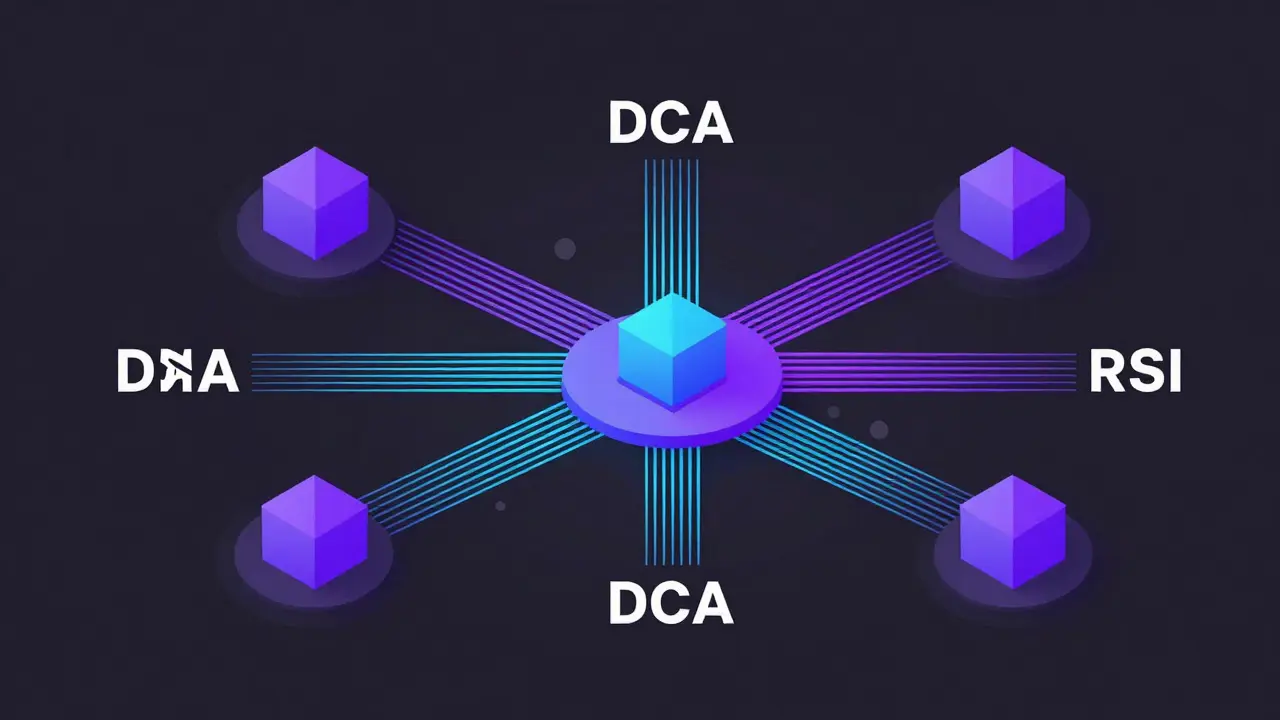
Basic DCA is great, but technology is evolving. New tools allow “smart DCA,” which adds conditions to your buys. For instance, Bitpanda is an Austrian fintech company offering investment products including smart DCA features based on technical indicators introduced features allowing users to buy only when the Relative Strength Index (RSI) drops below 35. This means you still invest regularly, but only when the asset is technically oversold.
Researchers at UCLA proposed “adaptive DCA” algorithms that increase allocation amounts during verified market bottoms using on-chain metrics. Back-testing showed these methods achieved 14.7% better average entry prices than standard DCA. While you don’t need AI to benefit, being aware of these tools helps. As Coinbase acquired DCA analytics startup DCAbot in 2023, expect more sophisticated, data-driven DCA options in 2026.
Tax Implications You Can’t Ignore
Every time you buy crypto, it’s a recordable event. With monthly DCA, you’re generating 12+ transactions a year. TurboTax reported a 47% year-over-year increase in users seeking crypto tax assistance for DCA portfolios in 2022. Why? Because calculating cost basis for hundreds of small buys is tedious.
Keep detailed records. Use software like CoinTracker or Koinly that integrates with your exchange via API. These tools automatically track your average cost basis and generate tax reports. Ignoring this can lead to penalties during audits. Remember: in many jurisdictions, selling crypto triggers capital gains tax. Your DCA history determines your gain or loss.
Who Should NOT Use DCA?
DCA isn’t for everyone. FINRA warns that holding cash longer reduces potential returns. If you have a large lump sum and believe in a sustained bull market, lump-sum may yield higher profits. Also, DCA fails if the asset goes to zero. TerraUSD collapsed in 2022, and DCAing into it meant losing everything gradually. Always research fundamentals. DCA manages timing risk, not project failure risk.
Additionally, if you live in a region with high inflation, keeping cash idle for DCA intervals might erode purchasing power faster than crypto volatility harms your portfolio. Assess your local economic context.
Is DCA better than lump-sum investing in crypto?
It depends on market conditions. DCA is superior in volatile or bearish markets because it lowers your average entry price and reduces emotional stress. Lump-sum investing typically yields higher returns in sustained bull markets. For most retail investors facing unpredictable crypto swings, DCA offers better risk management.
How much should I invest per DCA cycle?
Start with an amount you can afford to lose completely. Common ranges are $50-$200 per week or $200-$1000 per month. Ensure the amount is large enough that transaction fees remain under 2% of the total purchase. Consistency is more important than the specific dollar figure.
Which cryptocurrencies are best for DCA?
Stick to assets with strong network effects and liquidity, primarily Bitcoin and Ethereum. These have survived multiple market cycles. Avoid low-cap altcoins or memecoins for DCA unless you fully understand the risk of total loss. Established assets provide the stability needed for long-term averaging.
Do I need to pay taxes on DCA purchases?
Buying crypto is generally not a taxable event in most jurisdictions. However, each purchase creates a lot with a specific cost basis. When you eventually sell, you must report capital gains or losses based on that basis. Use tracking software to automate record-keeping for frequent transactions.
Can I stop my DCA plan early?
Yes, most exchanges allow you to pause or cancel recurring buys instantly. However, stopping during a dip defeats the purpose of DCA. The strategy relies on buying low as well as high. Only stop if your financial situation changes or you decide to exit the asset entirely.