

When you hold a cryptocurrency token, you own a piece of the network. But what happens when more tokens are created? That’s when dilution risk kicks in - and it can quietly erase value without you even noticing.
Imagine you own 1% of a pizza. Then someone brings in a second pizza and splits it evenly among everyone. Suddenly, your 1% is now 0.5%. You still have the same number of slices - but the whole pie got bigger. That’s token dilution. It doesn’t take your tokens away. It just makes each one worth less, because there are more of them floating around.
What Is Fully Diluted Value (FDV) and Why It Matters
The clearest way to measure dilution risk is through fully diluted value - or FDV. This isn’t the current market cap. It’s the total value of the project if every single token ever meant to exist was already in circulation.
Let’s say a project has a market cap of $100 million with only 10% of its tokens released. That sounds small. But if the total supply is 1 billion tokens and 100 million are out there, FDV is $1 billion. That means 900 million tokens are still locked up, waiting to be released. If all those tokens hit the market at the same price, your $100 million market cap could instantly become $1 billion - and your token’s price would drop 90% to match.
FDV is the red flag that tells you: "There’s a lot more supply coming. Will demand keep up?" Projects with FDV five or ten times higher than their current market cap are playing with fire. Most retail investors miss this. They see a low market cap and think they’re getting in early. They’re not. They’re just buying into a future flood.
The Dilution Trap: When Supply Outpaces Demand
The real danger isn’t just more tokens. It’s when those tokens hit the market and nobody’s buying.
This is the "dilution trap." You’ve got a blockchain that’s growing - new users, more apps, better tech. But every week, another 1% of the total supply unlocks and gets sold by stakers, investors, or teams. If the price doesn’t rise fast enough to absorb that new supply, the price drops. And once it drops, people panic-sell. More supply gets dumped. Price falls further. The cycle keeps going.
Take Ethereum. It earns hundreds of millions in transaction fees. But it also pays out billions in staking rewards. According to Kaiko Research (February 2026), Ethereum lost $1.62 billion last year just from paying validators. Solana lost $4.15 billion. That’s not a bug - it’s the business model. To keep the network secure, they print more ETH or SOL. But that means every non-staker’s holdings slowly lose value. You didn’t sell. You didn’t do anything wrong. But your tokens got cheaper.
How Governance Gets Weakened
Dilution doesn’t just hurt prices. It weakens your voice.
Many blockchains use tokens for voting. If you hold 10,000 tokens, you get 10,000 votes. But if the project issues 1 million new tokens to reward developers, your 10,000 tokens now represent less than 1% of the total voting power. Even if you hold the same number, your influence shrinks. That’s governance dilution.
Over time, this pushes power toward big stakers, venture funds, or teams who get first access to new tokens. Regular holders get quieter. DAOs start looking less like decentralized communities and more like corporate boards with a few noisy shareholders.
Why Lockup Schedules Are a Big Deal
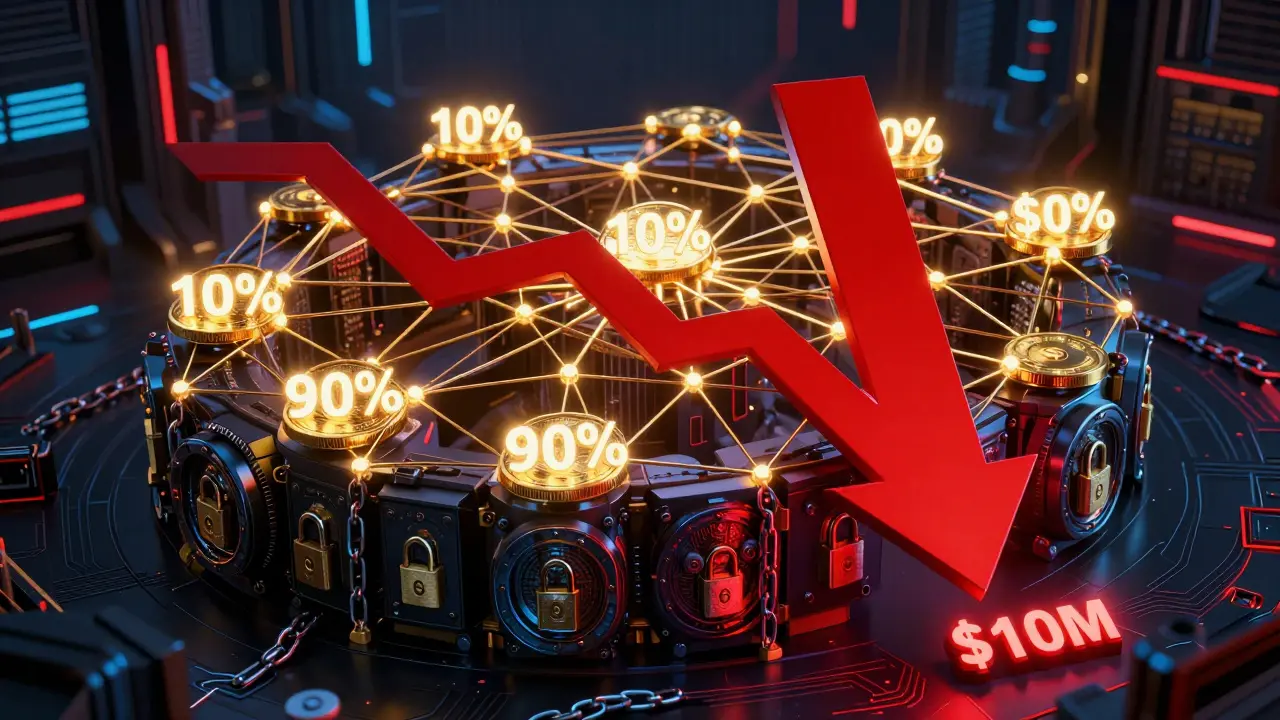
Not all token releases are equal. Some projects lock up tokens for 4 years. Others unlock 20% after 6 months.
Short lockups are a recipe for crashes. Think of it like a company going public and letting insiders sell their shares the day after listing. You’d expect the stock to crash. Same thing in crypto.
Projects with inconsistent lockups - where founders get 1-year vesting but investors get 6-month unlocks - create unfair pressure. The investors cash out early. The team keeps holding. The community gets stuck with the bag.
The smartest projects lock up everything uniformly: founders, team, investors, advisors - all the same schedule. That shows alignment. It says: "We’re all in this for the long haul."
How Some Projects Fight Back
Dilution isn’t inevitable. Some projects design their tokenomics to reduce its impact.
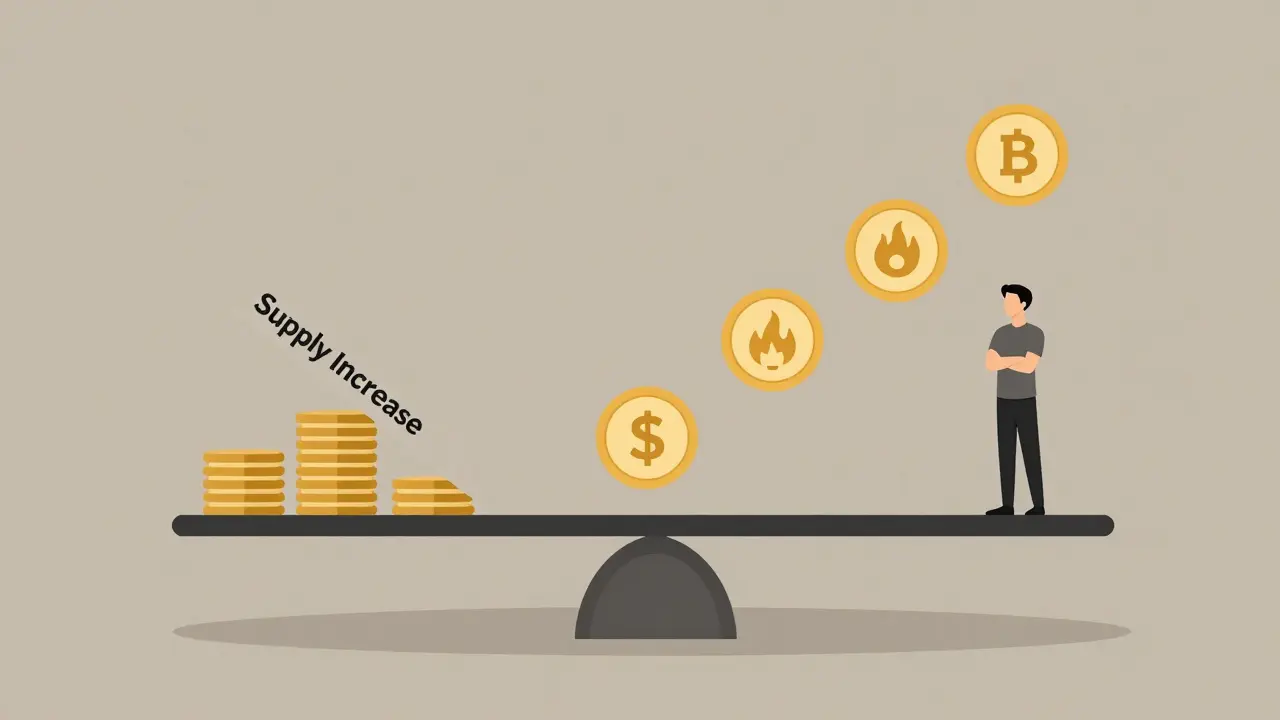
- Token burns: Every quarter, they destroy a portion of the circulating supply. Less supply = less dilution pressure. Binance’s BNB burn is a classic example.
- Fee sharing: Instead of printing new tokens, they give holders a cut of transaction fees. This rewards you without adding supply.
- Long vesting + gradual unlocks: Releasing 1% per month over 5 years is far less disruptive than dumping 20% in one month.
- Buybacks: Using treasury funds to repurchase tokens from the market. This reduces supply and signals confidence.
These aren’t just marketing tricks. They’re economic safeguards. Projects that use them consistently tend to hold value better during market downturns.
What You Should Check Before Investing
If you’re thinking about buying a new token, don’t just look at the price. Look at the supply schedule.
- Find the FDV. Compare it to the current market cap. If FDV is more than 3x higher, be cautious.
- Check the unlock calendar. Are there big unlocks in the next 3-6 months? That’s when selling pressure spikes.
- Look for burns or buybacks. If the project has a history of reducing supply, that’s a good sign.
- See who gets tokens. Are 40% going to investors with 6-month locks? That’s a red flag.
- Ask: "Is the network actually growing?" More users? More transactions? More apps? If adoption isn’t rising, dilution will crush the price.
Most people focus on the hype: "This coin will moon!" But smart investors focus on the math: "How many tokens are coming? Who’s getting them? And what’s the real demand?"
The Bigger Picture: Crypto Is Becoming an Equity Market
Five years ago, crypto was seen as speculative tech. Now, institutional investors treat it like stocks. They analyze revenue, costs, and profit margins.
And here’s the shocker: most Layer 1 blockchains are losing money. They earn fees - but spend far more on token rewards. That’s not sustainable. It’s inflation masquerading as growth.
That’s why we’re seeing shifts. Ethereum is lowering staking rewards. Solana is exploring fee upgrades. Cardano is testing new incentive models. The market is waking up to one truth: you can’t print your way to value.
The winners going forward won’t be the ones with the biggest token supplies. They’ll be the ones with the cleanest economics - where supply growth matches adoption growth. Where rewards come from fees, not printing. Where holders aren’t just spectators - they’re stakeholders.
What exactly is token dilution?
Token dilution happens when new tokens are created and added to circulation, reducing the percentage ownership of existing holders. It doesn’t remove your tokens - it just makes each one worth less because the total supply has increased. For example, if you owned 1% of a network with 100 million tokens, and 900 million more were issued, your share would drop to 0.1%.
Is FDV a reliable metric for evaluating crypto projects?
FDV is one of the most important metrics for spotting future dilution risk. It shows the total value if all tokens were in circulation. A high FDV compared to current market cap signals that a large portion of supply is still locked - and could hit the market later. While it doesn’t predict price, it helps you avoid overpaying for projects with massive upcoming token unlocks.
Can token burns eliminate dilution risk?
Token burns reduce circulating supply, which can offset dilution from new issuance. But they don’t eliminate risk entirely. If a project is issuing 10 million tokens per year and burning only 1 million, dilution still happens. Effective burns must match or exceed new supply to have real impact.
Why do blockchains like Ethereum keep issuing new tokens if they lose money?
Ethereum and similar networks issue new tokens as rewards to validators - the people who secure the blockchain. Without these rewards, validators would leave, and the network would become vulnerable. It’s a trade-off: pay in inflation to maintain security. The problem is that when transaction fees drop (as they do with Layer 2 scaling), the system has to issue even more tokens to keep validators engaged - worsening the loss.
How can I protect my holdings from dilution?
First, avoid projects with FDV more than 3x their current market cap. Second, check unlock schedules - avoid tokens with large unlocks in the next 6 months. Third, favor projects that burn tokens, share fees, or have long, uniform lockups. Finally, only invest if the network’s real usage (transactions, users, revenue) is growing faster than its supply.
Tokenomics isn’t magic. It’s math. And math doesn’t lie. If you’re holding a token and the supply keeps growing without a matching rise in demand, your stake is slowly being diluted - no matter how much you believe in the project. The smartest investors don’t ignore dilution. They calculate it. And they walk away when the numbers don’t add up.
11 Responses
Bro, I saw this same thread last week and thought I was alone. You nailed it. I bought into a project with a $50M market cap and 10x FDV. Thought I was early. Turned out I was just early to the graveyard.
Woke up this morning to another 5% unlock. My wallet’s bleeding. No one talks about this enough.
Stop chasing moonshots. Start checking unlock schedules. That’s the real alpha.
Ah yes, the classical fallacy of equating tokenomic dilution with monetary erosion-ignoring the deeper ontological rupture in value-signification inherent in permissionless ledger systems. The market cap is a phantom, a Hegelian abstraction. FDV? A spectral projection of capitalist entropy.
Meanwhile, the validators-those spectral laborers of the blockchain-extract surplus value via PoS, not unlike the serfs of feudalism, but with more gas fees and less dignity.
Capitalism doesn’t die. It just rebrands itself as a tokenized DAO with a whitepaper written in Comic Sans.
This is so well explained. I’m not super technical but I get it now. I used to think if I held my coins, I was safe. But now I see that even if I don’t sell, my share gets smaller.
Thanks for breaking it down like pizza. I’m gonna check FDV before I buy anything next time.
OMG I just realized I invested in a project with a 12x FDV and a 20% unlock next month. I’m so dumb. I thought the low price meant it was cheap. Nooo, it meant it was a ticking time bomb.
Does anyone have a good tool to track unlock schedules? I’m lost. I need a spreadsheet or something. Please help.
Also, anyone else feel like crypto is just Wall Street with better branding?
I appreciate how this post doesn’t just scare people-it gives real tools to navigate the mess. The FDV comparison is critical, but what really stood out was the governance dilution point.
It’s not just about price. It’s about power. When you hold tokens for voting rights, and suddenly 80% of the voting weight shifts to a few whales who got early unlocks, that’s not decentralization. That’s a rigged game with a blockchain logo.
And the lockup uniformity point? That’s the litmus test. If founders get 4-year vesting and investors get 6-months? Run. If everyone’s locked the same? That’s alignment.
Crypto’s future belongs to projects that treat tokenomics like a contract-not a lottery ticket.
Ugh I knew this was gonna happen. Everyone’s woke now. I bought into Solana last year. Now I’m watching them burn $4B a year in rewards and pretending it’s "security."
It’s not security. It’s inflation. And they’re lying to us. The whole system is a pyramid scheme with a whitepaper.
Why do you think they never talk about how much ETH they’re printing? Because if you knew, you’d run.
And don’t even get me started on burns. Binance burns 1% of BNB? That’s like giving a starving man one crumb while you eat the whole loaf.
I’m so done with this crypto bs. I bought a token because the team said "we’re building the future" and now I’m watching them dump 500M tokens like it’s Black Friday.
They didn’t care about me. They cared about their exit. I’m not a holder. I’m a sucker.
And don’t even say "do your own research"-I did. And I got roasted by the algorithm.
Why do they keep making new coins? Because they know people are dumb. And they’re rich. And I’m still holding a bag of worthless pixels.
Think about it like this-every time a new token is issued, it’s like a new voice joining a choir. You’re still singing your part. But now the song’s louder. And if no one’s listening anymore, your voice doesn’t matter.
The real question isn’t how many tokens are coming. It’s who’s still listening.
Are people using the network? Are they paying fees? Are they building? Or are they just waiting for the pump?
If the answer is the latter, then dilution isn’t the problem. Indifference is.
I’ve been holding a few tokens for years and never thought about how my voting power was shrinking. It’s heartbreaking, honestly.
It’s not just about money-it’s about feeling like you have a say. And when the project keeps giving more tokens to insiders, it feels like you’re being erased from your own community.
I started asking questions. I joined the DAO calls. I read the governance proposals. And honestly? It’s exhausting.
But I’m still here. Because I believe in the idea. I just wish the math matched the mission.
Small tip: Use CoinGecko’s "Token Unlock Schedule" tab. It’s free and shows every upcoming unlock. I used it to avoid two projects that were about to dump 30%+ supply. Saved me from a 70% loss.
Also, if a project has burns, check how much they’ve burned vs. how much they’ve issued. If burns are less than issuance? It’s still dilution. Just slower.
Wow. This post deserves a medal. I’ve been in crypto since 2017. I’ve seen every bubble. Every rug. Every "it’s different this time."
But this? This is the one thing no one teaches you. Not in YouTube videos. Not in Twitter threads. Not even in the whitepapers.
You think you’re buying into a technology. But really, you’re buying into a financial model. And most of them are designed to enrich insiders first, users second.
I’m not quitting crypto. But I’m done being naive. I’m checking FDV. I’m checking unlocks. I’m checking burns. And I’m walking away from anything that doesn’t pass the math test.
Thank you. Seriously.