

Forget the old model where game companies kept all the profits. In Web3 games, DAO guilds are turning players into co-owners. These aren't just fan clubs or Discord servers. They're blockchain-based organizations where members vote on rules, share in profits, and even lend out expensive in-game assets so others can play. It’s a system built on transparency, not top-down control.
What Exactly Is a DAO Guild?
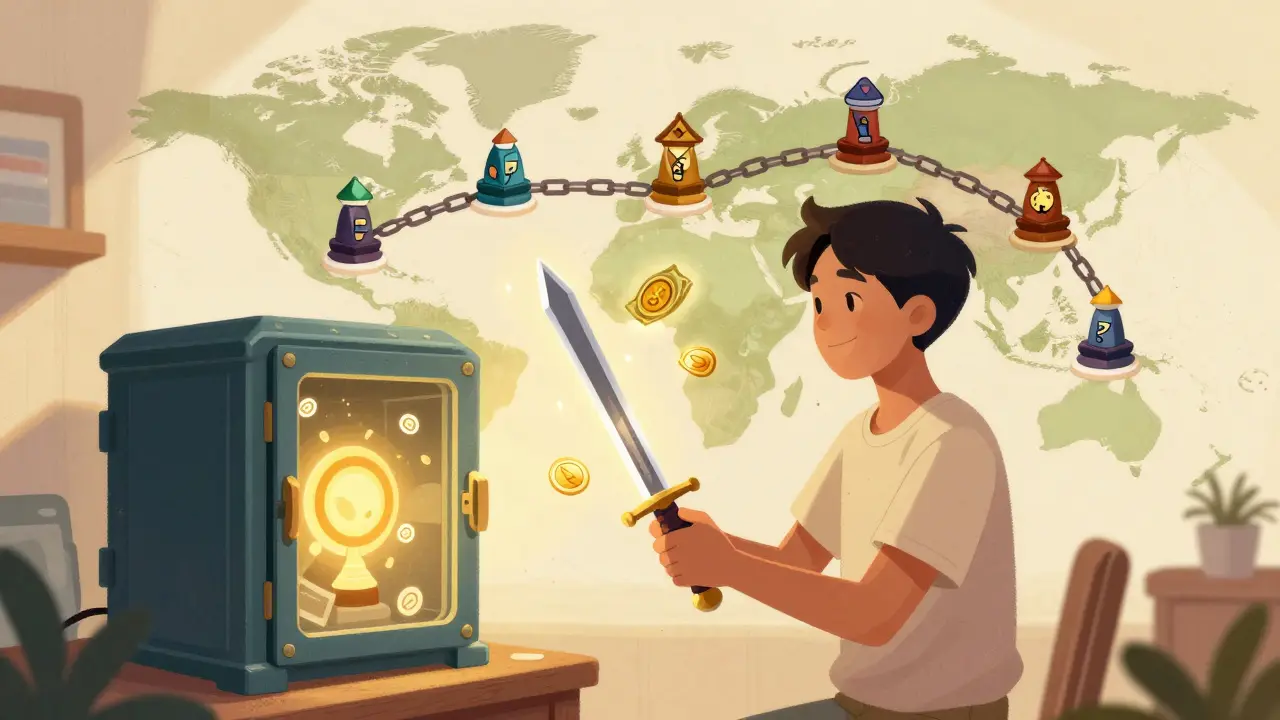
A DAO guild in Web3 gaming is a group of players who collectively own and manage a gaming economy using smart contracts. Unlike traditional games where the studio decides everything - from item prices to storylines - a DAO guild lets its members vote on those decisions. This happens through governance tokens, which you earn or buy. The more tokens you hold, the more voting power you have.Think of it like a cooperative. Instead of paying $500 for an NFT sword just to start playing, you can borrow it from the guild. You play, earn tokens or items, and split the rewards with the guild. The guild, in turn, uses its treasury to buy more NFTs, fund new games, or upgrade its infrastructure. Everyone wins - if the system works.
The Three Types of DAO Guilds
Not all DAO guilds are the same. There are three main kinds, each with a different role in the Web3 gaming world.- Player/Community DAOs: These are made up of active players who vote on game balance, event schedules, and how rewards are distributed. They’re the heartbeat of the community.
- Developer DAOs: These include game designers, coders, and artists who use DAO tools to get funding directly from players. Instead of pitching to venture capitalists, they propose updates and let token holders decide what gets built.
- Gaming Guilds (like YGG): These are the infrastructure providers. They pool money to buy NFTs, run scholarship programs, and coordinate thousands of players across multiple games. They’re the engine behind the scenes.
Most successful guilds combine elements of all three. Yield Guild Games (YGG) is the biggest example. It started during the Axie Infinity boom, when players in the Philippines and Indonesia were earning real income just by playing. YGG didn’t just fund players - it built a whole system around it.
How Coordination Works: The Scholarship Model
The real breakthrough? The scholarship model. Most Web3 games require expensive NFTs to play - sometimes hundreds or even thousands of dollars. That’s a wall for most people. YGG broke it down by lending NFTs to new players, called scholars.Here’s how it works: A scholar signs up, gets an NFT from the guild’s vault, and starts playing. They keep 70% of what they earn. The guild keeps 30%. That 30% goes back into the treasury to buy more NFTs, pay for tech upgrades, or fund new scholars. It’s a self-sustaining cycle.
This isn’t charity. It’s smart economics. The guild grows by helping others grow. And because everything is tracked on-chain, there’s no guesswork. Every token earned, every NFT loaned, every vote cast - it’s all public.
Incentives: Tokens, Voting, and Real Money
Incentives in DAO guilds aren’t just about fun. They’re tied to money. Most guilds issue a governance token - like YGG’s $YGG token. You can buy it on exchanges, earn it by playing, or get it as a reward for helping with community tasks.But here’s the key: holding the token gives you voting rights. Want to shift the game’s economy? Propose it. Want to invest guild funds into a new title? Submit a proposal. If enough members vote yes, it happens. No CEO says no. No board meeting drags it out for months.
This creates a powerful feedback loop. Players who earn tokens are more likely to stay active. They don’t just play - they care about the guild’s long-term health. If the guild’s treasury crashes because of bad decisions, their tokens lose value. So they vote carefully.
And yes, those tokens can be traded. That means players aren’t just gamers - they’re investors. They’re betting on the future of the game. That’s a huge shift from traditional gaming, where your time and effort only benefit the company.
The Power of SubDAOs
One-size-fits-all doesn’t work in gaming. A guild that runs well for Axie Infinity might fail in Guild of Guardians or Illuvium. That’s where SubDAOs come in.SubDAOs are smaller, focused teams inside the main guild. They might be organized by game, region, or even language. For example, YGG has a SubDAO for Southeast Asia, another for Latin America, and one just for managing the game Illuvium. Each has its own wallet, its own rules, and its own leaders.
This lets local managers adapt. A SubDAO in the Philippines might focus on low-cost mobile play. One in Germany might prioritize high-end PC setups. Both still answer to the main DAO, but they have the freedom to tweak what works for their players. It’s decentralization with structure.
Why DAO Guilds Are Changing Gaming
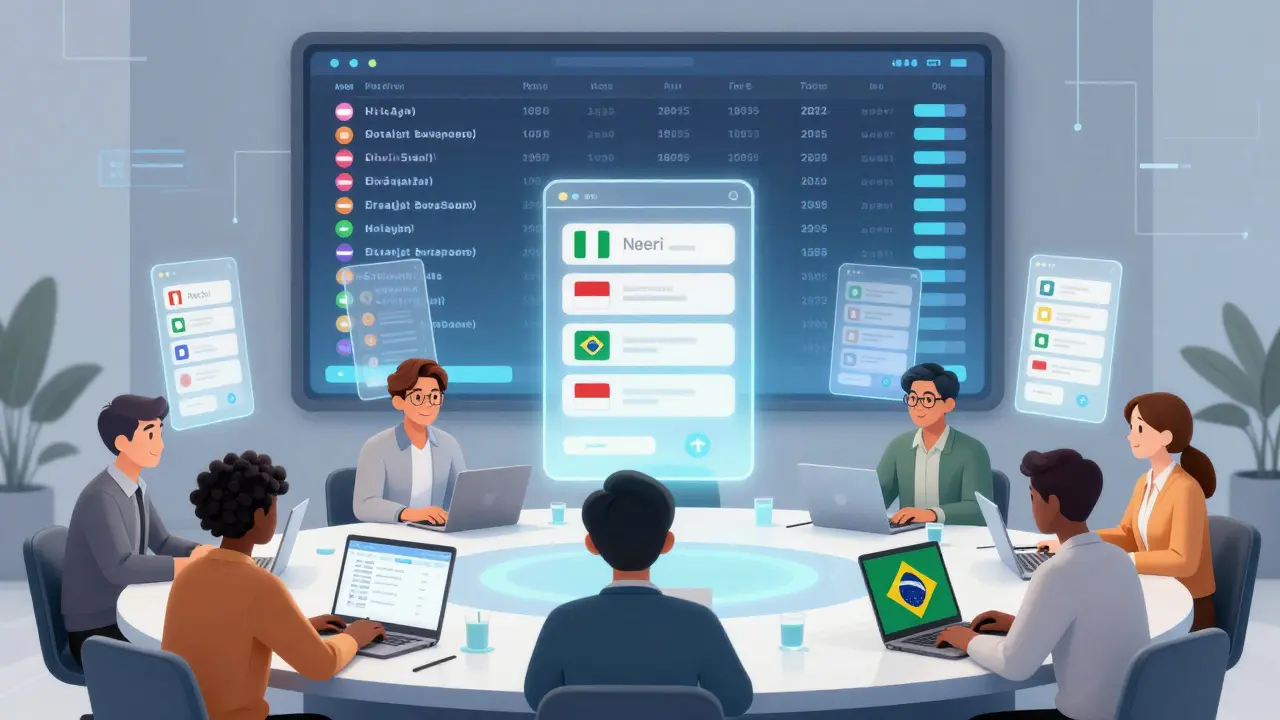
Traditional gaming is a one-way street. You pay, you play, you get nothing back. Web3 games flip that. You play, you earn, you vote, you own.DAO guilds make this possible. They turn scattered players into a collective force. They remove gatekeepers. They let people from Nigeria, Vietnam, or Brazil - places where salaries are low but gaming passion is high - compete on equal footing.
And it’s not just about money. It’s about agency. Players aren’t just consumers anymore. They’re stakeholders. They help design the next update. They decide how the treasury is spent. They’re not waiting for a patch note - they’re writing it.
The Risks: Volatility, Apathy, and Broken Trust
None of this is perfect. DAO guilds face real problems.First, token prices swing wildly. A guild might be thriving one month, then crash if its token loses value. That can kill participation. If people think their votes won’t matter because the guild is failing, they stop showing up.
Second, voter apathy. In many DAOs, less than 5% of token holders vote. That means a small group - maybe just a few wealthy investors - ends up controlling everything. That’s not decentralization. That’s just a new kind of elite.
Third, some guilds are just fronts for speculation. They promise community control but never actually let members vote on anything important. If a guild’s proposals are all pre-written by a small team, it’s not a DAO - it’s a marketing gimmick.
The difference between success and failure? Active, informed participation. A DAO guild only works if people care enough to show up, read proposals, and vote.
The Future: More Than Just Games
DAO guilds are proving that decentralized communities can manage complex systems. They’re not just about gaming. They’re a test case for how people can organize without bosses, without banks, without middlemen.Imagine a guild that doesn’t just play games - it builds them. A SubDAO that raises funds, hires developers, and launches its own title. Imagine players from 10 countries voting on a new quest line, then earning a share of its sales. That’s not sci-fi. It’s happening now.
DAO guilds are still young. But they’re the first real alternative to corporate gaming. And they’re showing that when you give people ownership, they don’t just play harder - they build better.
What is the main purpose of a DAO guild in Web3 games?
The main purpose is to create a player-owned system where members collectively manage in-game assets, vote on game changes, and share in the economic rewards. Instead of game studios controlling everything, DAO guilds let players decide how funds are used, which NFTs to buy, and how to reward participation.
How do DAO guilds make money?
DAO guilds earn money through in-game activities like play-to-earn rewards, NFT rentals, and trading fees. They also raise funds by selling governance tokens to investors. The revenue from these sources goes into a shared treasury, which is then used to buy more assets, fund new players, or invest in other Web3 projects.
Do I need to buy an NFT to join a DAO guild?
No, you don’t need to buy an NFT. Many guilds, like Yield Guild Games, offer a scholarship model where they lend NFTs to new players - called scholars - for free. In return, scholars share a portion of their earnings with the guild. This lets people from any background join without upfront costs.
What’s the difference between a DAO guild and a regular gaming clan?
A regular gaming clan is informal - it’s about teamwork and fun. A DAO guild is a formal, blockchain-based organization with real economic power. It owns assets, manages a treasury, issues tokens, and votes on decisions that affect the game’s economy. Members don’t just play together - they co-own the system.
Are DAO guilds only for crypto experts?
Not at all. While some knowledge helps, many guilds have onboarding systems that guide new members through setting up wallets, understanding tokens, and starting play. The scholarship model is designed for beginners. You don’t need to be a crypto expert - just willing to learn and play.
9 Responses
In India, we've been playing these games for years just to eat. No NFT needed. Just a phone, data, and willpower. DAO guilds? They finally get it. This isn't gaming. It's survival with a blockchain.
YGG's scholarship model? That's the real revolution. Not the tokens. Not the voting. The fact that a kid in Kerala can borrow a sword and feed his family.
Wow. Another crypto bros fantasy. You think people care about voting when their token dropped 90% last week? Lol. This is just ponzi with better graphics. And dont even get me started on 'player owned economies' - you own a 0.0003% slice of a contract written by 22yr olds in a basement. Congrats. You're a shareholder in a meme.
I appreciate how this post breaks down the structure without oversimplifying. The scholarship model is genuinely transformative, especially for regions where traditional economic mobility is limited. What’s often overlooked is that these guilds don’t just enable access-they build community infrastructure where none existed before. It’s not about the money; it’s about dignity. And yes, the governance still has flaws, but the framework? It’s the first time gaming has ever been designed to serve players, not extract from them.
I'm curious about the long-term sustainability of SubDAOs. If each one operates independently with its own treasury and rules, how do you prevent fragmentation? Do they ever merge? Compete? What happens when a SubDAO grows larger than the main DAO? Is there a mechanism for rebalancing power, or does decentralization just become chaos?
Been in a few guilds. The ones that work? They don’t talk much. Just show up. Do the work. Share the earnings. No drama. No voting wars. Just quiet consistency. The ones that crash? They had 500 posts a day about 'vision' and 'mission.' Meanwhile, no one was actually playing. Real value is made in silence.
I just love this so much... it feels like something real, you know? Like, for once, the people who put in the hours actually get to keep something... not just the investors. And the SubDAOs? That’s genius. It’s like having your own little neighborhood council inside a bigger city. I wish more systems worked like this... I really do. :)
Oh, so now we’re romanticizing blockchain-based feudalism? 'Player-owned economies'? Please. It’s still rent extraction-just with more steps. The 'scholarship' model? That’s indentured servitude with a Discord emoji. And don’t get me started on 'governance tokens'-the same 17 whales hold 80% of the votes. You think the kid in Manila has a voice? He’s just a cog in a machine designed by VCs who sold their NFTs before the crash. This isn’t empowerment. It’s a glittery trap.
I’m just so emotional about this. Like… I cried when I read about the Philippines scholars. It’s so beautiful. And then I saw the comment from Akhil and I just… I need a hug. Why is it so hard for people to see the good? Why does everyone have to be so cynical? Can’t we just celebrate this? For once? Can’t we just… feel something?
You’re all missing the point. The real innovation isn’t the guilds-it’s the *incentive alignment*. Traditional games are designed to drain your time and money. DAO guilds are designed to turn your time into capital. That’s not magic. That’s economics. And if you’re still stuck on 'but what if the token crashes?'-you’re thinking like a consumer. You need to think like an investor. If you’re not actively participating, you’re not part of the system. You’re just a spectator. And spectators lose.