

Imagine sending money from Australia to a supplier in Vietnam. Not in days. Not in hours. But in seconds. And paying less than 1% in fees instead of 8%. That’s not science fiction - it’s what blockchain is doing to cross-border payments right now.
Why Traditional Cross-Border Payments Are Still Broken
For decades, sending money across borders meant jumping through a maze of banks. Your payment would go from your bank to a correspondent bank, then maybe another, then another - each adding fees, delays, and hidden costs. The International Monetary Fund found that some remittance corridors charge up to 20% in fees. Even average global fees sit at 6.3%. That’s $63 for every $1,000 sent. And the wait? Three to five business days. If you send money on a Friday, don’t expect it to land until Wednesday. That’s because traditional systems only operate during banking hours, Monday through Friday. Weekends? Holidays? Forget it. This isn’t just inconvenient - it’s expensive for small businesses, migrant workers, and importers who need cash flow to keep running. Many pay extra just to avoid the risk of currency swings while waiting. It’s a system built for the 1980s, stuck in 2025.How Blockchain Fixes This - In Plain Terms
Blockchain cuts out the middlemen. Instead of routing money through five banks, it moves directly from sender to receiver on a digital ledger. No need for prefunded accounts in every country. No hidden FX markups. No waiting for bank clearances. The magic happens through three things:- Stablecoins like USDC and USDT - digital coins tied 1:1 to the US dollar. They’re not volatile like Bitcoin. They’re just digital cash.
- Smart contracts - automated rules that handle currency conversion, compliance checks, and delivery triggers without human input.
- 24/7/365 operation - no banking hours, no holidays. Payments run nonstop.
Real-World Speed and Cost Comparison
Here’s what you actually get with blockchain vs. traditional banks:| Feature | Blockchain Payments | Traditional Banking |
|---|---|---|
| Settlement Time | 2-15 seconds | 3-5 business days |
| Average Cost | 0.5%-1% | 5%-20% |
| Operating Hours | 24/7/365 | Business days only |
| Intermediaries | 0-1 | 3-5 |
| Transparency | Real-time tracking, full audit trail | Opaque, limited status updates |
That’s not a small improvement. That’s a total overhaul.

The Stablecoin Sandwich: How It Actually Works
You might hear terms like “stablecoin sandwich” and think it’s tech jargon. It’s not. It’s just smart routing. Say you’re in Australia sending money to Mexico. Instead of converting AUD to MXN directly (which banks do slowly and with high spreads), you do this:- Convert AUD to USDC (instant, low fee)
- Send USDC over blockchain (seconds, global reach)
- Recipient converts USDC to MXN (instant, local exchange)
Who’s Using This - And Why
This isn’t just for crypto enthusiasts. Real businesses are adopting it - fast.- Remittance companies like WorldRemit and Remitly are cutting fees from 8% to 3.5% - because their processing costs dropped 65%.
- Small importers in Turkey, Kenya, and Vietnam are paying suppliers directly in USDC, avoiding currency swings and delays.
- Fintechs are building APIs that let their customers send cross-border payments with one click - no more paperwork.
- Corporations like Banco Santander are using blockchain for 50% of their international payments. One client reported 89% higher satisfaction scores because they could track every step of the payment in real time.
What’s Holding It Back?
It’s not perfect. And it’s not magic. The biggest hurdle? Regulation. Every country has different rules about digital money. Some ban stablecoins. Others require strict KYC checks. The Financial Stability Board called for “enhanced policy implementation” in October 2025 - meaning governments are still catching up. Liquidity is another issue. If no one’s trading USDC for Vietnamese dong in a local exchange, the recipient can’t get cash fast. But platforms are solving this by pooling liquidity across multiple exchanges. And yes - you need internet. But so does a bank app. Blockchain actually needs less infrastructure than traditional banking. No need for branches, ATMs, or SWIFT network access.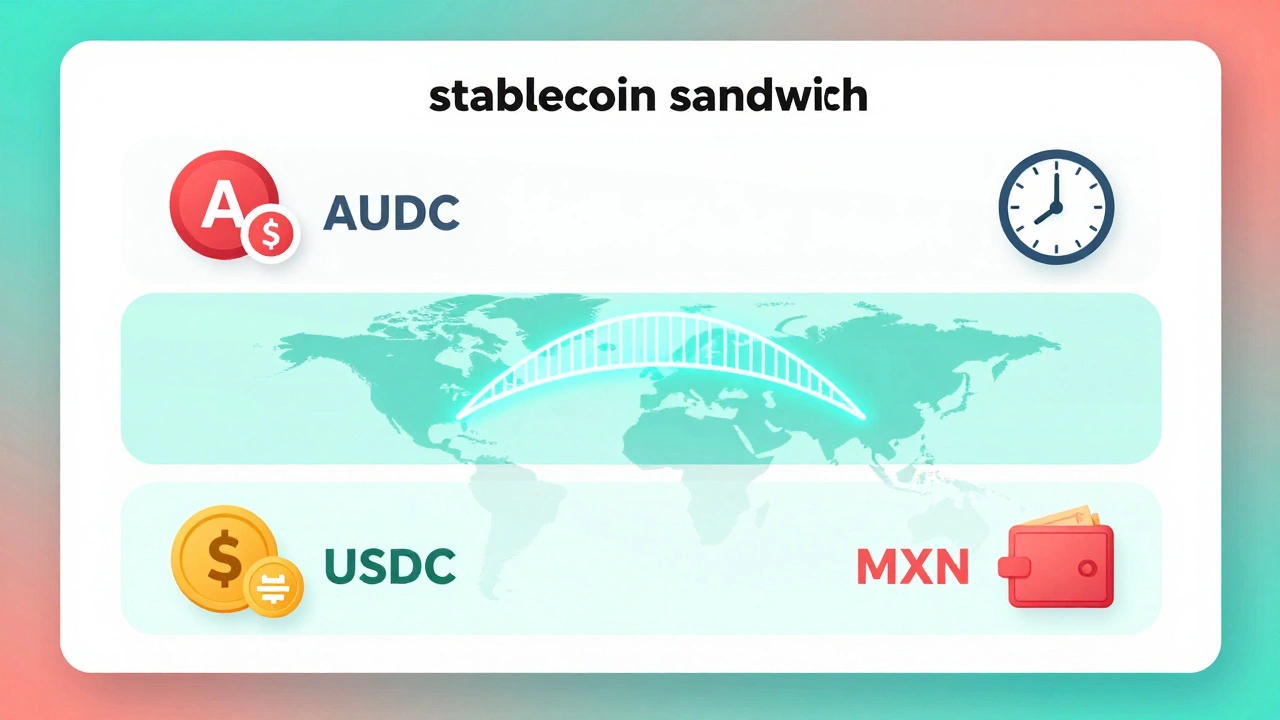
Is It Ready for You?
Yes - if you’re ready to move beyond old systems. If you’re a small business owner sending payments overseas, you can start today. Platforms like BVNK, Ripple, and Circle offer developer tools and pre-built integrations. Most fintechs can connect in 2-4 weeks. Developers need basic API knowledge - no PhD in cryptography required. The learning curve has flattened. In 2020, setting up a blockchain payment took months. Now? A week of training is enough. The tech is proven. The cost savings are real. The speed is unmatched. The only thing left is the will to switch.What’s Next? Programmable Money
The next leap isn’t just faster payments - it’s smarter ones. Imagine this: You pay your supplier in China for raw materials. The payment is sent in USDC, but it doesn’t release until your warehouse scans the goods in. That’s a smart contract. It’s not theory - it’s being tested now. CBDCs (Central Bank Digital Currencies) are also rolling out. China’s digital yuan is already in use. Fourteen central banks are testing cross-border CBDC corridors. This could mean direct government-to-government payments - no stablecoins needed. By 2028, blockchain could handle 25% of all cross-border payments. That’s not a prediction - it’s the current trajectory.Final Thought: This Isn’t Just About Money
Blockchain isn’t just replacing banks. It’s rebuilding how money moves across borders. It’s giving small businesses in Lagos or Manila the same payment power as multinational corporations. It’s letting migrant workers send home more of their hard-earned cash. It’s making global trade faster, fairer, and more inclusive. The old system isn’t broken because of bad people. It’s broken because it was never designed for the internet age. Blockchain is the upgrade we’ve been waiting for.Are blockchain cross-border payments safe?
Yes - more so than traditional systems. Blockchain uses cryptographic security and distributed ledgers that can’t be altered after a transaction is confirmed. Every payment is recorded publicly (or privately, in enterprise systems) and verified by multiple nodes. Plus, platforms now integrate full AML and Travel Rule compliance, making them more regulated than many bank corridors.
Do I need to own cryptocurrency to use blockchain payments?
No. Most enterprise platforms handle everything behind the scenes. You send AUD. The system converts it to USDC automatically, sends it over the blockchain, and the recipient gets local currency. You never touch crypto. It’s like using Apple Pay - you don’t need to know how NFC works to use it.
How much can I save on fees?
Typically 80-90% compared to traditional banks. If you’re paying 8% in fees now, you could drop to 0.8-1.5%. For a $10,000 payment, that’s $700-$800 saved. For businesses making dozens of payments a month, that adds up to tens of thousands in savings per year.
Can I use this for personal remittances?
Yes - and it’s already happening. Apps like Stellar, Circle’s USDC wallet, and Ripple-powered services let individuals send money across borders with near-instant settlement and fees under 1%. Many users report receiving funds in under 30 seconds, even to countries with weak banking systems.
Is blockchain faster than SWIFT?
SWIFT GPI improved speed, but it’s still not close. SWIFT payments take 1-3 days and still rely on correspondent banks. Blockchain settles in seconds. SWIFT is a messaging system - blockchain is a settlement system. They’re not the same thing.
What happens if the blockchain network goes down?
Enterprise blockchain networks used for payments (like Ripple’s or CBDC systems) are designed for 99.99% uptime. They run on multiple servers across continents. Unlike public blockchains, they’re not dependent on miners or random nodes. If one server fails, others take over instantly. Downtime is rarer than your bank’s website crashing.
13 Responses
This is actually happening. My cousin in Vietnam gets paid in USDC now and cashes out via local apps. Takes 8 seconds. Fee is 0.9%. No more waiting until Wednesday.
I used to send money to my sister in Delhi and it took 5 days and cost me 12%. Now I use a platform that converts AUD to USDC in seconds. She gets INR in under a minute. I cry every time I see the fee. This is justice.
Imagine if your rent payment didn't vanish into a black hole for three days. Imagine if your supplier didn't have to beg you for cash because the bank 'processed' it on Friday but it's still 'pending' on Tuesday. Blockchain isn't tech. It's dignity.
I work with a team in Nairobi. We pay them in USDC now. They use a local exchange. No more tracking payments on WhatsApp. No more 'did you send it yet'. Just done. It's beautiful
So you're telling me the entire global banking system is just a glorified fax machine with extra steps and a 20% markup? And we've been fine with this because... tradition? I need a nap.
You think this is new? We had digital cash in the 90s. This is just crypto rebranded. The real winners are the ones selling the infrastructure. Not you. Not your supplier. The platform owners.
Blockchain? More like blockchain *bogus*. They track everything. Who's watching? Who owns the nodes? The Fed? The IMF? This is just digital surveillance with lower fees. Don't be fooled.
The article uses 'USDC' without defining it as a 'tokenized fiat stablecoin issued by Circle'. This is sloppy. Also, 'smart contract' is misused 12 times. It's not magic. It's code. And code has bugs.
It works. I use it. No drama.
One might reasonably posit that the entrenched interests of the global financial infrastructure have, in a manner both deliberate and economically perverse, maintained a system of obsolescence for the sake of margin preservation. The blockchain, in its elegant simplicity, represents not merely an innovation, but a moral imperative.
I just lost $2000 because a blockchain app froze during a market dip. Now I'm broke. And you're telling me this is the future? This isn't progress. It's a casino with extra steps.
My uncle in Mexico got paid this way last week. Said it felt like magic. He didn't know what USDC was. He just got his money. That's all that matters.
You Americans think you invented everything. We've been doing peer-to-peer payments in India for decades. UPI. Zero fees. Instant. No blockchain needed. Your tech is late and overhyped.