
For years, we treated NFTs as static digital collectibles-jpegs of monkeys or pixels that sat in wallets like rocks in a jar. But what if those tokens could talk? What if owning a specific digital asset didn't just prove you had it, but actively opened doors, sent notifications, or even negotiated with other assets on your behalf?
This is the core promise of bridging NFTs and messages. We are moving beyond fungible tokens (like Bitcoin or ETH, where one unit equals another) into a world where unique, non-fungible identities drive communication. This shift transforms NFTs from passive ownership records into active participants in a decentralized internet. It’s not just about trading; it’s about creating an interoperable layer where your digital identity controls how information flows to and from you.
The Shift from Speculation to Utility
To understand why this matters, look at the trajectory of the industry. Early NFT hype was dominated by speculative trading volumes reaching tens of billions of dollars. However, academic reviews between 2022 and 2023 highlighted a critical pivot: long-term sustainability depends on utility, not speculation. Studies analyzing millions of social media posts showed a clear shift in discourse from price action to functional applications like community access and governance.
A symbolic milestone occurred in December 2021 when Vodafone tokenized the world’s first SMS ("Merry Christmas," sent in 1992) as an NFT. While the auction for €132,680 was a publicity stunt, it demonstrated the concept of linking historical messages to unique tokens. Today, that concept has evolved into concrete architectures. We are no longer just tokenizing messages; we are using tokens to gate, automate, and secure message flows across blockchains and applications.
Technical Standards: Giving Tokens a Voice
For NFTs to communicate, they need a common language. Enter EIP-5050, an NFT Interaction Standard proposed on Ethereum in July 2022. Unlike previous standards that focused solely on ownership transfer, EIP-5050 defines a generic action messaging protocol. It allows arbitrary user-initiated actions to be transmitted between on-chain entities.
Think of it like this: instead of an NFT being a silent receipt, EIP-5050 turns it into an "actor" in a computer science sense. An NFT can send a typed message to a smart contract or another token, triggering logic without bespoke code for every project. This standardization is crucial for interoperability. If your in-game sword (an NFT) needs to interact with a crafting station (another smart contract), EIP-5050 provides the gas-efficient ABI (Application Binary Interface) to make that conversation happen seamlessly.
Wallet-to-Wallet and Token-Bound Messaging
While EIP-5050 handles on-chain interactions, users also need private, human-readable communication. This is where protocols like XMTP (Extensible Message Transport Protocol) come in. XMTP provides a secure, end-to-end encrypted messaging layer for blockchain addresses. It uses the Internet Engineering Task Force (IETF) Messaging Layer Security (MLS) standard to ensure privacy.
But XMTP goes further than just text chats. It enables token-gated conversations. Imagine a creator community where only holders of a specific NFT collection can see the direct messages. Or a support channel where your ticket is tied to your wallet address. XMTP’s architecture allows developers to integrate these gated spaces directly into wallets and dApps. The conversation itself becomes a feature of the token ownership, merging communication and value transfer into a single interface.
Push Protocol takes this a step further with its NFT Chat system. Instead of binding messages to a wallet (which can hold many things), Push binds them to the NFT itself. If you own a specific digital avatar, that avatar has its own chat history. If you sell the avatar, the new owner inherits the conversation thread. This creates persistent, token-bound identities that travel with the asset, regardless of who holds the keys.
| Protocol | Primary Function | Identity Anchor | Key Feature |
|---|---|---|---|
| EIP-5050 | On-chain action messaging | Token/Contract | Standardized ABI for token-to-token logic |
| XMTP | Private wallet messaging | Blockchain Address | End-to-end encryption (MLS), token-gating |
| Push Protocol | NFT-bound chat | Specific NFT ID | Conversations follow the token across owners |
| Chainlink CCIP | Cross-chain synchronization | Cross-chain Asset | Secure state transfers between different blockchains |
Cross-Chain Interoperability
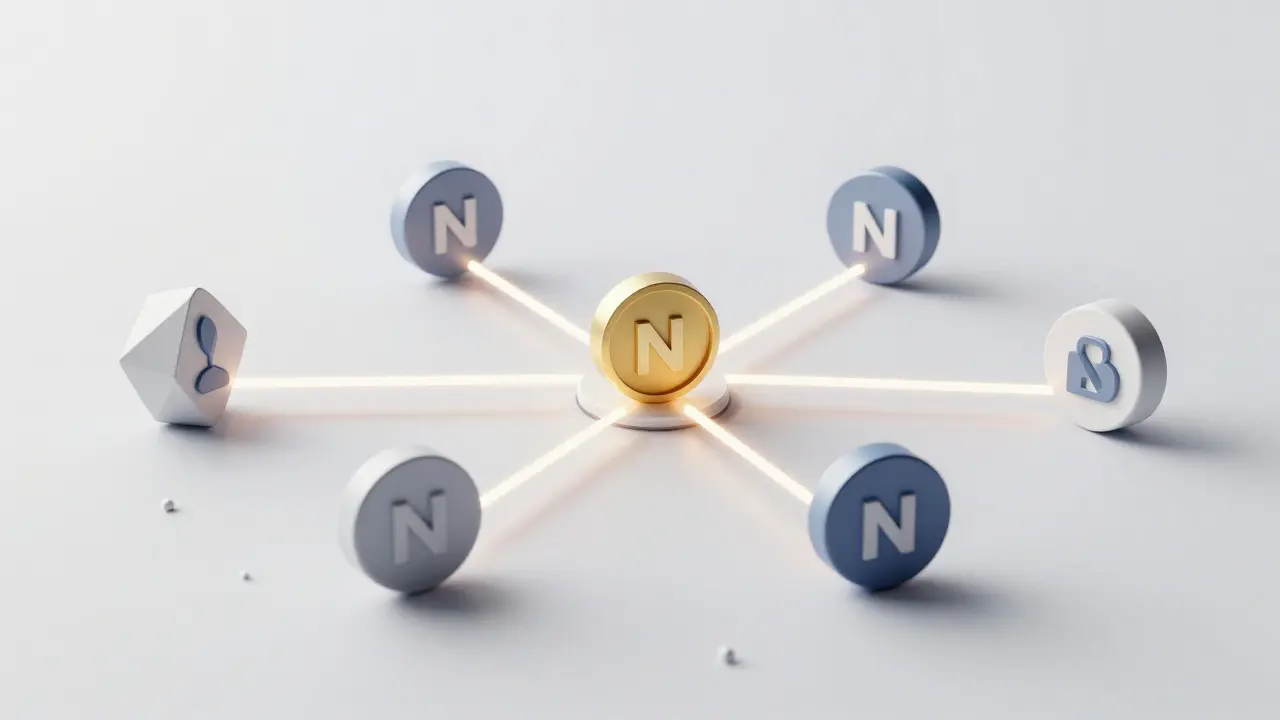
The biggest hurdle in crypto is fragmentation. Your NFT might live on Ethereum, but the game you want to play it in runs on Polygon. Bridging these worlds requires more than just moving assets; it requires moving context. Chainlink’s Cross-Chain Interoperability Protocol (CCIP) addresses this by providing a security-first messaging solution.
CCIP doesn’t just bridge funds; it bridges data. For NFT messaging, this means an NFT on Chain A can send a verified message to Chain B. This could trigger the minting of a "shadow" NFT, update metadata, or unlock a cross-chain chat experience. By using a decentralized oracle network to validate these messages, CCIP ensures that the communication isn’t spoofed. This is essential for complex ecosystems like metaverses, where assets and their associated permissions must remain consistent across multiple networks.
Web3 Social Graphs: Lens and Farcaster
The practical application of these technologies is most visible in decentralized social graphs like Lens Protocol and Farcaster. These platforms separate user data from centralized apps, allowing profiles, follows, and content to exist as open primitives.
In Lens, launched on Polygon in 2022, user profiles and follows are often represented as NFTs. This structure allows developers to build social feeds where access is programmatically gated. You can create a post that is only visible to people who hold a specific NFT or follow a certain profile. Farcaster, which has seen rapid growth through 2026, anchors identities in Ethereum addresses but stores content off-chain in a decentralized hub network. Both platforms enable token-gated channels, tipping, and paid messages, turning NFTs into dynamic keys for social interaction rather than static avatars.
A 2024 analysis by Bankless noted that both Lens and Farcaster are competing for developer mindshare by emphasizing these token-gated features. This creates a messaging environment where NFTs deepen brand-customer relationships. Brands can use NFTs as loyalty tokens that grant exclusive access to authenticated announcements or support messages, fostering higher engagement than traditional marketing drops.

Beyond Social: Healthcare and Authenticity
The implications extend far beyond social media. In healthcare, a 2023 scoping review highlighted how NFTs can represent medical records and diagnostic images. For this to work, there must be secure, standardized messaging between the NFT (proving ownership/provenance) and hospital information systems. Updates to consent or access logs would be communicated via these message layers, ensuring auditability and integrity.
Similarly, authenticity verification relies on messaging. A 2022 US patent application described an NFT authenticity protocol where media content is stored in a digital vault and verified through messages between verification services and user devices. When you query an NFT, it doesn’t just show an image; it answers whether the content is genuine or altered. This transforms NFTs into active validators of truth in a digital landscape plagued by deepfakes and fraud.
Challenges and Risks
Despite the potential, significant hurdles remain. First, complexity. Combining on-chain NFTs, off-chain messaging networks, and cross-chain oracles creates a large attack surface. Misconfigured bridges or oracle networks can become points of failure, making security audits critical. Second, privacy. Linking identities to wallets can expose sensitive data if not handled with robust encryption like MLS. Finally, regulatory uncertainty. As NFTs blend utility, membership, and financial value, their legal status remains evolving, particularly regarding securities laws and consumer protection.
Traditional Web2 platforms centralize moderation and data storage, offering easier user protection but less censorship resistance. Web3 messaging distributes these responsibilities, improving freedom but complicating content moderation at scale. Developers must balance decentralization with user safety, a challenge that will define the next phase of adoption.
What is the difference between fungible and non-fungible token messaging?
Fungible tokens (like ETH) are interchangeable, so messaging based on them usually involves simple balance checks. Non-fungible tokens (NFTs) are unique, allowing for personalized, identity-based messaging. NFTs can carry specific histories, reputations, and rights, enabling fine-grained access control and individualized communication flows that fungible tokens cannot support without additional infrastructure.
How does EIP-5050 improve NFT interoperability?
EIP-5050 provides a standardized Application Binary Interface (ABI) for token-to-token and token-to-contract messages. Before this, developers had to write custom code for each interaction. EIP-5050 allows NFTs to act as "actors" that send and receive typed messages, enabling seamless interactions across different games, metaverses, and dApps without bespoke bridging logic.
Can I keep my chat history if I sell an NFT?
It depends on the protocol. With wallet-based systems like XMTP, the chat stays with your wallet address. However, with token-bound systems like Push Protocol’s NFT Chat, the conversation is tied to the NFT itself. If you sell the NFT, the new owner inherits the chat history associated with that specific token ID.
What role does Chainlink CCIP play in NFT messaging?
Chainlink CCIP enables secure cross-chain messaging. It allows an NFT on one blockchain to send verified instructions or updates to another blockchain. This is essential for multi-chain ecosystems, ensuring that NFT states, metadata, and associated permissions remain synchronized and authentic across different networks.
Are NFT messaging systems private?
Protocols like XMTP prioritize privacy by using end-to-end encryption based on the IETF Messaging Layer Security (MLS) standard. This ensures that only the sender and recipient can read the messages, even though the existence of the communication may be visible on-chain. However, users should always verify the encryption standards of any specific dApp they use.