
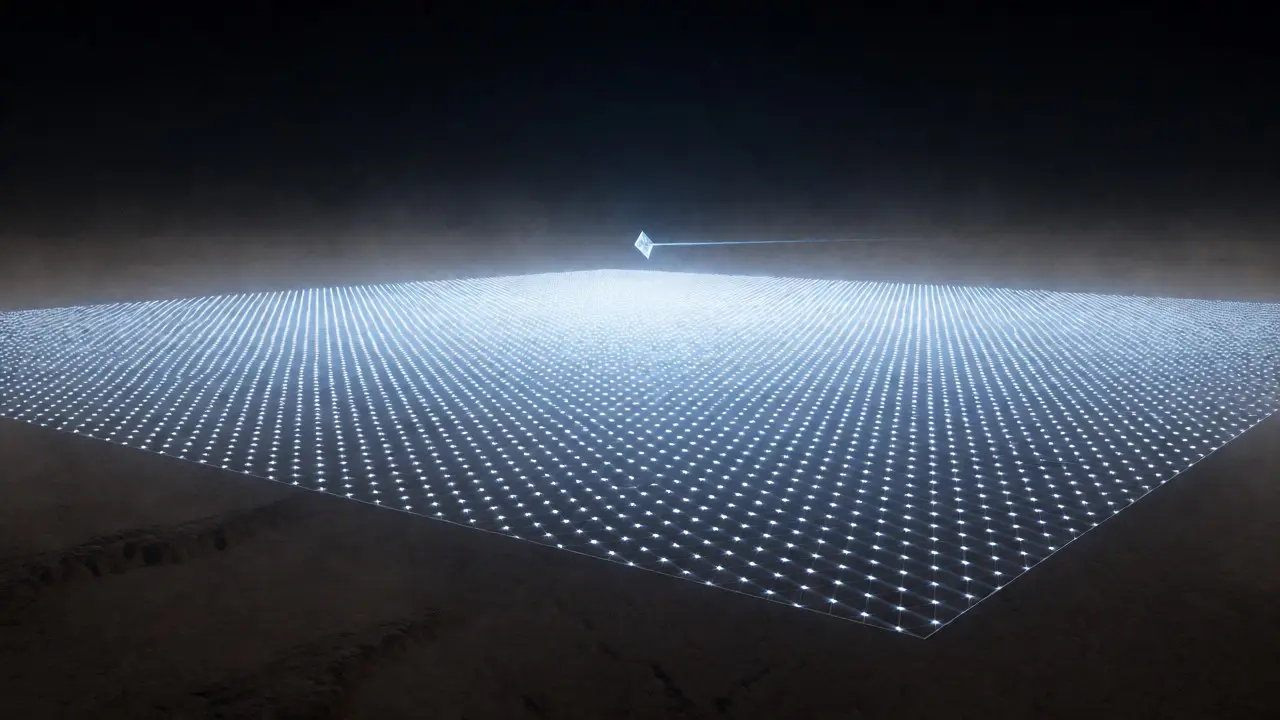
Imagine traveling to another star system in just over 20 years. Not with a rocket burning fuel for decades, but by being pushed by a beam of light from Earth. That is the core promise of Breakthrough Starshot, a research-and-engineering program aiming to send gram-scale spacecraft to Alpha Centauri using powerful lasers. Announced in 2016 by Yuri Milner and Stephen Hawking, this initiative isn't selling tickets or shipping products yet. It’s testing whether physics allows us to cheat the tyranny of distance by leaving the engine on Earth.
| Component | Specification / Requirement | Current Status (Nov 2026) |
|---|---|---|
| Laser Array Power | ~100 Gigawatts (GW) optical output | Prototype components tested; full array unbuilt |
| Sail Size | ~4 meters x 4 meters (approx. 10 m²) | Materials research ongoing at Caltech |
| Payload Mass | 1-2 grams total (sail + chip) | Sprite prototypes demonstrated basic electronics |
| Cruise Velocity | 20% speed of light (0.2c) | Theoretical target; no launch yet |
| Travel Time | ~20 years to Alpha Centauri | Based on constant velocity assumption |
The Physics of Pushing with Light
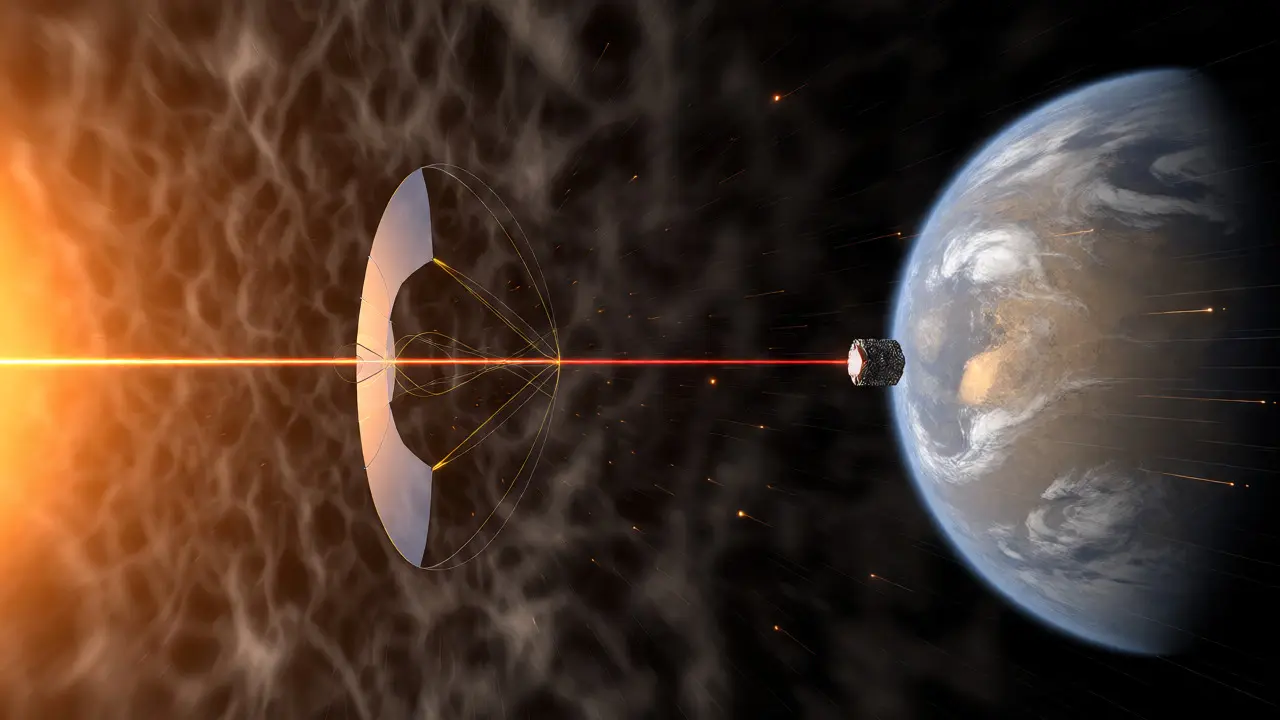
Most rockets carry their own fuel. As they burn it, they get lighter, which helps them go faster, but they still need massive amounts of propellant to reach high speeds. Breakthrough Starshot flips this model. The probe carries almost no fuel. Instead, a massive ground-based laser array shoots photons at a reflective sail attached to the probe. When these photons hit the sail and bounce off, they transfer momentum. This is called radiation pressure.
It sounds weak because a single photon has negligible mass. But if you have billions of watts of coherent light hitting a mirror-like surface, that pressure adds up. The goal is to accelerate the tiny craft to 20% of the speed of light-about 60,000 kilometers per second-in just minutes. Once accelerated, the sail can be detached or angled away, letting the probe coast through space at relativistic speeds without needing further energy input.
The Lightsail Challenge
The heart of the mission is the lightsail. It needs to be incredibly thin, lightweight, and reflective. Researchers are looking at materials like silicon nitride membranes that are only a few hundred atoms thick. Why so thin? Because every extra atom adds weight, and weight kills acceleration. A standard spacecraft might weigh tons. A Starshot nanocraft must weigh about one gram.
This creates a nightmare for engineers. The sail must reflect the specific wavelength of the laser while absorbing as little heat as possible. If it absorbs too much energy, it melts. Recent experiments at Caltech have measured radiation pressure on microscale membranes, proving the force exists. However, scaling this to a 4-meter-wide sail that can withstand a 100-gigawatt beam for several minutes remains an unsolved engineering hurdle. The sail also needs to survive impacts from interstellar dust. At 0.2c, even a microscopic grain of sand hits with the force of a grenade.
The Beam: A Kilometer-Scale Laser Array
To push the sail hard enough, you need a laser that doesn’t exist yet. We’re talking about a phased array of fiber or semiconductor lasers covering roughly one square kilometer. This "beamer" would sit in a dry, high-altitude location, perhaps in the Chilean desert or the Andes, to minimize atmospheric interference.
The technical demands are extreme. The beam must stay focused within milliarcseconds-a precision akin to hitting a coin on the moon from Earth. Atmospheric turbulence distorts light, so the system requires adaptive optics, similar to those used in large telescopes, to correct distortions in real-time. Furthermore, generating 100 GW of optical power requires storing gigawatt-hours of electricity, which implies a massive infrastructure project comparable to building a new national grid component.
Navigating the Void: Payload and Communications
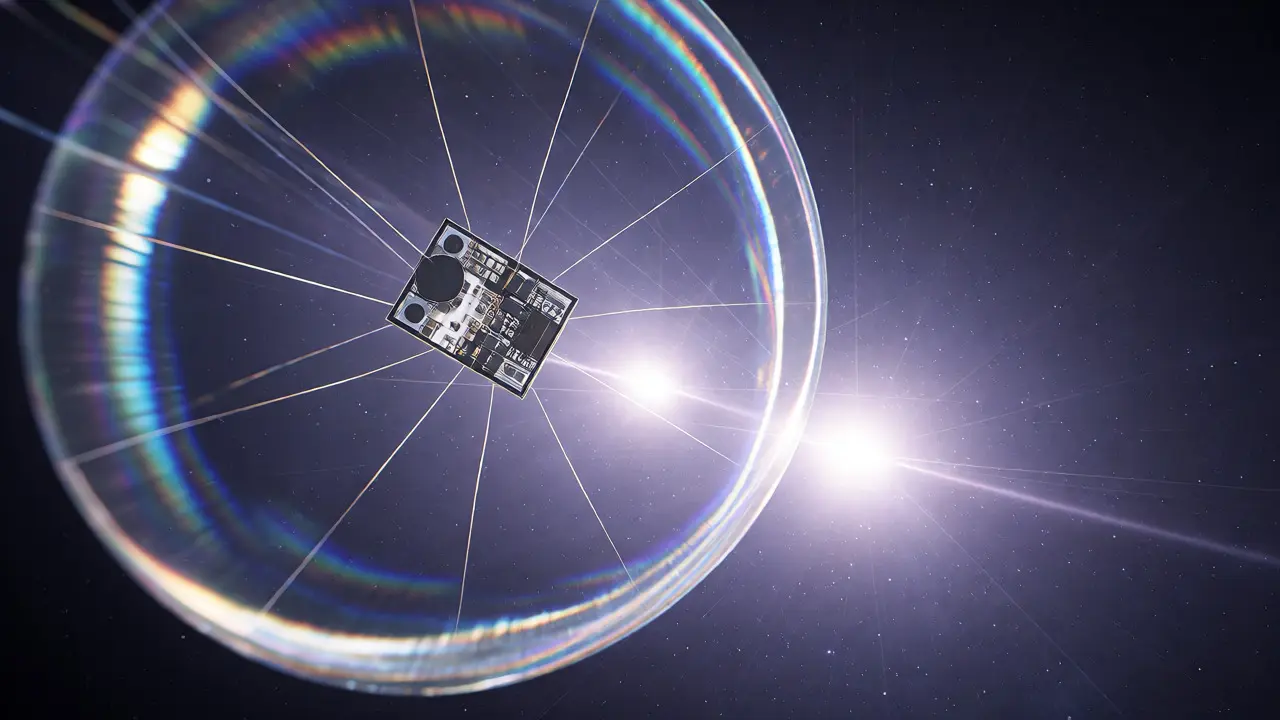
If the sail works, what does the probe actually do? The payload, often called a Starchip, fits on a circuit board. It contains cameras, sensors, navigation systems, and a communication laser. Since the probe moves so fast, it won’t orbit Alpha Centauri. It will fly by Proxima b, the closest exoplanet, in hours or days. It has to snap photos and gather data quickly before zooming past.
Sending that data back is another challenge. Radio waves weaken significantly over 4.37 light-years. The Starshot concept proposes using an optical laser transmitter on the return leg. This requires pointing the returning beam back at Earth with extreme accuracy. Current deep-space networks might need upgrades to detect such faint signals. The Sprite prototypes launched in 2017 were early tests of miniaturized electronics, but they didn’t test the high-speed optical communications needed for the real mission.
Costs, Risks, and Reality Checks
Is this feasible? The physics says yes. The engineering says maybe. The economics say... wait. Building the laser array alone could cost tens of billions of dollars. While the marginal cost per probe might drop to hundreds of thousands once the infrastructure exists, the upfront investment is staggering. Critics point out that the program has faced delays and funding uncertainties. A 2025 analysis suggested the project had lost some initial momentum, though research continues.
There are also safety concerns. A 100-GW laser beam pointed at the sky needs strict governance. What happens if it misfires? Could it be mistaken for a weapon? International agreements would be required to manage the exclusion zones and aviation safety around the firing site.
What’s Next for Interstellar Travel?
As of late 2026, no Starshot probe has been launched into interstellar space. The focus remains on laboratory demonstrations: testing sail materials, refining beam control algorithms, and developing smaller, cheaper laser components. Programs like NASA’s Solar Cruiser or other private ventures are exploring similar concepts, keeping the idea alive.
Breakthrough Starshot represents a shift in how we think about space travel. By moving the energy source off the vehicle, we bypass the rocket equation. It’s not guaranteed to work, but it offers the most plausible near-term path to touching another star. If successful, it wouldn’t just send pictures of Proxima b; it would prove that humanity can become a multi-star species.
How long would it take for a Starshot probe to reach Alpha Centauri?
At 20% of the speed of light, the probe would arrive in approximately 20 years. However, you wouldn't see the results for another 4.37 years, as that is the time it takes for the signal to travel back to Earth at the speed of light. Total round-trip information delay is nearly 25 years.
Why use lasers instead of traditional rockets?
Traditional rockets must carry their own fuel, which limits speed and increases mass exponentially. Laser propulsion leaves the heavy energy source on Earth, allowing the probe to be extremely light (gram-scale). This enables much higher velocities than chemical rockets can achieve for small payloads.
Can the probe stop at Alpha Centauri?
No, the baseline design is a flyby mission. Stopping a probe moving at 20% the speed of light would require an equally powerful braking system, likely involving another laser array at the destination or complex magnetic sails. For now, the goal is to capture data during a rapid pass-by.
What are the biggest risks to the lightsail?
The main risks are thermal damage from absorbing laser energy, instability caused by uneven pressure on the sail, and collisions with interstellar dust. At high speeds, even tiny particles can puncture or destroy the ultra-thin membrane.
Is Breakthrough Starshot a commercial product?
No. It is a scientific research and engineering program funded by philanthropists like Yuri Milner. There are no tickets for sale, no subscription models, and no current timeline for a public launch. It is a proof-of-concept effort.