
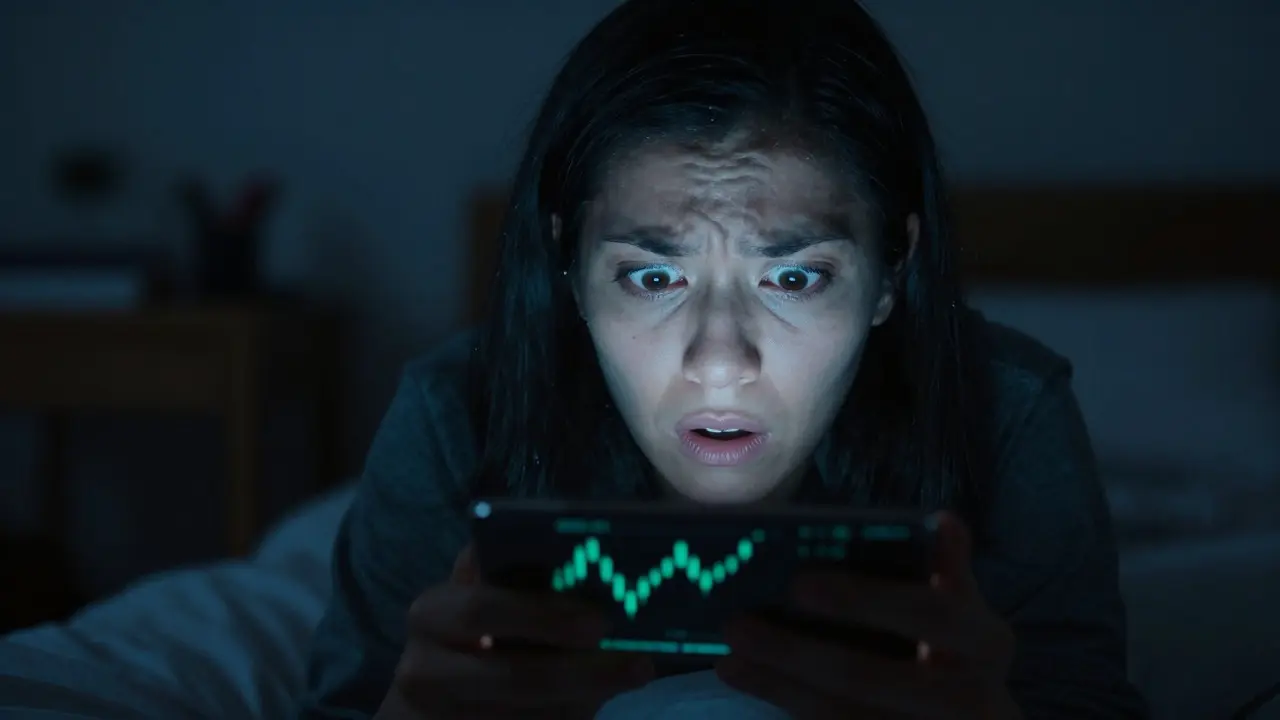
It is 2:00 AM. Your phone buzzes with a notification: Bitcoin just pumped 5%. Your heart rate spikes. You haven't slept well, you're stressed about work, but the green candles on the screen look like a promise of easy money. Do you open your app? If you do, are you following a plan, or are you chasing a feeling? This is the moment where most traders lose their edge. Crypto trading psychology is the study of how emotions, biases, and habits influence decision-making in digital asset markets. Unlike traditional stock markets that close at 4 PM, crypto trades 24/7, amplifying triggers like FOMO (Fear Of Missing Out) and revenge trading. To survive, you need to stop reacting and start executing a structured system.
The Core Problem: Why Crypto Is Harder on Your Mind
Cryptocurrency markets are volatile, liquid, and always open. This environment creates perfect conditions for bad habits. In traditional finance, you might wait until the next morning to make a rational decision. In crypto, the price moves while you sleep. Research from 2021 to 2025 shows that crypto traders often exhibit addiction-like behaviors, compulsively checking prices despite losses. The core issue isn't a lack of technical knowledge; it's a lack of emotional regulation. When you feel anxious, your brain seeks relief. For many, that relief comes from pressing the "Buy" button, not because the setup is good, but because acting feels better than waiting.
You need to understand that your brain is wired for survival, not investing. It prioritizes immediate rewards and pain avoidance. This leads to two dominant biases: loss aversion and overconfidence. Loss aversion means the pain of losing $100 feels twice as intense as the pleasure of gaining $100. So, you hold losing positions hoping they bounce back, while selling winners too early to lock in safety. Overconfidence kicks in after a win, making you think you have special insight, leading to oversized bets. Recognizing these mechanisms is the first step to breaking them.
Identifying Your Specific Triggers
You cannot fix what you don't measure. Before changing your behavior, you must identify exactly when and why you break your rules. Common triggers include:
- Social Media Hype: Seeing influencers shout "Moon!" or seeing a coin trend on Twitter/X. This triggers FOMO, causing you to buy at local tops.
- Losing Streaks: After three consecutive losses, you feel the urge to "make it back." This is revenge trading, often leading to larger, uncalculated risks.
- Boredom or Stress: Checking charts during a boring meeting or a stressful day at work. You trade to distract yourself, not because there is an opportunity.
- Price Spikes: A sudden 3% move in minutes. If you aren't watching, you panic. If you are watching, you get excited. Both are dangerous.
To map these, keep a simple log for one week. Every time you feel the urge to trade outside your plan, note the time, the emotion, and the external stimulus. You might discover that 80% of your impulsive trades happen after 9 PM or immediately after reading a news headline. This data turns vague feelings into concrete patterns you can address.
The 1-2% Rule: Your Safety Net
Once you know your triggers, you need a hard constraint that makes it impossible to blow up your account. The industry standard is the 1-2% Risk Rule. This means you should never risk more than 1% to 2% of your total capital on a single trade. Note: this is not position size; it is the amount you lose if your stop-loss hits.
Let's say you have a $10,000 portfolio. Your max risk per trade is $100 to $200. If you want to buy Ethereum and your stop-loss is 5% below your entry price, here is how you calculate your position size:
- Determine Max Risk: $10,000 * 1% = $100.
- Determine Stop-Loss Distance: 5%.
- Calculate Position Size: $100 / 0.05 = $2,000.
You would buy $2,000 worth of ETH. If the price drops 5%, you lose $100. That's 1% of your total account. You are still in the game. Without this rule, a single bad trade could wipe out 20% of your funds, triggering panic and further errors. This mathematical constraint forces you to respect volatility and keeps your emotional state stable.
| Feature | Impulsive Trader | Disciplined Trader |
|---|---|---|
| Entry Trigger | FOMO, News Headline, Gut Feeling | Pre-defined Setup, Technical Signal |
| Risk Management | Unlimited or High Leverage | 1-2% Account Risk Per Trade |
| Exit Strategy | Holding Losers, Selling Winners Early | Fixed Stop-Loss and Take-Profit Levels |
| Emotional State | Anxious, Excited, Tilted | Calm, Neutral, Process-Focused |
| Documentation | None or Vague Notes | Detailed Journal with Emotions and Metrics |

Building Your IF-THEN Execution Plan
Willpower is a finite resource. Relying on it to stay disciplined every day is a recipe for failure. Instead, use IF-THEN Planning. This cognitive tool helps you bypass emotional hesitation by pre-deciding your actions. Write down specific scenarios before you start trading.
Example 1: IF the price breaks above resistance with high volume, THEN I will enter with 1% risk and set a stop-loss below the previous swing low.
Example 2: IF I lose two trades in a row, THEN I will close my laptop for 2 hours and review my journal.
Example 3: IF I see a coin trending on social media but it doesn't match my strategy, THEN I will ignore it and stick to my watchlist.
These plans remove the decision-making process from the moment of stress. You don't ask "Should I buy?" You ask "Does this match my IF-THEN rule?" If yes, execute. If no, wait. This shifts your focus from predicting the market to executing your process.
The Role of the Trade Journal
Your Trade Journal is your feedback loop. Most people only record entry and exit prices. This is insufficient. To break bad habits, you must record the context. Include these fields in your journal:
- Emotional State: Rate your mood from 1-10 before entering the trade. Were you calm, anxious, or excited?
- Rule Adherence: Did you follow your plan? Yes/No. If No, why?
- Trigger: What caused the trade? Chart pattern, news, or impulse?
- Screenshot: Attach a screenshot of the chart at the exact moment of entry.
Review this journal weekly. Look for patterns. Do you lose more money when your mood is below 6? Do you take more trades on weekends? Once you see the correlation between your emotions and your P&L, the data becomes undeniable. You stop blaming the market and start fixing your behavior.

A 4-Week Habit Formation Roadmap
Changing deep-seated habits takes time. Here is a practical 4-week plan to restructure your trading approach:
- Week 1: Audit and Rules. Write down your current bad habits. Define your 1-2% risk rule. Create your initial IF-THEN statements. No trading yet, just planning.
- Week 2: Checklist Implementation. Start trading with a pre-trade checklist. Before clicking buy, check: Is the setup valid? Is risk under 2%? Am I calm? Log every trade in your journal with emotional ratings.
- Week 3: Enforcement and Accountability. Introduce consequences. If you break a rule, reduce your position size by 50% for the next trade. Share your progress with a trading partner or community. Review your journal mid-week.
- Week 4: Review and Refine. Analyze your full month of data. Identify which IF-THEN rules worked and which didn't. Adjust your stop-loss placement or entry criteria based on evidence. Celebrate small wins in discipline, not just profit.
This phased approach prevents overwhelm. You build one layer of discipline at a time, creating a robust system that supports long-term consistency.
FAQ
How long does it take to break bad trading habits?
While some sources suggest 21 days, realistic habit formation in complex environments like crypto trading typically takes 4 to 8 weeks of consistent practice. The key is not perfection but consistency in applying your rules and reviewing your journal weekly.
What is the difference between FOMO and overtrading?
FOMO (Fear Of Missing Out) is the emotional trigger that causes you to enter a trade late because you fear missing a rally. Overtrading is the behavioral result of taking too many trades, often driven by FOMO, boredom, or a desire to recover losses quickly. FOMO is the cause; overtrading is often the effect.
Should I use leverage to break even faster?
Generally, no. Leverage amplifies both gains and losses, increasing emotional pressure and the likelihood of hitting your stop-loss due to minor volatility. For breaking bad habits, it is best to trade with spot assets or minimal leverage (1x-2x) to keep the psychological stakes manageable.
How do I deal with revenge trading after a big loss?
Implement a mandatory cooling-off period. If you hit your daily loss limit or suffer a significant drawdown, close all apps and leave the desk for at least 30 minutes. Engage in a physical activity like walking or stretching. Only return to trading after you have rated your emotional state as neutral (5/10 or higher).
Is a trade journal really necessary for beginners?
Yes. Beginners often mistake luck for skill. A journal provides objective data to separate the two. It helps you identify if your profits are coming from a repeatable strategy or random chance, allowing you to refine your approach before scaling up capital.