

Imagine you are walking down a path in a dense forest. Suddenly, the trail splits into two. Which way do you go? In a physical world, you might look for footprints or signs. In the digital world of blockchain is a decentralized ledger technology that records transactions across many computers so that the record cannot be altered retroactively, this split happens all the time. It is called a fork. When multiple blocks are created at nearly the same time, the network temporarily disagrees on which one is the "true" history. To resolve this, networks use something called a fork choice rule is a deterministic algorithm used by nodes to decide which chain is the canonical main chain when multiple competing chains exist. This rule tells every node which version of the truth to accept and which to discard.
The two most famous methods for making this choice are the Longest Chain Rule is the original fork choice mechanism used by Bitcoin where the chain with the most accumulated proof-of-work is considered valid and GHOST is Greedy Heaviest Observed Subtree, a more complex fork choice rule that considers the weight of all branches in a subtree rather than just the longest linear path. Understanding the difference between them is not just academic trivia; it determines how fast your transaction confirms, how secure the network is against attacks, and whether the blockchain can scale to handle millions of users. Let’s break down how these rules work, why they matter, and which one wins in different scenarios.
How the Longest Chain Rule Works
The Longest Chain Rule is the oldest and simplest method. It was introduced by Satoshi Nakamoto in the original Bitcoin whitepaper in 2008. The logic is brutally simple: the valid chain is the one that has the most cumulative computational work behind it. In practice, since blocks are roughly the same size and difficulty, this usually means the chain with the most blocks is the winner.
Here is how it plays out in real life. Imagine miners A and B both find a block at height 100 almost simultaneously. The network splits. Some nodes see Block A first, others see Block B. Miners start working on top of both. If Miner C finds a block on top of Block A, that chain now has two blocks (100-A and 101-C). If no one finds a block on top of B, the chain with A is longer. All honest nodes switch to following the chain with A. Block B becomes an "orphan" or "uncle" block. Its transaction fees are lost, and the transactions inside it must wait to be included in a future block.
This system works beautifully for Bitcoin because Bitcoin is designed to be slow and steady. Blocks arrive every 10 minutes. This long interval gives plenty of time for the block to propagate across the globe before another one is found. As a result, forks are rare, and when they happen, they are resolved quickly. The simplicity of the Longest Chain Rule makes it easy to implement and audit. There is no complex math to get wrong. However, this simplicity comes with a cost. If you try to speed up Bitcoin by making blocks come every second instead of every 10 minutes, the Longest Chain Rule breaks down. You would get constant forks, massive amounts of wasted energy (orphaned blocks), and severe centralization pressure. This limitation led developers to invent GHOST.
Understanding GHOST: Greedy Heaviest Observed Subtree
GHOST stands for Greedy Heaviest Observed Subtree. It was proposed by Yonatan Sompolinsky and Aviv Zohar in 2013. The core idea is to stop wasting the work done on orphaned blocks. In the Longest Chain Rule, if a block doesn’t make it into the main chain, its value drops to zero. GHOST says, "Wait, that miner still did the work. That block still proves security. Let’s count it."
Instead of looking only at the longest linear line of blocks, GHOST looks at the entire tree structure. It calculates the "weight" of each branch. The weight includes not just the block itself, but also all the blocks built on top of it, and the blocks built on those, recursively. The rule selects the branch whose entire subtree has the highest total weight. Even if a specific block is not on the main trunk, if it has a heavy branch growing off it, it contributes to the decision.
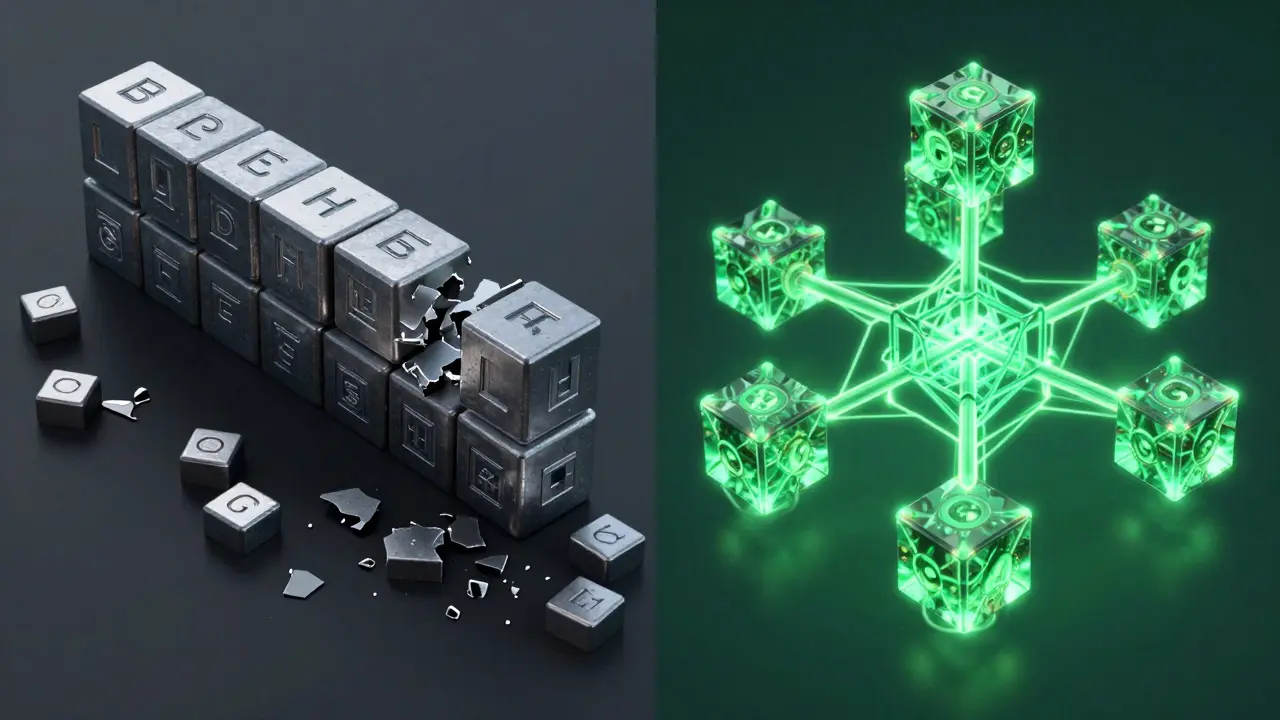
Why does this matter? Because it allows for much faster block times. If blocks come every second, forks will happen constantly. With the Longest Chain Rule, half the blocks would be orphaned, wasting 50% of the network’s security budget. With GHOST, even if a block is not chosen as the immediate next block, its work still adds weight to its parent branch. This encourages the network to converge on a single history without discarding vast amounts of computational power. This efficiency is what enables high-throughput blockchains like Ethereum Classic (which uses GHOST) and Ethereum 2.0 (which uses a variant called LMD-GHOST).
Security Implications: Attacks and Defenses
Every fork choice rule has strengths and weaknesses. No system is perfect. The Longest Chain Rule is vulnerable to what is known as a "selfish mining" attack or a secret pre-mining attack. An attacker could mine blocks in secret, building a private chain longer than the public one, and then release it all at once. Since the public nodes only see the length, they would be forced to reorganize their history to follow the attacker’s longer chain. This could allow double-spending.
GHOST offers better protection against this specific type of attack. Because GHOST considers the total weight of the observed subtree, the public chain-which has been accumulating votes and blocks openly-often retains more total weight than a secret chain that suddenly appears, even if the secret chain is longer in terms of block count. The public chain’s "subtree" is heavier because it includes all the side branches that grew while the attacker was hiding. This makes it harder for an attacker to rewrite history by simply producing blocks faster in isolation.
However, GHOST introduces new vulnerabilities. The most famous is the "Avalanche Attack." In this scenario, an attacker creates a massive amount of fake weight by generating many small, conflicting branches that look heavy but contain no real value. This can confuse the GHOST algorithm into selecting an invalid path. Researchers have developed countermeasures, such as limiting the depth of subtrees considered, but it shows that GHOST requires more careful parameter tuning than the Longest Chain Rule. The Nomos blockchain team explicitly chose not to use GHOST for this reason, preferring the simpler, albeit slower, Longest Chain approach for their specific threat model.
Ethereum’s Evolution: From GHOST to LMD-GHOST
Ethereum originally used the Longest Chain Rule during its Proof-of-Work phase. But as it moved towards Proof-of-Stake (PoS) with Ethereum 2.0, the old rules didn’t fit anymore. In PoS, there is no "mining" or computational work to measure. Instead, validators vote on blocks. These votes are called attestations.
To handle this, Ethereum adopted LMD-GHOST, which stands for Latest Message Driven GHOST. This is a specialized version of GHOST designed for Proof-of-Stake networks. Instead of counting hash power, LMD-GHOST counts validator votes. Each validator casts one vote per epoch. The fork choice rule looks at the latest message from each validator and follows the chain that has the most recent support from the majority of stakeholders.
LMD-GHOST ensures that the chain reflects the current state of consensus among validators. It prevents old, stale votes from influencing the present. This mechanism is crucial for achieving finality in Ethereum. While LMD-GHOST determines which chain to follow, it works in tandem with Casper Finality Gadget, which provides economic penalties for validators who try to lie about the history. Together, they create a robust system that can process thousands of transactions per second while remaining secure.
| Feature | Longest Chain Rule | GHOST / LMD-GHOST |
|---|---|---|
| Primary Metric | Cumulative Proof-of-Work (Block Count) | Total Weight of Subtree / Validator Votes |
| Orphaned Blocks | Wasted (Value = 0) | Utilized (Contribute to Parent Weight) |
| Ideal Block Time | Slow (e.g., 10 mins) | Fast (e.g., seconds) |
| Complexity | Low (Easy to Implement) | High (Requires Careful Tuning) |
| Main Vulnerability | Selfish Mining / Secret Pre-mining | Avalanche Attack / Complex Sybil Attacks |
| Notable Users | Bitcoin, Litecoin | Ethereum (LMD-GHOST), Ethereum Classic |

Choosing the Right Rule for Your Network
So, which one is better? The answer depends entirely on your goals. If you are building a currency focused on maximum decentralization, low barrier to entry, and absolute simplicity, the Longest Chain Rule is hard to beat. Bitcoin has run on this rule for over 15 years with near-perfect uptime. Its slowness is a feature, not a bug, because it minimizes the chance of forks and makes the security model easy to understand for anyone running a full node.
On the other hand, if you are building a platform that needs to handle high-frequency transactions, smart contracts, or serve as a settlement layer for other chains, you need speed. The Longest Chain Rule will choke under high throughput due to excessive orphaning. GHOST and its derivatives like LMD-GHOST are essential here. They allow the network to absorb latency and still reach consensus efficiently. Ethereum’s shift to LMD-GHOST was not just a technical upgrade; it was a necessity for scaling.
Developers must also consider the threat model. If your network is highly permissionless and anonymous, you must defend against selfish mining. GHOST helps here. If your network has identity or reputation layers, you might mitigate some GHOST-specific risks like the Avalanche attack. There is no one-size-fits-all solution. The best fork choice rule is the one that aligns with your network’s performance requirements and security constraints.
Future Directions in Consensus Mechanisms
Research into fork choice rules is far from over. As blockchains strive for greater scalability, new challenges emerge. Sharding, for example, splits the network into smaller pieces. How do you apply GHOST across shards? How do you ensure cross-shard consistency? Researchers are exploring hybrid models that combine the simplicity of longest-chain with the efficiency of subtree weighting. Some experimental protocols are looking at "threshold signatures" and "danksharding" to further reduce the load on fork choice calculations.
Moreover, as Layer 2 solutions like Optimistic Rollups and ZK-Rollups grow, they rely on the underlying Layer 1’s fork choice rule for security. If the base layer reorganizes frequently, the Layer 2 suffers. Therefore, optimizing the base layer’s fork choice rule for stability and finality remains a critical area of development. The evolution from Longest Chain to GHOST to LMD-GHOST shows that consensus mechanisms are living, breathing systems that adapt to the demands of the network. Understanding these foundations is key to navigating the future of decentralized technology.
What is the main difference between Longest Chain Rule and GHOST?
The Longest Chain Rule selects the chain with the most blocks (cumulative work) in a straight line. GHOST selects the chain based on the total weight of the entire subtree, including side branches. This allows GHOST to utilize work from orphaned blocks, enabling faster block times without losing security.
Why does Bitcoin still use the Longest Chain Rule?
Bitcoin prioritizes simplicity, decentralization, and proven security. With 10-minute block times, forks are rare, so the inefficiency of orphaned blocks is minimal. Changing the rule would introduce complexity and potential new vulnerabilities, which goes against Bitcoin's conservative design philosophy.
Is GHOST safer than the Longest Chain Rule?
GHOST is generally more resistant to selfish mining and secret pre-mining attacks because it accounts for the total weight of observed branches. However, it is vulnerable to specific attacks like the Avalanche Attack, which exploit its complexity. Security depends on proper parameter tuning and network conditions.
What is LMD-GHOST?
LMD-GHOST (Latest Message Driven GHOST) is a variant of GHOST used by Ethereum 2.0. Instead of measuring computational work, it measures validator votes. It only considers the latest vote from each validator to determine the heaviest chain, ensuring the consensus reflects the current state of the network.
Can I use GHOST for my own blockchain project?
Yes, but you should carefully evaluate your needs. If you need high throughput and fast finality, GHOST or LMD-GHOST is a strong candidate. If you prioritize extreme simplicity and low resource usage for nodes, the Longest Chain Rule may be better. Always conduct thorough security audits and simulations before implementation.