
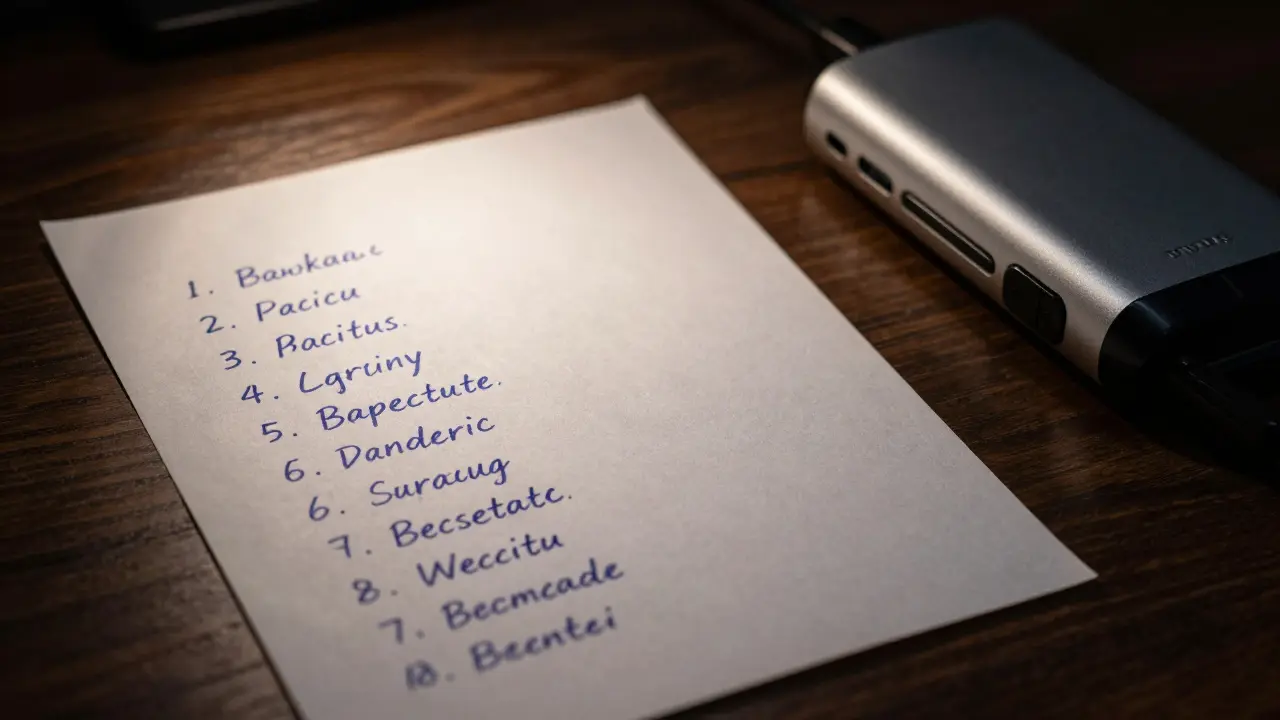
Imagine you have a physical key to a safety deposit box. You lose the key, but you still have the combination written down on a piece of paper. In the world of Bitcoin, that piece of paper is your seed phrase, and it is the only thing standing between you and permanent loss of your funds. There is no customer support line to call. There is no "forgot password" button. If you lose this backup, your Bitcoin stays in the blockchain forever, inaccessible to anyone.
This article breaks down exactly how these backups work, why they are structured the way they are, and how the optional passphrase adds a layer of security that can save your life-or lock you out completely if mishandled.
What Is a Seed Phrase?
A seed phrase, also known as a mnemonic sentence or recovery phrase, is a human-readable representation of the cryptographic entropy that generates your wallet's private keys. It was standardized by BIP-39 (Bitcoin Improvement Proposal 39), published in 2013. Before BIP-39, backing up a wallet meant saving individual private keys for every address you used-a messy and error-prone process. BIP-39 changed everything by introducing Hierarchical Deterministic (HD) wallets.
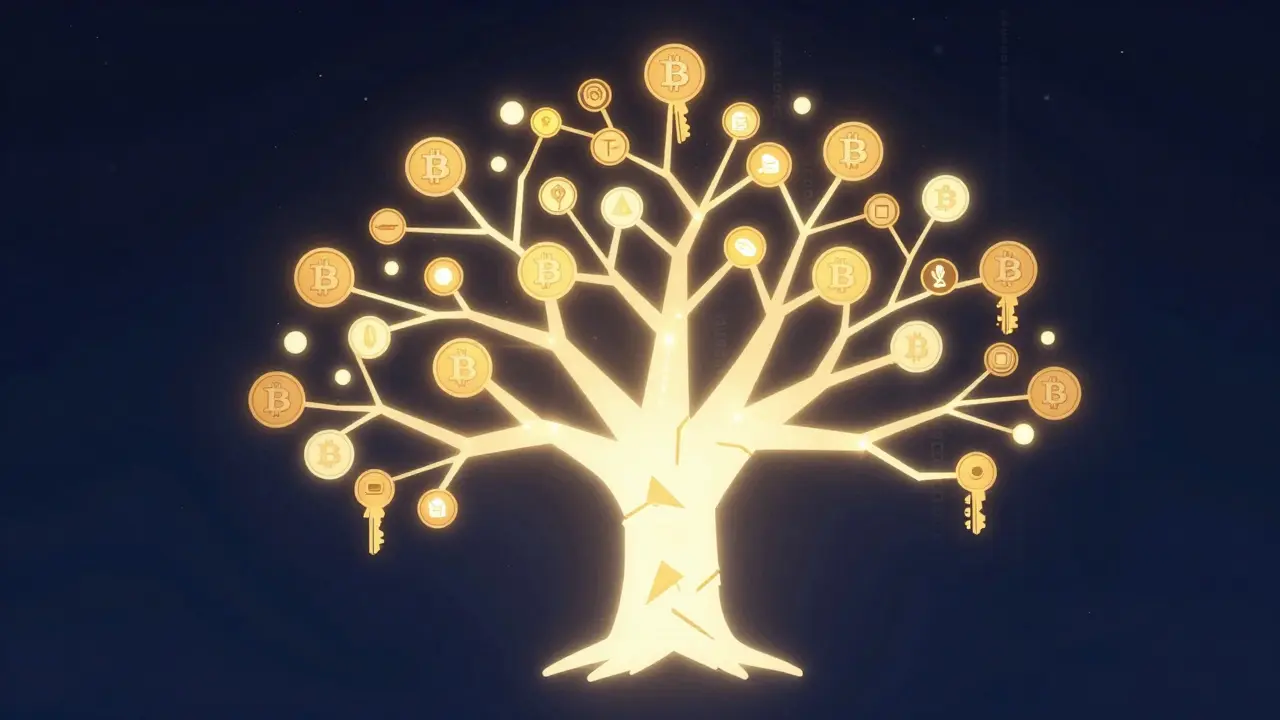
With HD wallets, a single seed phrase generates a tree of infinite private keys and public addresses. This means one backup restores your entire wallet history and future transactions. The standard uses a fixed list of 2,048 words. Each word has a unique index from 0 to 2,047. To make things easier for humans, every word in the list has a unique first four letters, reducing confusion during manual entry.
The length of your seed phrase depends on the amount of entropy (randomness) used to create it:
- 12 words: Represents 128 bits of entropy plus a 4-bit checksum. This provides 2^128 possibilities (approx. 3.4 × 10^38), which is computationally impossible to brute-force with current technology.
- 24 words: Represents 256 bits of entropy plus an 8-bit checksum. This offers 2^256 possibilities, providing even higher security margins, often preferred by institutional holders.
Both lengths are secure for typical users. The choice usually comes down to personal preference and risk tolerance. A 12-word phrase is shorter to write down and less prone to transcription errors, while a 24-word phrase offers peace of mind against theoretical future computing threats.
How the Math Works: From Words to Keys
It helps to understand what happens behind the scenes when you enter those words into a wallet. The process involves several cryptographic steps defined by BIP-39 and related standards like BIP-32 and BIP-44.
- Entropy Generation: Your wallet device generates random bits (128 or 256).
- Checksum Addition: A hash of the entropy is calculated, and the first few bits are appended to the end. This checksum ensures that if you mistype a word, the wallet will detect the error immediately.
- Word Mapping: The binary data is split into 11-bit chunks. Each chunk corresponds to a number between 0 and 2,047, which maps directly to a word in the BIP-39 wordlist.
- Seed Derivation: The mnemonic sentence is processed through a function called PBKDF2-HMAC-SHA512. This takes the mnemonic as the "password" and a salt consisting of the string "mnemonic" concatenated with your optional passphrase. It runs this through 2,048 iterations to produce a 512-bit root seed.
- Key Tree Creation: This root seed feeds into BIP-32 to create a master extended key, from which all your specific Bitcoin addresses are derived.
This design is irreversible. You cannot derive the original seed phrase from a private key. This one-way street is crucial for security; even if someone sees your Bitcoin address, they cannot reverse-engineer your seed phrase.
The Power and Peril of the Passphrase
Many beginners skip the passphrase option, but it is one of the most powerful features in self-custody Bitcoin. A crypto wallet passphrase is an optional secret string added to the PBKDF2 derivation process. It acts as a second factor of authentication, combining "what you have" (the seed phrase) with "what you know" (the passphrase).
Here is why it matters:
| Feature | Seed Phrase | Passphrase |
|---|---|---|
| Function | Restores the wallet structure and keys | Selects which wallet instance to unlock |
| Storage | Must be offline, durable (paper/metal) | Can be stored digitally or memorized |
| Error Detection | Yes (via checksum) | No (silent failure if wrong) |
| Loss Consequence | Total loss of access | Access to *that specific* wallet lost, but other instances may remain accessible |
The passphrase creates a mathematical separation. If you use the same seed phrase with two different passphrases, you get two completely different sets of private keys. This enables plausible deniability. For example, you could have a "decoy" wallet with a small balance unlocked by a simple passphrase, and your main savings wallet unlocked by a complex, secret passphrase. If someone forces you to reveal your seed and a basic passphrase, they only see the decoy funds.
However, this feature is dangerous if you forget the passphrase. Unlike the seed phrase, there is no checksum for the passphrase. If you type it wrong, the wallet simply generates a new, empty set of keys. It won't tell you it's wrong; it will just show zero balance. As hardware wallet manufacturer Coldcard warns, the device never stores the passphrase. If you lose it, you lose access to that specific wallet instance permanently.
Recovering Your Wallet: Step-by-Step
Whether your hardware wallet broke, got stolen, or you're moving to a new device, the recovery process is straightforward because the seed phrase is universal across compliant wallets.
- Get a New Device: Purchase a reputable hardware wallet (like Trezor, Ledger, or Coldcard) or install trusted software wallet on an air-gapped computer.
- Select Restore: Choose the "Restore from Seed" or "Recover Wallet" option during setup. Do not choose "Create New Wallet."
- Enter the Seed: Carefully input your 12 or 24 words in the exact order. Double-check spelling. Remember, the first four letters of each word are unique, so partial matches help verify correctness.
- Add Passphrase (If Applicable): If you used a passphrase originally, you must enter it here. Without it, you will recover a different, likely empty, wallet.
- Verify Balance: The wallet will scan the blockchain using the derived addresses. Wait for the sync to complete to ensure all funds are visible.
If you find a seed phrase online or on a discarded device, you can use any BIP-39 compliant wallet to check for funds. However, be aware of the ethical and legal implications. Using someone else's seed phrase without permission is theft. Furthermore, if the device where you found the phrase was compromised, the private keys might already be exposed.
Best Practices for Storage and Security
As of mid-2026, the consensus among security experts remains consistent: treat your seed phrase like gold. Digital copies are vulnerable to hacking, malware, and cloud breaches. Here are concrete strategies for protection:
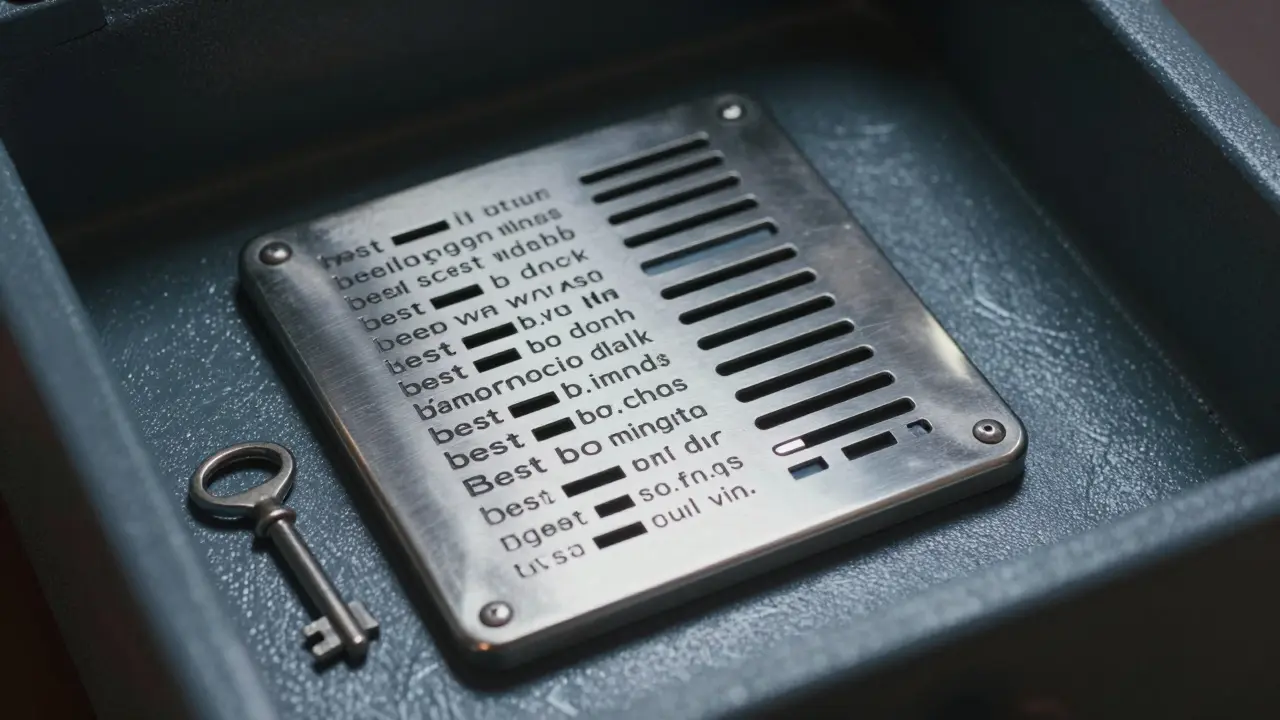
- Use Metal Backups: Paper burns and disintegrates. Engrave your seed phrase onto stainless steel or titanium plates designed for crypto storage. These survive fire, water, and corrosion.
- Geographic Separation: Don't keep all eggs in one basket. Store copies in different secure locations, such as a home safe and a bank safety deposit box. This mitigates risks from natural disasters or localized theft.
- Digital Passphrase Strategy: Since passphrases don't need to be on the device, some users store them digitally (encrypted in a password manager) while keeping the seed phrase offline. This allows for easier recovery of the passphrase component while maintaining the highest security for the core seed.
- Test Your Backup: After writing down your seed phrase, perform a test recovery. Create a new wallet on a separate device, restore it using your backup, and send a small amount of Bitcoin to it. Verify you can spend it. Then, wipe the test wallet. This confirms your backup works before you need it.
Avoid taking photos of your seed phrase. Avoid storing it in cloud notes, email drafts, or text files. Attackers specifically target these digital footprints. The goal is to ensure that only you, physically present with the correct secrets, can access your funds.
Common Pitfalls and Failure Scenarios
Even with robust technology, human error causes most losses. Understanding common failures can help you avoid them.
Misordered Words: The sequence matters. Swapping word 3 and word 4 results in a completely different seed. Always read back your written phrase aloud as you type it into the recovery interface.
Language Mismatch: BIP-39 supports multiple languages, but the wordlist must match. If your wallet generated English words, you must use the English wordlist during recovery. Mixing languages will fail.
Forgotten Passphrase: As mentioned, there is no reset. If you use a passphrase, consider splitting it into parts or using a method to reconstruct it (like a book code) rather than relying solely on memory. Document this reconstruction method securely, separate from the seed phrase.
Derivation Path Issues: Sometimes, a recovered wallet shows zero balance despite a correct seed. This often happens if the new wallet uses a different derivation path (e.g., legacy P2PKH vs. SegWit vs. Taproot). Most modern wallets scan common paths automatically, but older or specialized wallets may require manual adjustment. Check your original wallet's settings to see which path was used.
Can I recover my Bitcoin if I lost my seed phrase but still have my hardware wallet?
No. The hardware wallet does not store your seed phrase internally in a retrievable format. It only stores encrypted fragments used to unlock the device. If you lose both the device and the seed phrase, your funds are irretrievably lost. The seed phrase is the true backup.
Is a 12-word seed phrase less secure than a 24-word one?
Mathematically, a 12-word phrase offers 128-bit security, which is considered unbreakable by any existing or foreseeable computing power. A 24-word phrase offers 256-bit security. For most individuals, 12 words are sufficient. The primary advantage of 24 words is reduced risk of human error during transcription due to the longer checksum, and psychological comfort for high-value holdings.
What happens if I type the wrong passphrase?
The wallet will generate a valid but different set of private keys. You will likely see an empty wallet or a wallet with random, unrelated balances. There is no error message saying "wrong passphrase." You must try again with the correct passphrase to access your intended funds.
Can someone steal my Bitcoin if they have my seed phrase but not my passphrase?
If you used a passphrase, having only the seed phrase allows the attacker to access the "default" wallet instance (using an empty passphrase). If you moved all your funds to the passphrase-protected wallet, the attacker would see zero balance. This is why the passphrase acts as a strong additional security layer.
Should I store my seed phrase in the cloud for easy backup?
Absolutely not. Cloud storage is vulnerable to hacks, account compromises, and unauthorized access. The entire point of self-custody is to remove third-party risk. Store your seed phrase offline on durable physical media like metal plates or fireproof paper safes.