
Imagine trying to win a lottery where you buy one ticket every few years. That is essentially what solo Bitcoin mining is for an individual with standard hardware. The odds are so stacked against you that finding a block on your own could take decades. To solve this problem of unpredictability, miners joined forces. They formed groups known as mining poolscoordinated groups of Bitcoin miners who combine their hash power to find blocks more consistently and share rewards. By pooling resources, they turn a rare windfall into a steady paycheck. But how does this sharing actually work? And who decides how the money gets split?
The Core Problem: Variance in Solo Mining
In the early days of Bitcoina decentralized digital currency created in 2009 by Satoshi Nakamoto, anyone with a computer could mine blocks using their CPU. Back then, finding a block was relatively easy. As more people joined, the network difficulty increased. Today, the network hash rate exceeds 600 exahashes per second (EH/s). This means the entire global network performs over 600 quintillion calculations every second.
If you own a single ASIC miner producing 110 terahashes per second (TH/s), your chance of finding a block is statistically negligible. You might go months or even years without seeing a single reward. This variance makes it impossible to pay electricity bills or plan for the future. Mining pools exist specifically to smooth out this income volatility. Instead of waiting for a lucky strike, pool members receive small, frequent payments based on their contribution to the group's total effort.
How Hash Power Is Shared Technically
When you connect your miner to a pool, you aren't just sending raw computing power into a void. You are connecting to a pool server via a specific communication protocol. For most of Bitcoin's history, this has been the Stratum protocolthe standard communication protocol between mining pools and miners. Introduced around 2012, Stratum replaced older methods that were inefficient and prone to errors.
Here is the step-by-step process of how work is distributed:
- Block Template Creation: The pool server gathers pending transactions from the mempool and creates a candidate block header. This includes the previous block hash, the Merkle root of transactions, and a timestamp.
- Job Distribution: The pool sends this template to all connected miners. Each miner receives a unique "nonce" range or extra nonce to search through. This ensures no two miners are checking the same numbers, preventing wasted effort.
- Hashing: Your ASIC hardware repeatedly hashes the block header with different nonces. It is looking for a result that is lower than a specific target number set by the Bitcoin network.
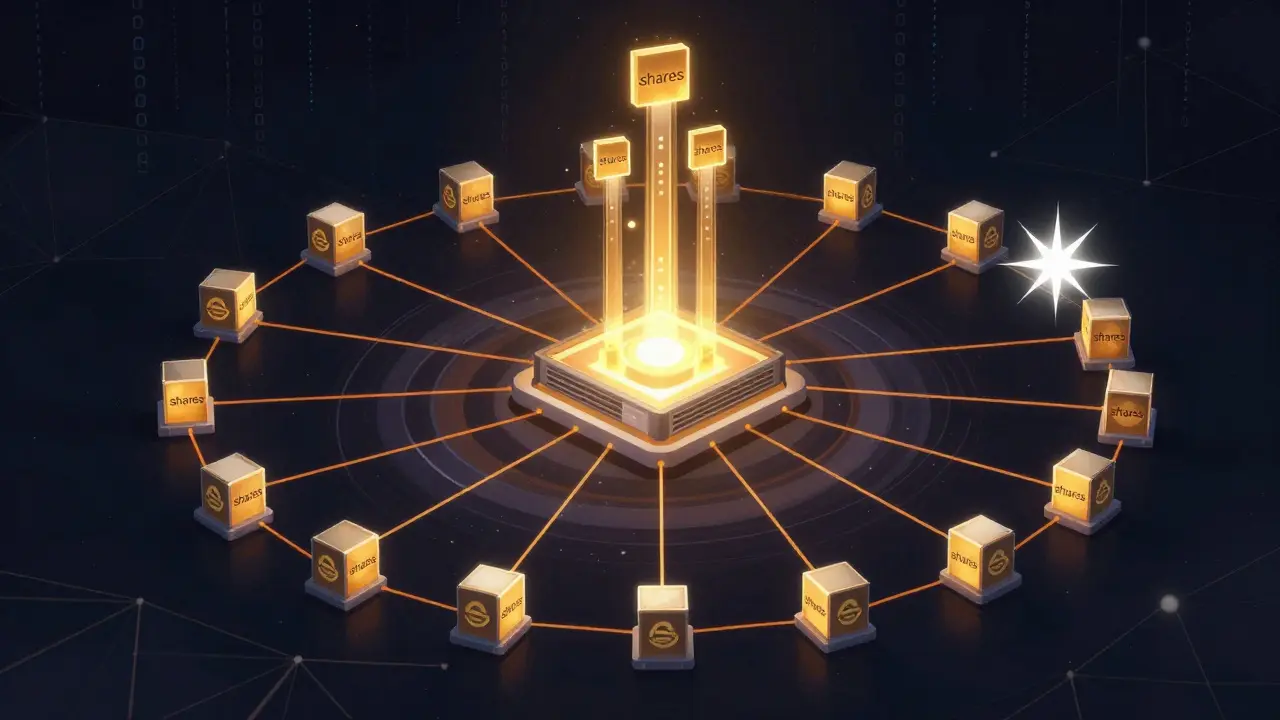
- Share Submission: The pool sets its own internal target, which is much easier (higher) than the global Bitcoin target. When your miner finds a hash that meets the pool's easier target, it submits this result back to the pool. This is called a "share."
A share proves you did the work. The pool verifies the share and credits your account. If, by sheer luck, one of those shares also happens to meet the stricter global Bitcoin target, the pool has found a valid block. The pool broadcasts this block to the network, receives the block reward (currently 3.125 BTC plus transaction fees), and then distributes the funds to miners based on how many shares they contributed.
Reward Distribution Methods: Who Gets What?
Not all pools pay out the same way. The method used determines your risk and income stability. Understanding these models is crucial for choosing the right pool.
| Method | How It Works | Risk Level | Typical Fee |
|---|---|---|---|
| PPS (Pay Per Share) | You get paid immediately for every valid share submitted, regardless of whether the pool finds a block. | Low (for miner) | 2% - 4% |
| FPPS (Full Pay Per Share) | Similar to PPS, but includes estimated transaction fees in the payout calculation. | Low (for miner) | 2% - 4% |
| PPLNS (Pay Per Last N Shares) | You only get paid when the pool finds a block. Payment is proportional to your shares within a rolling window of recent activity. | Medium/High (depends on pool luck) | 1% - 2% |
| PROP (Proportional) | Rewards are split proportionally among all miners who contributed shares during the current round since the last block was found. | High (vulnerable to pool-hopping) | 0% - 2% |
PPS and FPPS are popular because they offer predictable income. The pool operator takes on the risk of bad luck. If the pool doesn't find a block for a week, you still get paid for your shares. However, the pool covers this risk by charging higher fees. FPPS is often preferred today because transaction fees have become a significant part of block rewards, especially after the 2024 halving reduced the block subsidy to 3.125 BTC.
PPLNS rewards loyalty. If you stay with a pool for a long time, you benefit when the pool gets lucky and finds multiple blocks in quick succession. It penalizes "pool-hoppers"-miners who switch pools frequently to join rounds that are close to finishing. Fees are usually lower here because the miner bears the variance risk.
The Landscape of Major Pools
The Bitcoin mining industry is dominated by a few large players. While there are hundreds of pools, the top five control the majority of the network's hash rate. This concentration raises questions about centralization, but it also provides stability and reliability for miners.
- Foundry USA: A major U.S.-based pool that often leads in hash rate share. It is known for integrating mining with hosting and financial services.
- AntPool: Operated by Bitmain, the manufacturer of many popular ASICs. It has a massive global presence and supports a wide range of hardware.
- ViaBTC: One of the oldest pools, offering low fees and diverse payout options like PPS+ and PPLNS.
- F2Pool: Known for its user-friendly interface and support for merged mining (mining other coins alongside Bitcoin).
- Binance Pool: Backed by the exchange Binance, offering seamless integration for traders and miners alike.
When choosing a pool, consider factors beyond just hash rate. Look at fee structures, payout thresholds (the minimum amount needed to trigger a withdrawal), and geographic proximity. Latency matters. If your miner is far from the pool's servers, your shares may arrive too late to be counted as valid, resulting in "stale shares" and lost revenue.
Centralization Risks and Decentralized Alternatives
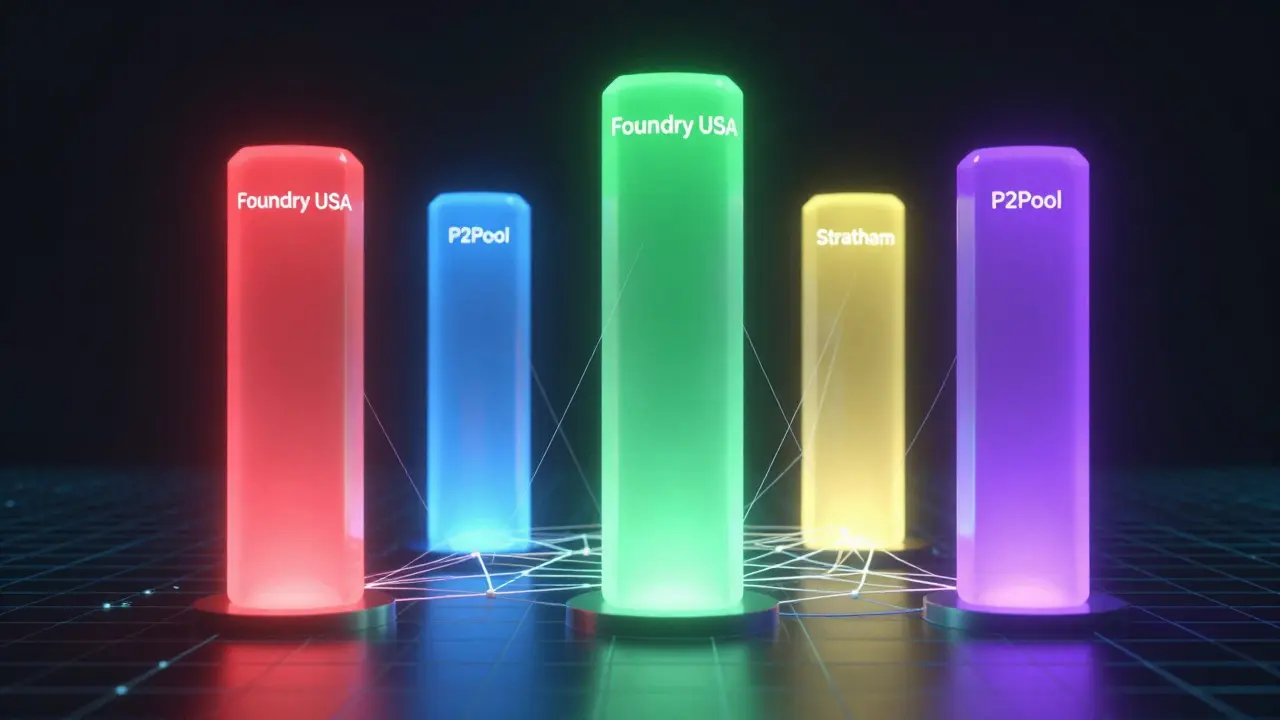
Critics argue that the dominance of large pools threatens Bitcoin's decentralization. If a single pool controls more than 50% of the hash rate, it could theoretically censor transactions or attempt a 51% attack. While no pool has sustained such a dominant position recently, the GHash.io incident in 2014 showed how quickly the community reacts to perceived threats.
To address these concerns, decentralized alternatives have emerged. P2Poola decentralized mining pool that eliminates the need for a central server allows miners to collaborate peer-to-peer. More recently, protocols like Stratum V2an updated mining protocol that allows miners to propose their own block templates are gaining attention. Stratum V2 enables miners to retain control over which transactions they include in blocks, reducing the pool operator's power to censor. Pools like Ocean Pool and Public Pool are built on these principles, offering self-custody and greater transparency.
Getting Started: Practical Steps
If you are ready to join a pool, here is what you need to do:
- Acquire Hardware: Ensure you have a compatible ASIC miner. Older GPUs are no longer viable for Bitcoin SHA-256 mining.
- Create a Wallet: Generate a secure Bitcoin address to receive your payouts. Never use the pool's default wallet for long-term storage.
- Register on the Pool: Sign up on your chosen pool's website. You will likely need to provide your payout address and create a worker name.
- Configure Your Miner: Access your miner's web interface. Enter the pool's Stratum URL (e.g., stratum+tcp://btc.pool.com:3333), your worker name, and password.
- Monitor Performance: Check the pool dashboard regularly to ensure your miner is submitting shares correctly and not experiencing high stale rates.
Remember, mining is a business. Calculate your profitability before starting. Factor in electricity costs, hardware depreciation, and pool fees. Tools like calculators from CoinWarz or WhatToMine can help you estimate returns based on current network difficulty and Bitcoin price.
What is the difference between PPS and PPLNS?
PPS (Pay Per Share) pays you immediately for each valid share submitted, offering stable income but higher fees. PPLNS (Pay Per Last N Shares) only pays you when the pool finds a block, distributing rewards based on your recent contribution. PPLNS offers lower fees but variable income depending on the pool's luck.
Why should I use a mining pool instead of mining solo?
Solo mining is extremely risky due to high variance. With current network difficulty, an individual miner might never find a block. Pools allow you to combine hash power with others, ensuring regular, smaller payouts that cover operational costs.
How do mining pools make money?
Mining pools charge a percentage fee on the rewards distributed to miners. These fees typically range from 1% to 4%, depending on the payout scheme. Some pools also offer additional services like hosting or equipment financing for extra revenue.
Is it safe to trust mining pools with my payouts?
Reputable pools have operated for years without issues. However, centralization risks exist. Using pools that support Stratum V2 or decentralized models like P2Pool can reduce reliance on a single operator. Always use a personal wallet for receiving payouts rather than keeping funds on the pool.
What is a stale share?
A stale share is a valid hash submitted to the pool after the block template has already changed or a block has been found. Stale shares are not paid. High latency between your miner and the pool server increases the likelihood of stale shares, reducing your effective earnings.