
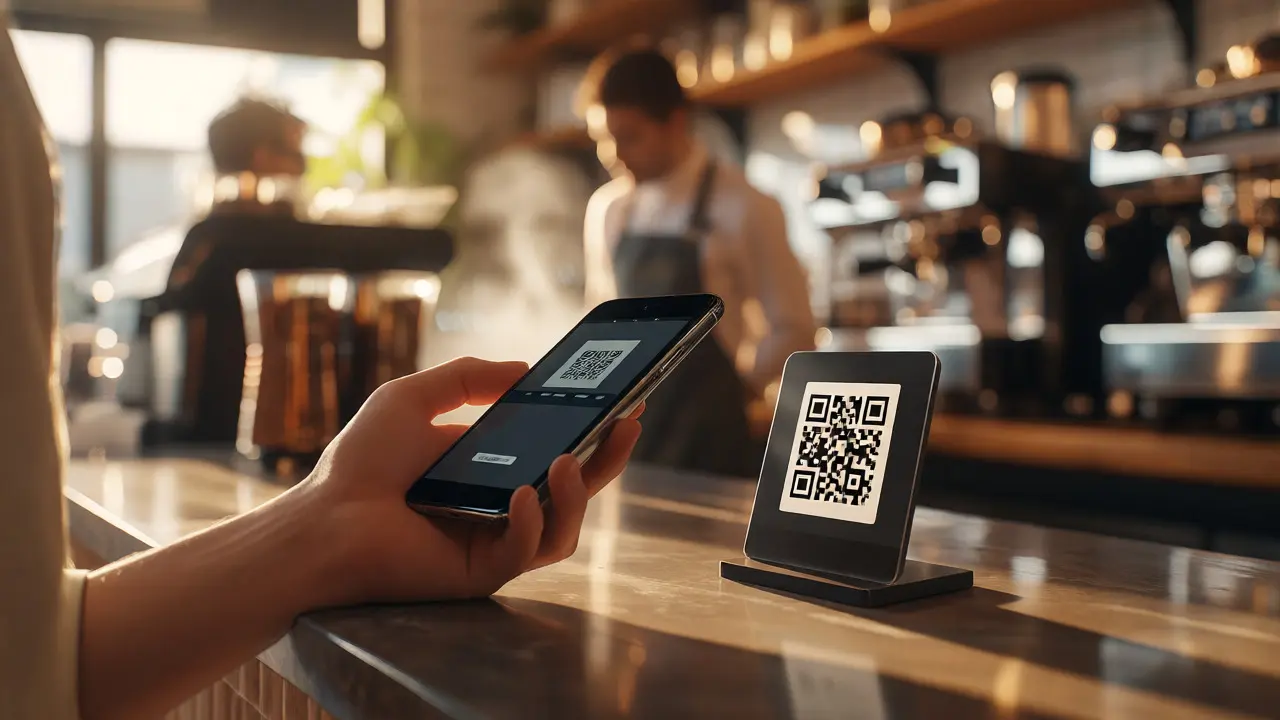
Imagine buying a coffee with Bitcoin. You scan a QR code, tap your phone, and the transaction clears before you’ve even picked up your cup. No ten-minute wait. No $5 fee eating up half your change. This isn’t a hypothetical future; it’s happening right now thanks to the Lightning Network, a layer-2 protocol that solves Bitcoin’s biggest headache: speed and cost.
For years, Bitcoin faced a brutal trade-off. It was secure and decentralized, but slow and expensive. With only about seven transactions per second on its base layer, it couldn’t handle the volume of everyday commerce. Enter the Lightning Network. Proposed by Joseph Poon and Thaddeus Dryja in 2015, this technology moves most transactions off the main blockchain, settling them instantly and cheaply. By September 2026, it has matured from a theoretical experiment into a critical piece of financial infrastructure, enabling everything from streaming micro-tips to retail purchases without clogging the main chain.
The Core Problem: Why Bitcoin Needs Scaling
Bitcoin’s original design prioritized security over speed. Every transaction must be verified by miners and added to a block, which happens roughly every ten minutes. During periods of high demand, fees spike because users bid against each other for limited space in these blocks. If you tried to buy a sandwich costing $10 with a $4 network fee, the math just doesn’t work. This limitation made Bitcoin great for storing value-often called "digital gold"-but terrible for spending small amounts daily.
The Lightning Network changes the game by separating the settlement layer from the payment layer. Think of it like a tab at a bar. Instead of paying cash for every single drink (which would be slow and require constant verification), you open a tab (a channel) and settle the bill once when you leave. The bar owner trusts the tab because they know you have funds locked in escrow. Similarly, Lightning allows two parties to exchange thousands of payments instantly, recording only the opening and closing balances on the main Bitcoin blockchain.
How Payment Channels Work
At its heart, the Lightning Network is built on bi-directional payment channels. Here’s how it actually functions in practice:
- Opening a Channel: Two users lock a specific amount of Bitcoin into a 2-of-2 multi-signature address on the main chain. This creates a private ledger between them.
- Off-Chain Transactions: They can now send Bitcoin back and forth instantly. Each update invalidates the previous state using cryptographic keys. No miners are involved yet, so no fees or delays occur.
- Closing the Channel: When either party wants to exit, they broadcast the final balance to the Bitcoin network. Only then do miners verify and record the transaction.
This mechanism relies on Hashed Timelock Contracts (HTLCs). These smart contracts ensure that payments are atomic-they either happen completely across multiple hops, or not at all. If Alice wants to pay Dave through Bob and Carol, HTLCs guarantee that if one link fails, the money returns to Alice automatically. This trustless routing is what makes the network scalable without requiring everyone to know everyone else.

Performance Metrics: Speed and Cost
The difference between on-chain and Lightning transactions is night and day. On the base layer, confirmation times average ten minutes, and fees fluctuate wildly based on network congestion. In contrast, Lightning transactions confirm in milliseconds to seconds. Fees are typically fractions of a cent, often less than $0.01. This economic viability unlocks use cases that were previously impossible.
| Feature | Bitcoin Base Layer | Lightning Network |
|---|---|---|
| Transaction Speed | ~10 minutes | Milliseconds to seconds |
| Average Fee | $1 - $10+ (variable) | Fractions of a cent |
| Throughput | ~7 transactions/sec | Potentially millions/sec |
| Best Use Case | Large transfers, long-term holding | Micropayments, retail, streaming |
| Privacy | Pseudonymous, public ledger | Higher privacy, off-chain data |
These metrics aren't just theoretical. Major exchanges like Kraken and Coinbase have integrated Lightning support, allowing users to withdraw funds instantly. For merchants, accepting Bitcoin via Lightning means competing directly with credit card networks on speed while avoiding their high interchange fees.
Security and Decentralization Risks
While Lightning offers massive improvements, it introduces new complexities. Security still ultimately rests on the Bitcoin base layer. If someone tries to cheat by broadcasting an old channel state, the honest party can claim all the funds in the channel as a penalty. However, this requires the honest party to be online or monitoring the chain. If you go offline for weeks, you might miss a fraudulent broadcast unless you use a "watchtower" service-a third party that monitors the chain for you.
Another concern is centralization. Critics worry that large routing nodes could dominate traffic, creating a hub-and-spoke model similar to traditional banking. While the protocol is permissionless, liquidity tends to flow toward well-connected nodes. To mitigate this, developers are working on better liquidity management tools and automated channel balancing. Despite these risks, institutions like Fidelity Digital Assets note that business integration grew significantly in 2024, suggesting confidence in the network's resilience.

Real-World Applications and Adoption
By 2026, Lightning isn't just for tech enthusiasts. It powers real-world economies. Content creators receive tips in satoshis (the smallest unit of Bitcoin) for individual articles or seconds of video watched. Gamers buy in-game items instantly without waiting for bank approvals. Retailers in countries with high inflation use Lightning to price goods in Bitcoin, offering customers a stable store of value with the ease of digital cash.
Developer adoption has also surged. Libraries for Python, JavaScript, and Rust make it easier to build Lightning-enabled apps. Wallets like Muun, BlueWallet, and Phoenix abstract away the complexity, letting users manage channels automatically. This user-friendly experience is crucial for mass adoption. You don’t need to understand HTLCs to buy lunch; you just need to know that the app works fast and cheap.
Future Outlook and Challenges
The Lightning Network continues to evolve. Recent updates focus on improving liquidity management, making it easier for users to move funds between channels without opening new ones. Protocols like Loop allow users to swap on-chain Bitcoin for Lightning capacity seamlessly. As more businesses integrate Lightning, we expect to see deeper connections with other financial systems, potentially bridging fiat currencies and Bitcoin more smoothly.
However, challenges remain. User experience still lags behind traditional fintech apps. Managing inbound and outbound liquidity can be confusing for beginners. Additionally, while fees are low now, they could rise if network usage explodes beyond current capacity limits. Yet, the trajectory is clear: Lightning is becoming the standard rail for Bitcoin payments, fulfilling Satoshi Nakamoto’s vision of peer-to-peer electronic cash.
Is the Lightning Network safe?
Yes, it inherits Bitcoin’s security. Funds are protected by cryptographic proofs and time-locked contracts. If a counterparty cheats, you can reclaim your funds plus penalties, provided you monitor the network or use a watchtower service.
Do I need to keep my wallet online?
Not necessarily. Custodial wallets handle connectivity for you. For self-custody, you can use watchtowers or services that monitor the blockchain for you, ensuring you don’t lose funds if your device goes offline.
What are the fees on the Lightning Network?
Fees are extremely low, usually fractions of a cent. They depend on the size of the payment and the liquidity of the route taken. Opening and closing channels costs regular Bitcoin on-chain fees, but frequent transactions within an open channel are nearly free.
Can I send any amount of Bitcoin?
You are limited by the capacity of your channels. If you want to send a large amount, you may need to open a larger channel or use a service that provides additional liquidity. Small amounts, known as satoshis, are easily sent.
Which wallets support Lightning?
Popular options include Muun, Phoenix, BlueWallet, and Wallet of Satoshi. Many major exchanges like Kraken and Coinbase also offer integrated Lightning withdrawals and deposits.
10 Responses
Great breakdown! 🚀 The comparison table is super helpful for beginners. I've been using Phoenix wallet for months and the auto-channel balancing is a game changer. No more worrying about liquidity issues when sending small amounts. 😊
Another hype piece. Lightning has failed to achieve mass adoption because it's too complex for normies. You need to understand HTLCs just to buy coffee? Give me a break. It's still a tech demo, not a payment system.
SHANNON you're missing the point entirely!!
The complexity is abstracted away now!! Wallets like Muun handle all that backend stuff automatically!! People don't care about HTLCs they care about speed!! And it IS fast!! Stop being so negative and look at the actual data from Kraken withdrawals!! It's working!!!
It works but only if you stay online. If your node goes down you lose money or have to wait weeks to reclaim funds. That's not "electronic cash" that's electronic hassle. Satoshi would be dissapointed.
Oh, darling, let me paint a clearer picture for you! 🎨 While the 'staying online' fear is valid, watchtowers and non-custodial solutions like BlueWallet have largely mitigated this risk for casual users.
You don't need to run a full node yourself; you can delegate that duty securely. Furthermore, the penalty mechanism ensures that even if you are offline, an honest third party can enforce the rules on your behalf. It is a beautiful dance of cryptography where trust is minimized, not eliminated. We are witnessing the birth of true financial sovereignty, one satoshi at a time! ✨
The narrative presented here is dangerously incomplete. One must consider who benefits from this layer-2 solution. Are we merely creating a centralized honey pot for surveillance? The reliance on routing nodes suggests a return to intermediaries, albeit with different branding. This is not decentralization; it is obfuscation. Proceed with extreme caution.
USA leads innovation. We built the rails. Others just copy. Lightning proves American tech dominance in finance. Don't let foreign regulations kill it.
WILLIAM!!
It's not just USA!! It's GLOBAL!!
El Salvador adopted Bitcoin as legal tender and they use Lightning heavily!!
And Europe is integrating it too!!
This isn't about national pride, it's about universal access to money!!
Stop being so narrow-minded and look at the world map!!
We are building the future together, dammit!!!
If you don't understand how the channel opens and closes, you shouldn't be touching your savings. Most people treat it like Venmo but forget the security model. It's risky for large amounts. Keep your lightning wallet small and keep your cold storage cold. Simple as that.
I appreciate the balanced view here. For those starting out, remember that the network effect is growing. Start small, maybe $10-$20, get comfortable with the flow, and then scale up. It’s okay to make mistakes early on while the stakes are low. We’re all learning this new paradigm together. Happy paying!