
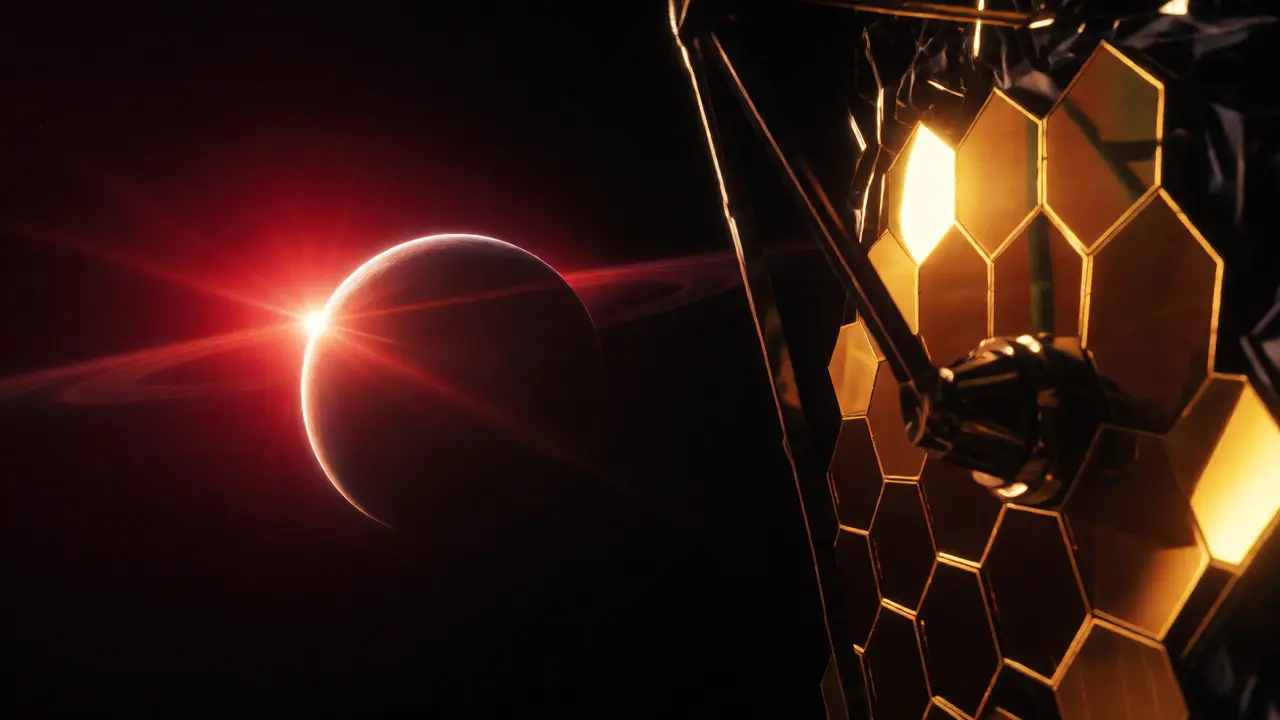
Imagine staring at a dot of light 40 light-years away and knowing, with scientific certainty, that something alive is breathing down there. That’s the promise-and the trap-of biosignatures. It sounds like science fiction, but it’s becoming engineering reality. We aren’t sending astronauts to distant worlds yet. Instead, we’re sniffing their air from billions of miles away. But here’s the catch: seeing oxygen doesn’t mean you’ve found life. In fact, finding just one gas might tell you almost nothing. To actually detect life, scientists have to look for weird chemical combinations that shouldn’t exist together unless biology is forcing them to.
The Gas That Fooled Everyone
For decades, oxygen was the holy grail. On Earth, plants pump out about 21% of our atmosphere as molecular oxygen (O₂). Before life arrived, Earth’s sky was mostly nitrogen and carbon dioxide, with very little free oxygen. So, logically, if we see lots of O₂ on another planet, we assume photosynthesis is happening there. Simple, right? Wrong. Abiotic processes-chemistry without life-can make plenty of oxygen. If a planet loses its hydrogen to space, water molecules break apart, leaving oxygen behind. This can pile up to huge levels even on dead rocks. So, spotting O₂ alone is like hearing a door slam in an empty house; it suggests someone might be there, but it could also be the wind. This is why modern astrobiology has moved beyond single-gas detection. We need context. We need to know if the oxygen is part of a larger, unstable pattern that only life can maintain.
Disequilibrium: The Real Signature of Life
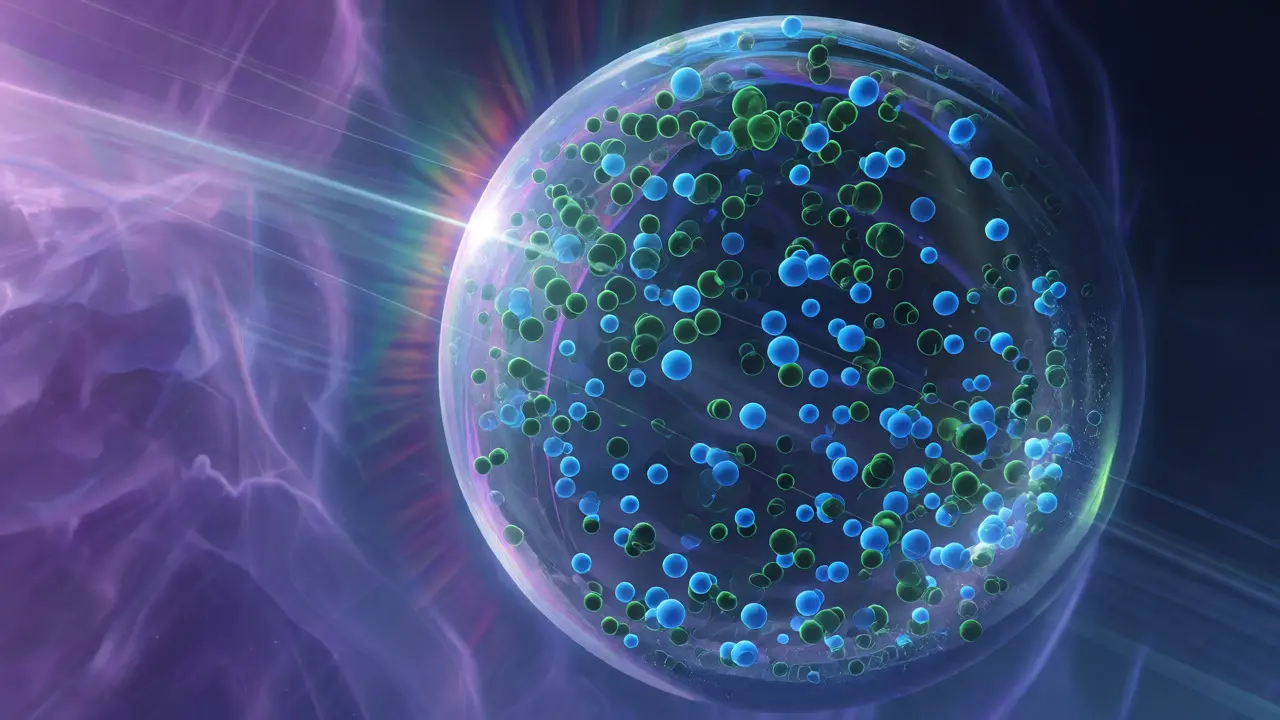
The most powerful tool we have isn’t a specific gas; it’s chemical disequilibrium. Think of it this way: in a closed system without life, chemicals react until they reach a stable balance. Oxygen loves to react with methane (CH₄) to form water and CO₂. They shouldn’t coexist in large amounts for long. Yet, on Earth, we have both. Why? Because life constantly replenishes them. Plants make O₂, and microbes or animals make CH₄. This constant fighting against equilibrium is a massive clue. If a telescope sees significant amounts of both oxidizing gases (like O₂ or ozone, O₃) and reducing gases (like CH₄) in the same atmosphere, it’s a strong hint that biological activity is driving the cycle. This concept, rooted in the work of James Lovelock in the 1960s, remains the gold standard for remote life detection today.
| Gas | Primary Biological Source | Abiotic False Positive Risk | Detectability |
|---|---|---|---|
| Molecular Oxygen (O₂) | Photosynthesis | High (Water photolysis, CO₂ breakdown) | Moderate (Visible/NIR bands) |
| Ozone (O₃) | Photochemical product of O₂ | Moderate (Follows abiotic O₂ sources) | High (Strong UV absorption) |
| Methane (CH₄) | Methanogens, decay | Moderate (Serpentinization, volcanism) | High (IR bands near 3.3 µm) |
| Nitrous Oxide (N₂O) | Microbial denitrification | Low (Harder to produce abiotically) | Low (Weak spectral features) |
How We Actually Smell the Air of Another World
You can’t send a probe to every exoplanet. Most are too far, too small, or too dim. So, we use spectroscopy. When a planet passes in front of its star (a transit), some starlight filters through the planet’s atmosphere. Molecules in that air absorb specific wavelengths of light. By analyzing the missing colors in the starlight, we build a chemical fingerprint. The James Webb Space Telescope (JWST), launched in late 2021, is currently doing this. It’s not perfect. JWST struggles to see oxygen directly because its instruments are optimized for infrared, where O₂ signals are weak. However, it’s excellent at spotting methane, water vapor, and carbon dioxide. For now, JWST is mostly characterizing hot Jupiters and smaller rocky planets around red dwarf stars. It’s laying the groundwork, proving we can get spectra from rocky worlds, even if detecting true biosignatures requires more time and better tools.
The Trap of False Positives
False positives are the nightmare scenario. Imagine announcing life on K2-18b, only to realize later that the methane came from a volcanic vent interacting with seawater, not bacteria. Serpentinization-a reaction between water and iron-rich rocks-can produce methane without any biology involved. Similarly, high-energy ultraviolet light from young, active stars can strip hydrogen from water, creating false oxygen signatures. This is why scientists insist on multi-channel verification. You don’t just want to see methane; you want to see methane *plus* oxygen *minus* excessive carbon monoxide. If you see carbon monoxide (CO), it usually means the chemistry hasn’t reached equilibrium yet, which might suggest geological activity rather than biological regulation. Every gas detected must be weighed against models of what a dead planet would look like under those specific stellar conditions.
Beyond Oxygen: The Weird Stuff
If oxygen and methane are the obvious suspects, what about the accomplices? Scientists are looking at trace gases that are harder to fake. Nitrous oxide (N₂O) is produced mainly by microbes on Earth. Finding it alongside oxygen would be compelling. Then there are sulfur compounds like dimethyl sulfide (DMS). On Earth, marine phytoplankton release DMS. It smells like the ocean. If we detected DMS in an exoplanet’s atmosphere, especially combined with other indicators, it would raise eyebrows. These molecules are fainter and harder to spot, requiring future telescopes with much higher sensitivity. They represent the next tier of evidence, moving us from "maybe" to "highly probable."

The Future: Direct Imaging and Starshades
Transits are great, but they limit us to planets aligned just so. To study Earth-like planets around Sun-like stars, we need direct imaging. This involves blocking the star’s glare to see the planet clearly. Concepts like the Habitable Worlds Observatory and missions using starshades (giant occulter spacecraft flying in formation) aim to do this in the 2030s and 2040s. These tools will provide cleaner spectra, allowing us to detect oxygen and methane simultaneously with high confidence. Until then, we rely on statistical studies of many planets. We won’t find life with one observation. We’ll find it by building a picture across dozens of worlds, ruling out the dead ones until only the biologically active candidates remain.
Frequently Asked Questions
Can we detect life on exoplanets right now?
Not definitively. While the James Webb Space Telescope detects gases like CO₂ and H₂O on rocky exoplanets, it cannot yet confirm life. Current detections are often ambiguous due to potential abiotic sources. Definitive proof likely requires future missions capable of detecting simultaneous oxygen and methane disequilibrium on Earth-sized planets.
Why is oxygen not enough to prove life exists?
Oxygen can be produced abiotically. If a planet loses hydrogen to space, water breaks down, leaving oxygen behind. This process can create high oxygen levels without any biological activity. Therefore, oxygen must be interpreted in context, such as its presence alongside methane or other disequilibrium indicators.
What is chemical disequilibrium?
Chemical disequilibrium occurs when gases that should react with each other coexist in significant amounts. On Earth, oxygen and methane coexist despite reacting rapidly. Life continuously replenishes these gases, maintaining the imbalance. Finding similar imbalances on exoplanets is a strong indicator of biological activity.
Which telescopes are best for finding biosignatures?
The James Webb Space Telescope (JWST) is the current leader for infrared spectroscopy. Future missions like the Habitable Worlds Observatory and LUVOIR are designed specifically for high-resolution optical/infrared spectroscopy of Earth-like exoplanets, offering better sensitivity for key biosignatures like oxygen.
Could non-living processes produce methane?
Yes. Geological processes like serpentinization, where water reacts with iron-rich rocks, can produce methane. Volcanic outgassing can also release methane. This is why detecting methane alone is not proof of life; it must be considered alongside other atmospheric components and planetary conditions.