
Back in 1961, Soviet scientists were terrified that leaving Earth's gravity would be a death sentence. They limited Yuri Gagarin's first orbit to just 108 minutes because they weren't sure if a human body could actually survive the void. Fast forward to today, and we know the truth is far more interesting: our bodies don't just survive in space; they rewrite their own rules to keep us alive. The process of microgravity research has revealed that while weightlessness creates immediate chaos for our systems, biological life is incredibly flexible, adapting at speeds that would make a computer blink.
The Sixty-Second Shift: Cellular Speed
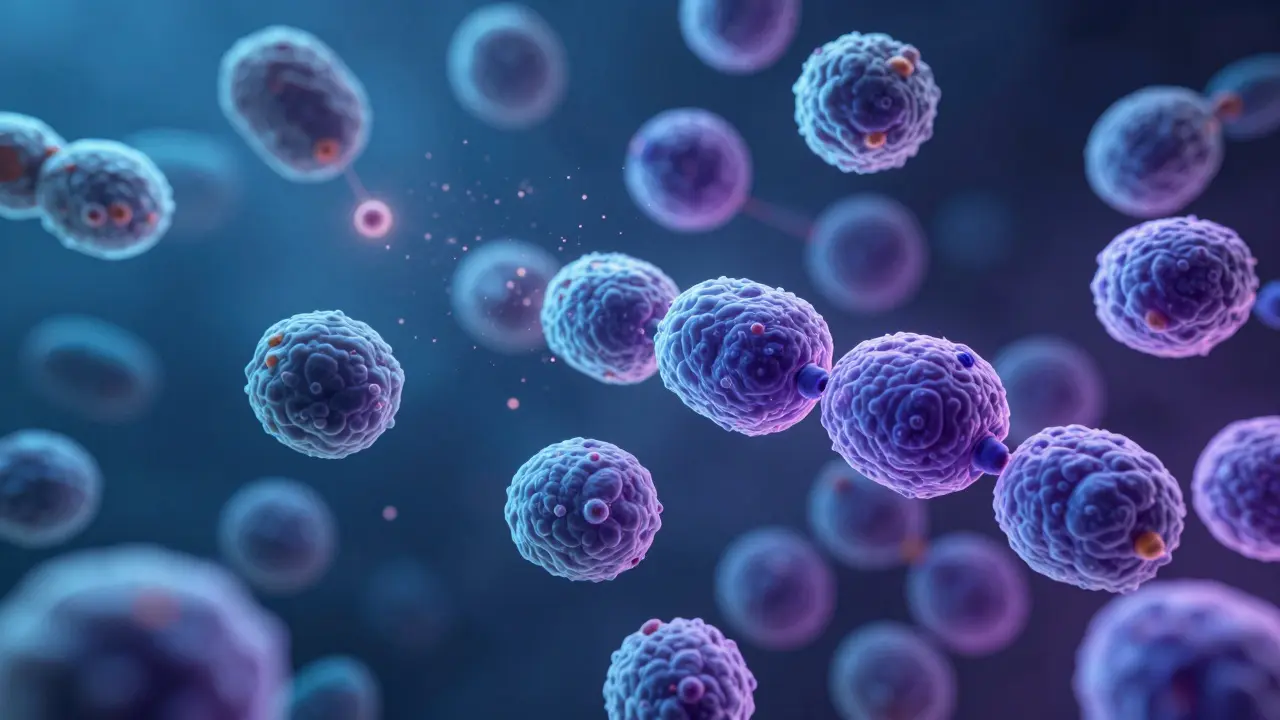
You might imagine that cells take days or weeks to realize they are no longer on Earth, but the reality is nearly instantaneous. In studies conducted on the International Space Station (ISS), researchers found that mammalian cells adapt to zero gravity in less than a minute. In some cases, the recovery happens in as little as 42 seconds.
Researchers from the University of Zurich put this to the test using rat immune defense cells. They focused on the oxidative burst-an ancient evolutionary tool used to kill bacteria. When these cells hit zero gravity, the immune defense system initially collapsed. However, it didn't stay down. The cells showed an "ultra-rapid" recovery, fully adapting within 60 seconds. This discovery is a game-changer for science; it suggests that many of the cellular changes we see after days in space aren't permanent damage, but rather the result of a successful, rapid adaptation process.
Molecular Shielding and the Role of HSP70
When a cell realizes the gravity is gone, it doesn't just sit there. It activates a specific set of "stress-response" proteins to stabilize itself. The most critical of these is HSP70, a type of heat-shock protein that helps fold other proteins and protects the cell from stress.
In the early stages of spaceflight, liver tissue sees a spike in HSP70 mRNA and protein expression. This isn't a random glitch; it's a calculated response. To simulate this on Earth, scientists use "tail-suspension" models with rats to mimic weightlessness. In these experiments, HSP70 levels in the liver peak around six hours of suspension. Even more striking is the kidney tissue, where HSP70 expression can jump by seven times compared to a normal control group. These proteins essentially create a state of "stress tolerance," allowing cells to maintain their basic functions even when the physical environment is completely alien.
| Biological Marker | Response in Microgravity | Primary Function/Outcome |
|---|---|---|
| HSP70 Protein | Significant Increase (up to 7x in kidneys) | Stabilizes cellular translation and stress tolerance |
| Actin Fibers | Reduction through transcriptional mechanisms | Prevents unnecessary fiber accumulation |
| Sodium Excretion | Decreased excretion | Accompanies temporary GFR increase |
| Vestibular System | Imbalance/Disorientation | Triggers Space Adaptation Syndrome (SAS) |
Reshaping the Body: From Cytoskeletons to Bones
Weightlessness doesn't just affect proteins; it changes the very architecture of our cells. Endothelial cells, which line our blood vessels, undergo a rapid remodeling of their cytoskeleton. After a few days without gravity, these cells significantly reduce their actin-the protein that gives a cell its shape. This isn't the cell "breaking"; it's an adaptive move to avoid building unnecessary structures that the body no longer needs to support against a gravitational pull.
On a larger scale, the human body faces a massive fluid shift. On Earth, gravity pulls blood and fluids toward our legs. In space, that pull vanishes, and fluids rush toward the head. This leads to the infamous "puffy face' phenomenon. While this happens almost instantly, other changes are slower. Your muscles and bones, no longer fighting to hold you up, begin to weaken over weeks. This is less about disease and more about efficiency-the body stops spending energy on maintaining dense bone and heavy muscle that it doesn't need in a weightless environment.
The Kidney and Liver Response
Our internal filtration systems also have to pivot. The kidneys struggle with sodium management in microgravity. Initially, there's a transient increase in the Glomerular Filtration Rate (GFR), which leads to increased sodium reabsorption and a decrease in how much sodium we excrete. Interestingly, despite these shifts, we don't see permanent renal vascular dysfunction after astronauts return to Earth.
The liver continues to treat microgravity as a persistent stressor. Using Wistar rats in hindlimb-suspension models, researchers found that the regulation of HSP70 in the liver happens on multiple levels-both at the transcriptional stage (making the mRNA) and the post-transcriptional stage (stabilizing that mRNA so it can be translated into protein). This shows that the body uses a sophisticated, multi-layered defense strategy to handle the stress of weightlessness.
The Paradox of Return: Deconditioning vs. Damage
One of the most important takeaways from modern space biology is the difference between pathology and deconditioning. For a long time, we thought space was "damaging" the body. But data from Cosmos biosatellites and the US Space Life Sciences Laboratory (SLS-2) suggests that microgravity doesn't cause chronic, intensive stress. Instead, it causes deconditioning.
Think of it like this: if you stop walking for a month, your legs get weak. You haven't "damaged" your legs; you've just adapted to a lifestyle of not walking. The real biological crisis happens upon return. When an astronaut lands on Earth, their deconditioned systems suddenly perceive normal Earth gravity as an extraordinary, overwhelming stimulus. The "stress" isn't the weightlessness itself-it's the sudden return to 1g.
This realization has shifted how we handle astronaut training. By using simulated weightlessness-like the tail-suspension methods used on rats-we can actually "pre-adapt" humans to a certain level of stress, enhancing their ability to tolerate the actual environment of space.
How long does it take for cells to adapt to zero gravity?
Mammalian cells adapt incredibly quickly, often in less than one minute. Some research on the ISS has shown complete cellular recovery and adaptation in as little as 42 seconds.
What is Space Adaptation Syndrome (SAS)?
SAS is a short-term condition characterized by nausea, disorientation, and dizziness. It is caused by an imbalance in the vestibular system as the brain tries to figure out where "up" and "down" are without a gravitational pull.
What role does HSP70 play in space adaptation?
HSP70 is a heat-shock protein that acts as a molecular chaperone. In microgravity, it increases in tissues like the liver and kidney to stabilize cellular processes and provide a form of non-specific stress tolerance.
Do muscles and bones permanently degrade in space?
Not permanently, but they do undergo deconditioning. Because they aren't needed to support the body's weight, they lose density and strength. Most humans can re-adapt to Earth's gravity relatively quickly through exercise and rehabilitation.
How do scientists simulate weightlessness on Earth?
One common method is the hindlimb-suspension or tail-suspension model in rodents, which removes the mechanical load from the animal's limbs, mimicking the effects of microgravity on organs like the liver and kidneys.
Next Steps and Troubleshooting Adaptation
For those planning long-duration missions to Mars or beyond, the focus is shifting from "survival" to "optimization." The goal is to mitigate the effects of deconditioning before they become problematic. If you're looking at the future of space travel, keep an eye on artificial gravity solutions (like rotating spacecraft) and pharmacological interventions that might mimic the protective effects of HSP70 without needing the initial stress trigger.
If an organism-human or animal-struggles with the return to gravity, the primary troubleshooting step is a gradual re-introduction of load. This means structured physical therapy and carefully managed fluid intake to correct the shift from the "puffy face" state back to normal terrestrial circulation.
9 Responses
pretty wild that cells change that fast.
This is absolutely electrifying stuff! Imagine the cosmic possibilities when we finally crack the code on pharmacological HSP70 triggers. We're talking about a total paradigm shift in how we traverse the starry void. Just mind-blowing to see our biology dance to the tune of zero gravity like that!
The whole thing is a lie. They talk about cells adapting in seconds but they won't tell you how the radiation actually cooks your DNA. This is just cover-up talk to make us think Mars is possible. It's all a game to keep the funding flowing into these fake agencies. Wake up people, we aren't meant to leave the dirt.
It is important to distinguish between permanent damage and deconditioning, as mentioned in the text. For anyone interested in the biological aspect, focusing on the role of heat-shock proteins provides a solid foundation for understanding cellular stress management. The transition from a 0g environment back to 1g is where the real physiological challenge lies, necessitating a structured rehabilitation approach to regain bone density and muscle mass.
I love how this explains the puffy face thing! It makes so much sense that the fluids just migrate upward without gravity pulling them down. I'm honestly obsessed with the idea of the body just deciding that actin fibers are unnecessary and just stopping the production. Nature is so efficient it's almost scary!
So fascinating to see how we adapt! 🚀✨ The part about the kidney response is really interesting. Hope they find a way to make it easier for astronauts 👩🚀💫
Intresting read. didnt know about the rat tail suspention model. its a bit sad for the rats but i guess thats how science works in differnet cultures to help humnas.
It sounds really scary to feel your body change like that. I feel for the astronauts when they land and everything suddenly feels too heavy again.
Keep pushing the boundaries of science! This is the kind of knowledge that gets us to the next level of human evolution. The fact that our bodies are this flexible gives me so much hope for long-term space colonization. Let's go for it!