
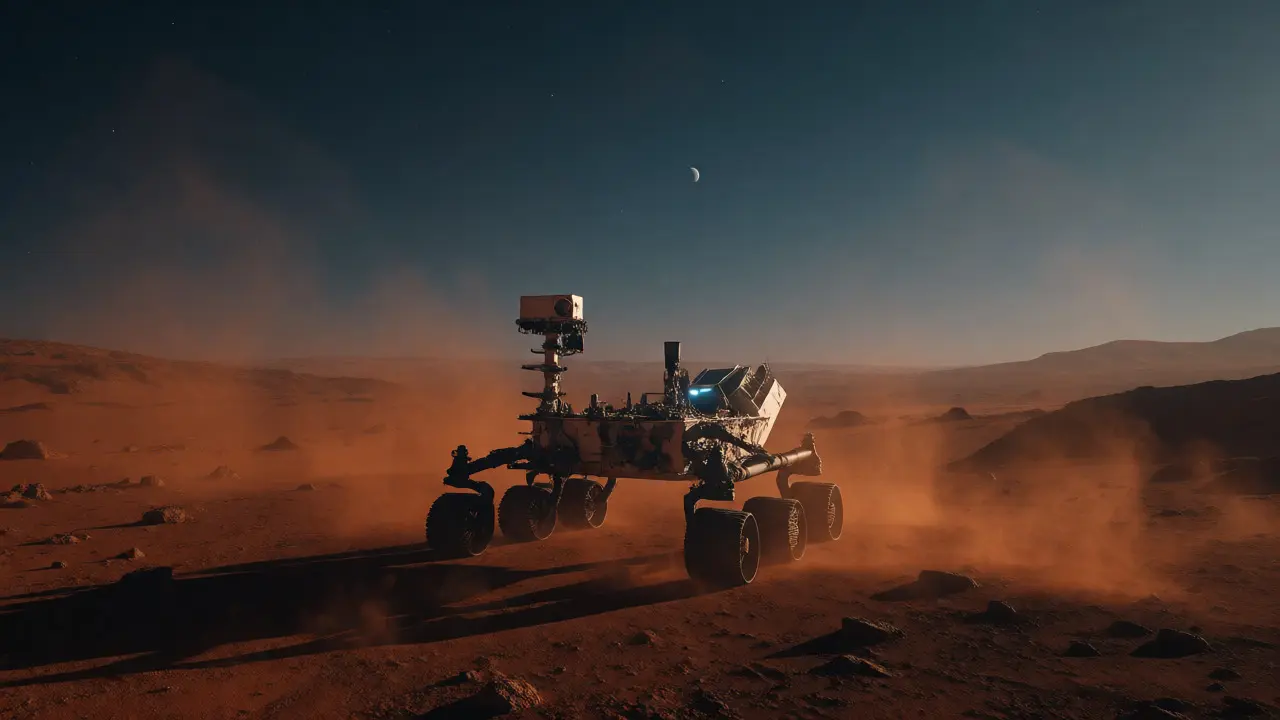
Imagine trying to drive a car through a dense fog where your GPS signal cuts out for hours at a time. You can’t call your friend on the phone for directions because there’s no reception. If you hit a pothole, you have to fix it yourself, right now, or risk breaking down completely. That is essentially what engineers face when they send robotic explorers to Mars, Europa, or the outer planets. The delay in communication means that by the time a command from Earth reaches the spacecraft, the situation on the ground might have changed entirely.
This is why autonomous mission planners are becoming critical. These aren't just simple timers or pre-programmed scripts. They are sophisticated onboard software systems that allow spacecraft to think for themselves. Instead of receiving a rigid list of commands like "turn left at 10:00," the spacecraft receives a goal, such as "take a picture of this rock" or "keep the battery charged." The planner then figures out how to achieve that goal based on what it sees and its current status. This shift from prescribed sequences to goal-driven spacecraft operations allows missions to survive delays, adapt to surprises, and gather more science than ever before.
The Shift From Ground Control To Onboard Thinking
For decades, spaceflight relied on a model called "ground-in-the-loop." A team of engineers on Earth would write a detailed sequence of activities-when to turn on the camera, when to fire thrusters, when to sleep-and upload it to the spacecraft. The spacecraft would execute these steps exactly as written. But this method has a major flaw: it assumes nothing unexpected happens. If a dust storm rolls in, or a sensor fails, or the sun angle changes unexpectedly, the pre-written plan might fail, or worse, put the spacecraft in danger.
Goal-driven planning solves this by changing the relationship between humans and machines. Humans define the intent (the "what"), and the software defines the execution (the "how"). For example, an operator might tell a rover, "Observe target Alpha if power levels are above 50%." The rover’s internal planner checks its battery, looks at the lighting conditions, schedules the observation, and executes it. If the battery drops below 50% halfway through, the planner can pause, wait for recharge, or skip the task, all without waiting for a human reply that might take 20 minutes to arrive.
This capability is vital for deep-space missions where light-speed delays make real-time control impossible. It also helps in low-bandwidth scenarios where sending massive amounts of telemetry data back to Earth is too expensive or slow. By processing data locally, the spacecraft only sends back the most important results, saving precious bandwidth.
How The Architecture Works: Sense, Plan, Act
You might wonder how a piece of code can handle such complex decision-making. Most modern autonomous planners use a four-layer architecture that mimics how a human pilot operates, but much faster and with perfect memory of constraints.
- Goal Specification: This is the input layer. Operators upload a declarative task network. Think of this as a menu of possible actions with rules attached. For instance, "Activity A requires Power Source B and must happen before Time C."
- Planning and Scheduling: The core engine reads the goals and the current state of the spacecraft (battery level, temperature, location). It generates a timeline of activities that satisfies all constraints. If a conflict arises-say, two instruments need power simultaneously-it resolves it by prioritizing tasks.
- Execution: An executive module dispatches commands to the hardware near the scheduled time. It doesn't just fire blindly; it performs real-time checks. If a motor stalls, the executive catches it immediately.
- State Estimation and Recovery: After execution, the system monitors outcomes. Did the camera actually take the picture? Is the antenna pointed correctly? If something goes wrong, the planner re-evaluates the remaining schedule and repairs the plan. This is known as iterative repair.
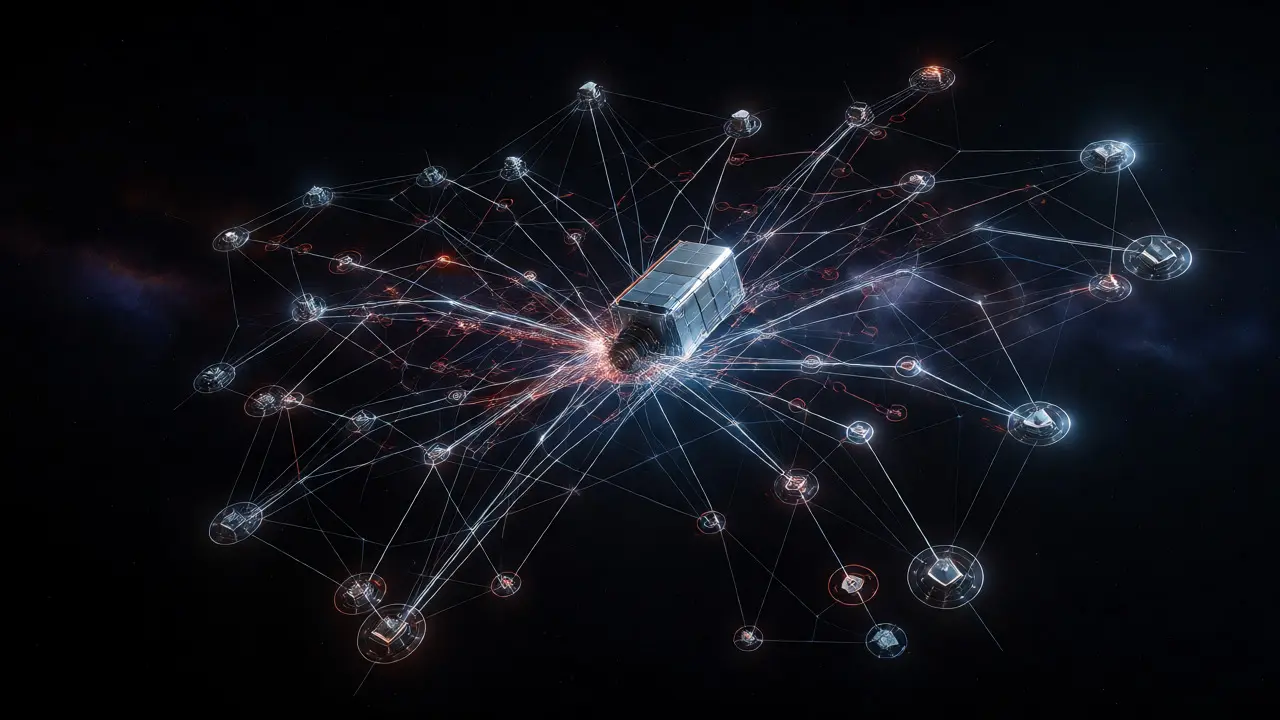
A prime example of this architecture is CASPER (Continuous Activity Scheduling Planning Execution and Replanning), developed by NASA. CASPER doesn't rebuild the entire plan from scratch every time something changes. Instead, it propagates the effects of the change through the existing schedule and fixes conflicts incrementally. This efficiency is crucial for spacecraft with limited computing power.
Flight Heritage: From Deep Space 1 To Perseverance
The concept isn't new theory; it’s battle-tested. The foundational moment came in 1999 with NASA’s Remote Agent experiment on the Deep Space 1 spacecraft. For three days, Remote Agent took full control of primary operations. It managed ion-engine thrusting, attitude adjustments, and communications without any human intervention. When a simulated fault occurred with the camera, Remote Agent detected the issue, diagnosed the cause, and generated a revised plan to account for the extra power consumption. While a software bug eventually halted the experiment, it proved that onboard autonomy was feasible.
Fast forward to today, and the technology has matured significantly. The Mars 2020 Perseverance rover uses a sophisticated onboard planner called the Simple Planner. Since becoming the baseline for operations in October 2023, it has executed hundreds of plans covering over 650 Martian sols. The planner adapts to unexpected changes, such as sudden temperature drops affecting battery performance or activities finishing earlier than predicted. It adjusts the remaining schedule on the fly, ensuring the rover maximizes its scientific return despite the harsh Martian environment.
Another key player is MEXEC (Multi-mission EXECutive), used on the ASTERIA CubeSat. MEXEC demonstrated how small satellites could perform complex maneuvers autonomously. In one test, it monitored the spacecraft’s momentum and commanded a "momentum dump" before hitting a safety limit, then resumed science observations once stability returned. This avoided costly reset procedures that would have required days of ground coordination.
Comparing Autonomous Planners With Traditional Methods
Why go through the trouble of building these complex systems? Why not just stick with traditional ground-generated sequences? The answer lies in flexibility and robustness. Here is how autonomous planners stack up against other operational models.
| Feature | Ground Sequenced (Traditional) | Reactive Fault Protection | Autonomous Mission Planner |
|---|---|---|---|
| Decision Speed | Slow (hours/days due to comms delay) | Instant (hardware-level triggers) | Fast (seconds/minutes, onboard) |
| Adaptability | Low (fails if conditions change) | Low (only handles specific faults) | High (replans around constraints) |
| Complexity Handling | High (manual effort on Earth) | Low (simple logic gates) | Medium-High (algorithmic resolution) |
| Verification Burden | Low (predictable output) | Low (deterministic) | High (requires extensive simulation) |
| Best Use Case | Near-Earth, stable environments | Critical safety shutdowns | Deep space, dynamic environments |
Reactive fault protection is great for immediate safety-like shutting down a heater if it gets too hot-but it lacks context. It doesn't know that turning off the heater might mean missing a science observation. An autonomous planner understands the trade-offs. It knows that skipping one image is acceptable if it ensures the spacecraft survives until the next solar cycle.
Challenges And Risks Of Onboard Autonomy
It’s not all smooth sailing. Giving a spacecraft the authority to make decisions introduces significant risks. The biggest hurdle is verification and validation (V&V). How do you prove that an AI-like planner will behave correctly in every possible scenario? Unlike traditional software, where inputs lead to predictable outputs, autonomous planners navigate a vast space of possibilities.
NASA’s Engineering and Safety Center has highlighted that uncertainty and nonlinear coupling create substantial difficulties for certifying autonomous guidance and navigation. If the planner’s model of the spacecraft is slightly off-if it thinks a motor takes 5 seconds to move, but it actually takes 7-the resulting plan might fail. The Remote Agent incident in 1999 serves as a cautionary tale: a logic error in the command-issuing module stopped the experiment, requiring a backup command from Earth to shut down the ion engine safely.
Security is another emerging concern. As autonomy grows, so does the attack surface. Could corrupted decision algorithms or falsified sensor data trick a spacecraft into bad behavior? Supply chain vulnerabilities for radiation-hardened chips also pose risks. Engineers must balance the desire for smart, adaptive systems with the need for deterministic, explainable safeguards. Often, the solution is "bounded autonomy": the planner can choose among valid options, but independent watchdogs monitor for catastrophic errors.
The Future: Integrated Multi-Function Autonomy
Looking ahead, the trend is toward integration. Current research, particularly at JPL, is moving beyond isolated planning tasks. New efforts connect planners with machine-learning anomaly detectors, mobility systems, and telecommunications functions. Imagine a rover that detects a dust storm via onboard cameras, automatically cancels a drive, switches to safe mode, and schedules a high-priority downlink to alert Earth-all without human input.
Projects like ESA’s Advanced Planning and Scheduling Initiative (APSI) aim to create reusable frameworks for this kind of flexibility. The goal is to reduce the cost of operations while increasing reliability. As we plan missions to Europa, Titan, and beyond, the ability to operate independently will be non-negotiable. The technology is no longer experimental; it is operational. The challenge now is scaling it, securing it, and building trust among operators who must rely on their robots to make the right calls when no one is watching.
What is the main difference between a mission planner and a fault protection system?
Fault protection is reactive and focused solely on safety, triggering immediate actions like shutting down subsystems when limits are exceeded. A mission planner is proactive and goal-oriented, scheduling activities to maximize science return while respecting safety constraints. The planner can reason about multiple objectives, whereas fault protection usually handles single-point failures.
Can autonomous planners replace human operators entirely?
No, not currently. Human operators still define the high-level goals, priorities, and constraints. They also retain ultimate command authority to override the planner. The autonomy handles the tactical execution and adaptation, freeing humans from micromanaging every second of activity.
Which spacecraft have used autonomous mission planners?
Notable examples include Deep Space 1 (Remote Agent), Earth Observing-1 (CASPER), ASTERIA (MEXEC), and the Mars 2020 Perseverance rover (Simple Planner). These missions demonstrated various aspects of goal-driven operations, from propulsion management to science targeting.
Is there a commercial market for buying autonomous mission planner software?
There is no standard off-the-shelf product with a public price list. Systems like CASPER and MEXEC are primarily government or academic research tools tailored to specific missions. Costs are embedded in project development, integration, and verification rather than sold as standalone licenses.
How do autonomous planners handle communication blackouts?
During blackouts, the planner relies on its onboard models and stored task networks. It continues to execute and replan based on local sensor data. Once communication is restored, it uploads the updated plan and telemetry, allowing ground teams to assess performance and adjust future goals.