
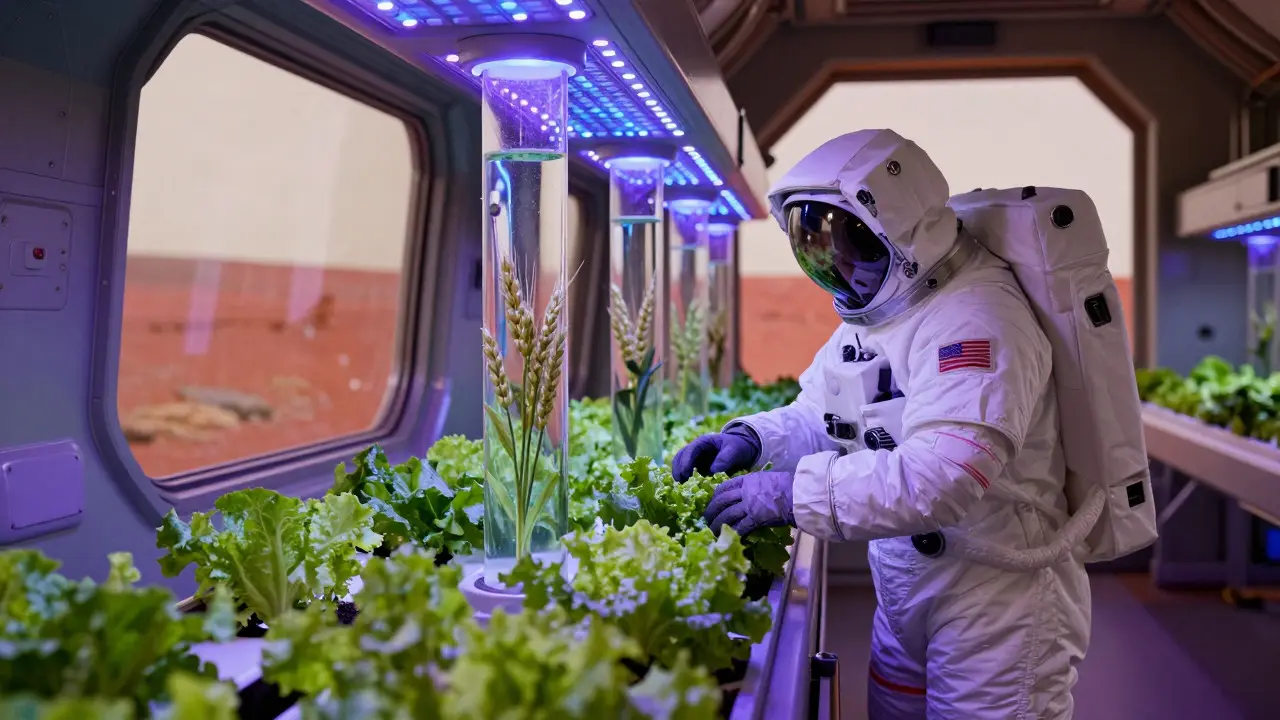
Imagine living on Mars for three years. You can’t order groceries from Amazon. You can’t just open a window to breathe fresh air. If you rely solely on supplies shipped from Earth, the mission fails before it begins. This is why engineers and biologists are obsessed with bioregenerative life support. These aren't just fancy plant pots; they are complex, engineered ecosystems designed to turn your waste into food, water, and breathable oxygen. It’s nature’s recycling program, scaled up for survival in the vacuum of space.
What Are Bioregenerative Life Support Systems?
To understand how we keep astronauts alive far from home, we first need to define what these systems actually do. A Bioregenerative Life Support System (BLSS) is an artificial ecosystem that uses living organisms like plants, algae, and bacteria to regenerate air, water, and food from human waste. Unlike traditional spacecraft systems that simply scrub carbon dioxide or filter water using chemicals and filters, BLSS creates a loop. Your output becomes the system's input.
Think of it as a miniature Earth. In this closed loop, there are three main players:
- Producers: Plants, microalgae, and photosynthetic bacteria. They take in carbon dioxide (CO₂) you exhale and release oxygen (O₂) and biomass (food).
- Consumers: That’s you. The crew inhales the oxygen and eats the biomass, producing CO₂, urine, feces, and other organic waste.
- Decomposers: Specialized microbes and bacteria. They break down your solid and liquid waste into mineral nutrients like nitrates and phosphates, which the producers then use to grow more food.
The goal? To close the material loops for oxygen, water, and nutrients so efficiently that the crew needs almost no resupply from Earth. As of 2026, this technology remains largely experimental but is critical for any long-term settlement on the Moon or Mars.
The History: From Concept to Compartmentalized Reality
This isn't a new idea. NASA first articulated the concept of a Closed-Ecology Life Support System (CELSS) in technical reports during the late 1970s and early 1980s. The vision was clear: future lunar outposts or Mars bases couldn't survive on disposable supplies alone. By 1994, reviews in journals like *Life Support & Biosphere Science* emphasized that controlled ecological systems were necessary to revitalize atmosphere, purify water via plant transpiration, and generate vegetarian food.
While NASA focused on integrating humans, plants, and physicochemical waste treatment, the European Space Agency (ESA) took a different approach. In 1989, ESA launched the Micro-Ecological Life Support System Alternative (MELiSSA) project. Instead of trying to mimic a natural forest, MELiSSA broke the ecosystem down into five distinct, highly controlled bioreactor compartments. Each compartment houses specific microorganisms or plants performing one precise task. This modular design allows engineers to tweak each step of the recycling process independently, aiming for near-100% resource efficiency.
How the Closed Loop Works: The MELiSSA Architecture
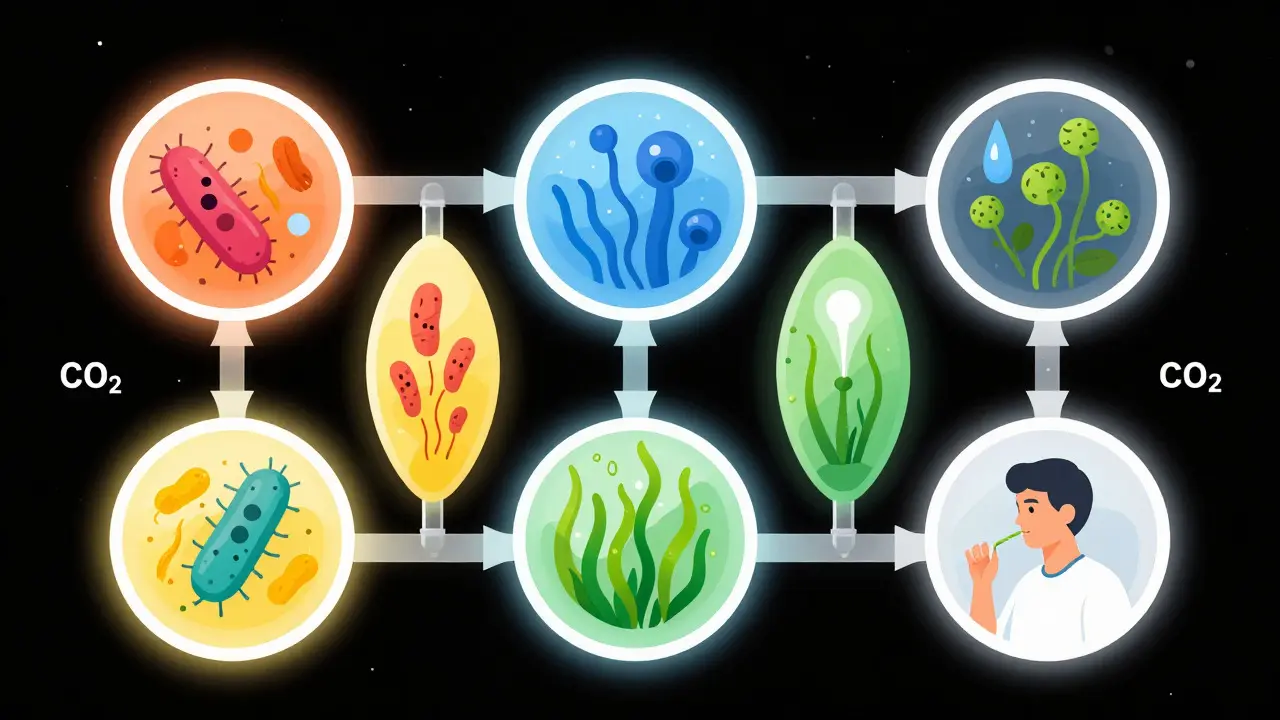
Let’s look at how a sophisticated system like MELiSSA actually functions. It doesn’t just throw everything into one big tank. It separates processes to maximize efficiency and control. Here is the flow:
- Compartment I (Thermophilic Bacteria): Solid organic waste (feces, food scraps) enters here. Heat-loving bacteria break it down under oxygen-poor conditions, sterilizing pathogens and releasing simple compounds.
- Compartment II (Photoheterotrophic Bacteria): These bacteria consume the compounds from the previous stage, further breaking them down and preparing them for the next phase.
- Compartment III (Nitrifying Bacteria): This is crucial for the nitrogen cycle. Ammonia from urine and waste is converted into nitrate, a form of fertilizer plants can actually use.
- Compartment IV (Photosynthetic Bacteria & Algae): Using light energy, these organisms produce biomass and help balance the chemical environment.
- Compartment V (Higher Plants & Crew): Finally, crops like lettuce or wheat grow using the recycled nutrients and CO₂ from the crew. The crew eats the plants, breathes the oxygen, and the cycle restarts.
The only external input required for this entire chain is energy-usually sunlight or artificial LED grow lights. Everything else, including water and minerals, circulates internally. If this works perfectly, an astronaut could theoretically live indefinitely without bringing a single extra bottle of water or bag of soil from Earth.
Bioregenerative vs. Physicochemical Systems
You might wonder, "Why not just use better filters?" Currently, the International Space Station (ISS) relies mostly on Physicochemical Life Support Systems. These use zeolites to absorb CO₂, Sabatier reactors to convert CO₂ and hydrogen into methane and water, and advanced membranes to recover drinking water from urine. They are reliable, fast, and well-understood.
| Feature | Physicochemical (Current ISS Standard) | Bioregenerative (Future BLSS/MELiSSA) |
|---|---|---|
| Resource Source | Consumables (filters, sorbents) must be replaced | Living organisms self-repair and reproduce |
| Food Production | None (food must be supplied) | Produces fresh edible biomass |
| Complexity | Mechanical/Electrical complexity | Ecological/Biological complexity |
| Reliability Risk | Equipment failure, consumable depletion | Ecological imbalance, pathogen outbreaks, crop failure |
| Best Use Case | Short missions, Low Earth Orbit (LEO) | Long-duration missions, Lunar/Martian bases |
Physicochemical systems have a hard limit: once your filters are full, you’re done unless you have spares. For a six-month trip to the Moon, that’s manageable. For a two-year stay on Mars, shipping spare filters is prohibitively expensive. Bioregenerative systems solve this by creating their own resources. However, they come with a trade-off. Biology is messy. Plants get sick. Microbial populations crash if the pH shifts slightly. A mechanical filter doesn’t care about its mood; a bacterial colony does.
Current Challenges and Technical Gaps
Despite decades of research, we haven’t yet deployed a fully closed-loop BLSS in deep space. Why? Because closing a loop completely is incredibly difficult. As of 2025-2026, several critical gaps remain:
- Ecological Stability: Maintaining a balanced ecosystem over years is hard. If one species of bacteria dies off, the nutrient flow stops, potentially starving the plants or poisoning the water with ammonia.
- Gravity Effects: We know very little about how fluids, gases, and plant roots behave in partial gravity (like on Mars or the Moon). Fluid dynamics change, which affects how nutrients reach plant roots and how gases exchange in bioreactors.
- Automation: Astronauts are pilots and scientists, not full-time farmers. The system must monitor itself, adjust lighting, regulate temperature, and detect diseases autonomously. Current automation levels are insufficient for unattended operation.
- Volume and Power: Growing enough food for a crew requires significant space for plant chambers and massive amounts of electricity for grow lights. This competes with other essential ship systems.
A 2025 perspective paper titled "Critical investments in bioregenerative life support systems" highlights that while these systems are a "clear necessity," they currently function as advanced prototypes rather than flight-ready hardware. The timeline for supporting a real human crew in a fully closed loop, originally targeted for 2020-2025 by ESA, has slipped due to these persistent engineering challenges.
The Path Forward: Hybrid Systems
So, when will we see this in action? The immediate future lies in hybrid systems. Engineers don’t expect to replace the ISS’s robust physicochemical systems overnight. Instead, they plan to integrate biological components gradually. Imagine a spacecraft where the primary air revitalization is still chemical, but a small bioregenerative module provides fresh vegetables, recycles some wastewater, and offers psychological benefits through greenery.
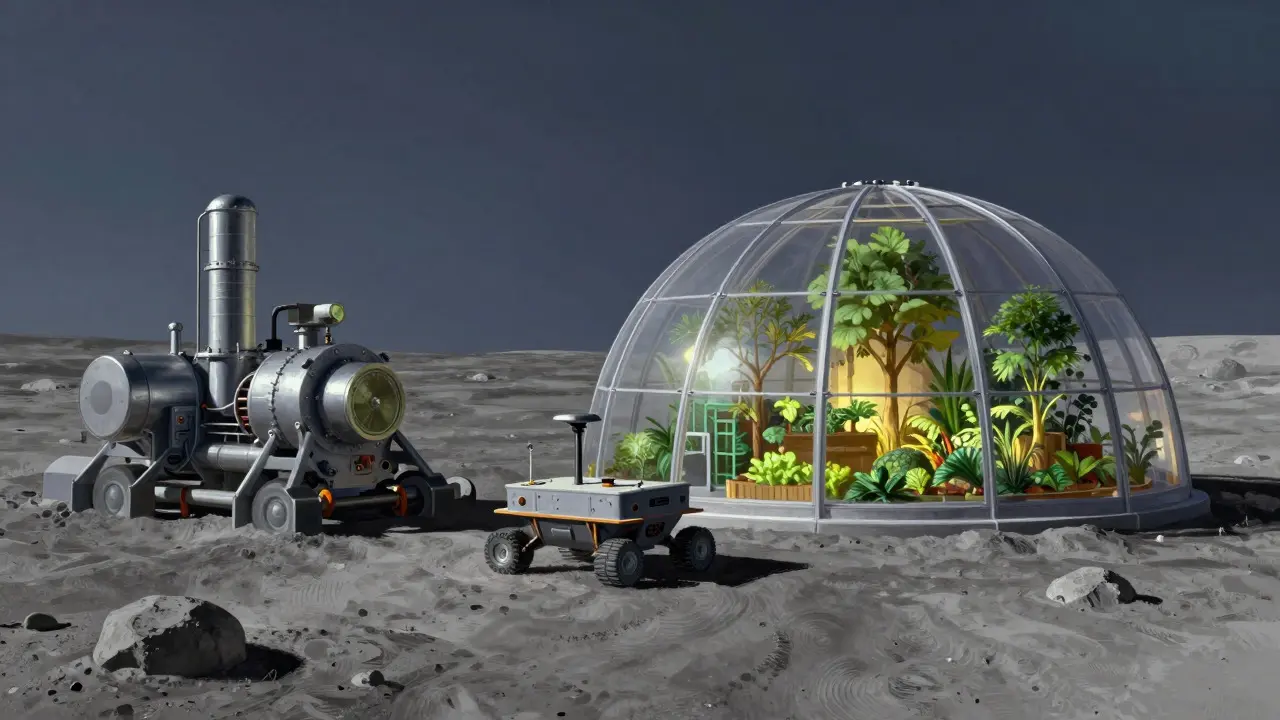
For permanent settlements on the Moon or Mars, however, the hybrid model evolves into a predominantly bioregenerative one. In-situ resource utilization (ISRU) will combine with biology. We’ll use local regolith (soil) for construction and perhaps extract water ice, feeding those resources into our closed loops. The ultimate goal is a self-sustaining habitat where the boundary between the machine and the garden blurs completely.
The science is sound. The ecology is proven on Earth. The engineering hurdles are steep, but as we push further into the solar system, bioregenerative life support transitions from a nice-to-have experiment to an absolute requirement for survival.
Can bioregenerative systems provide 100% of an astronaut's food?
Theoretically, yes, but practically, current systems aim for partial closure. While plants can produce carbohydrates and some proteins, achieving a complete nutritional profile (including all essential amino acids, fats, and vitamins) solely from a closed-loop system is extremely challenging. Most current designs aim to supplement rations rather than replace them entirely, focusing on high-calorie crops like potatoes or rice alongside leafy greens.
How long does it take for a bioregenerative system to start working?
It depends on the scale. A small microbial loop can stabilize in weeks, but a full system involving higher plants takes months. Plant growth cycles are slow compared to chemical reactions. For example, wheat takes several months to mature. Therefore, crews would likely arrive with initial food stocks while the biological system ramps up production.
What happens if the biological system fails?
This is why hybrid systems are used. If the bioregenerative loop crashes, the spacecraft relies on backup physicochemical systems (like CO₂ scrubbers and stored water) to keep the crew alive. Redundancy is key. The biological system is viewed as a supplement and long-term sustainer, not the sole lifekeeper in the early stages of deployment.
Are there any successful examples of closed-loop systems today?
Yes, but mostly on Earth. Facilities like BIOS-3 in Russia and the MELiSSA testbeds in Europe have demonstrated long-term stability in ground-based analogs. In space, experiments like the Veggie system on the ISS have successfully grown lettuce and peppers, proving that plants can grow in microgravity, though these are open-loop systems (they require manual watering and fertilization) rather than fully closed loops.
Why not just use algae for everything?
Algae are incredibly efficient at producing oxygen and protein, but eating nothing but algae paste is psychologically taxing and nutritionally limited. Higher plants provide variety, fiber, and psychological comfort. Additionally, algae cultures are prone to contamination and require precise light and nutrient control. A diverse ecosystem with multiple trophic levels (plants, microbes, insects, or even fish) is more resilient and sustainable.